




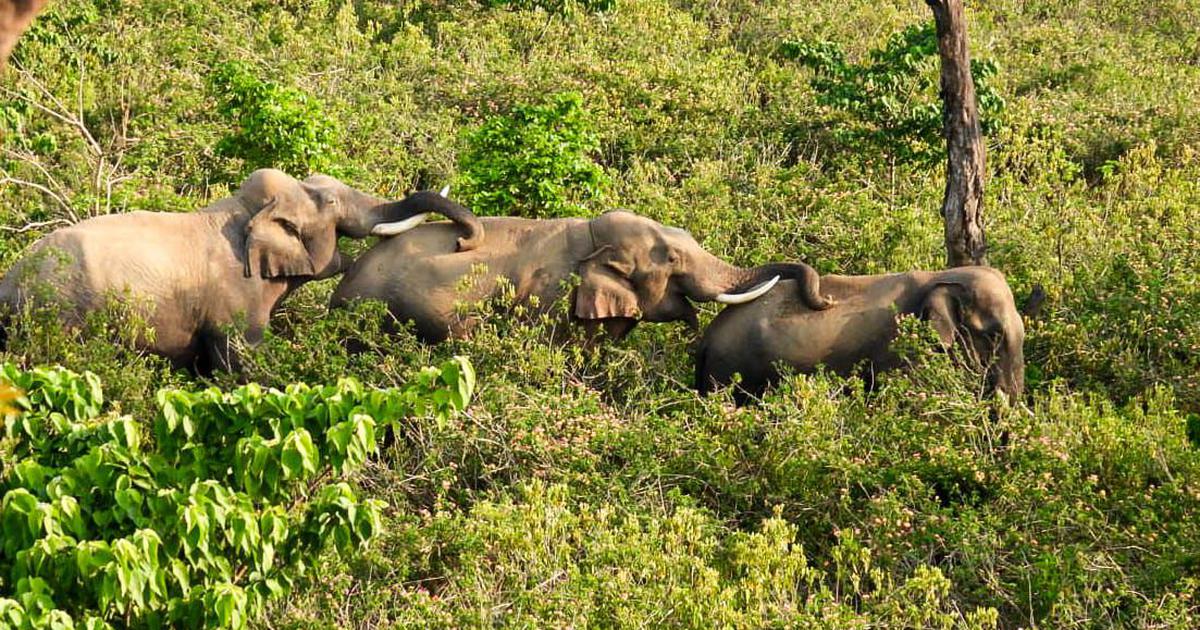
Traditionally viewed as solitary creatures, male Asian elephants are exhibiting surprising social behaviors, according to a groundbreaking study conducted in the picturesque Rajaji National Park, Uttarakhand. This research, carried out by a team of wildlife biologists, suggests that the social dynamics of these majestic animals are far more intricate than previously understood. The 2026 study reveals that male elephants frequently form distinct groups, indicating that their associations are not merely random but influenced by various factors such as age, reproductive status, and environmental conditions.
One of the most compelling findings of the study is that many of these male group dynamics occur in open landscapes that are increasingly shared with human populations. This overlap between human habitats and elephant territories is crucial, as it often leads to negative encounters between the two species. Abhimanyu Madhusudanan, a prominent wildlife biologist from the Wildlife Institute of India and the study’s lead author, emphasizes the importance of understanding how these elephants interact. He notes, “By examining the social structures of male elephants, we can develop more effective strategies to mitigate conflicts that arise when their habitats intersect with human activities.”
The research team meticulously recorded data on 706 elephants, including 219 males, observing their behaviors and interactions over an extended period. By logging each sighting, researchers were able to create detailed individual histories. They recorded whether the males were seen alone, in all-male groups, or mingling in mixed herds. The age and reproductive conditions of these elephants were also documented, providing a comprehensive overview of their social lives.
To analyze their findings, the researchers employed a sophisticated method known as spatially explicit capture-recapture, which estimates population sizes by tracking how frequently individuals are spotted and the locations of these sightings. This method revealed an estimated population of around 40 adult males residing in the park. The implications of such findings are significant, especially in light of the ongoing challenges faced by elephants in the wild due to habitat loss and increasing human-elephant conflict.
The shift in understanding regarding male elephants’ social behavior highlights a critical need for conservation strategies that take into account their complex social structures. By fostering a deeper understanding of their interactions, researchers can better inform wildlife management practices aimed at preserving these gentle giants and ensuring their survival in a rapidly changing world.

