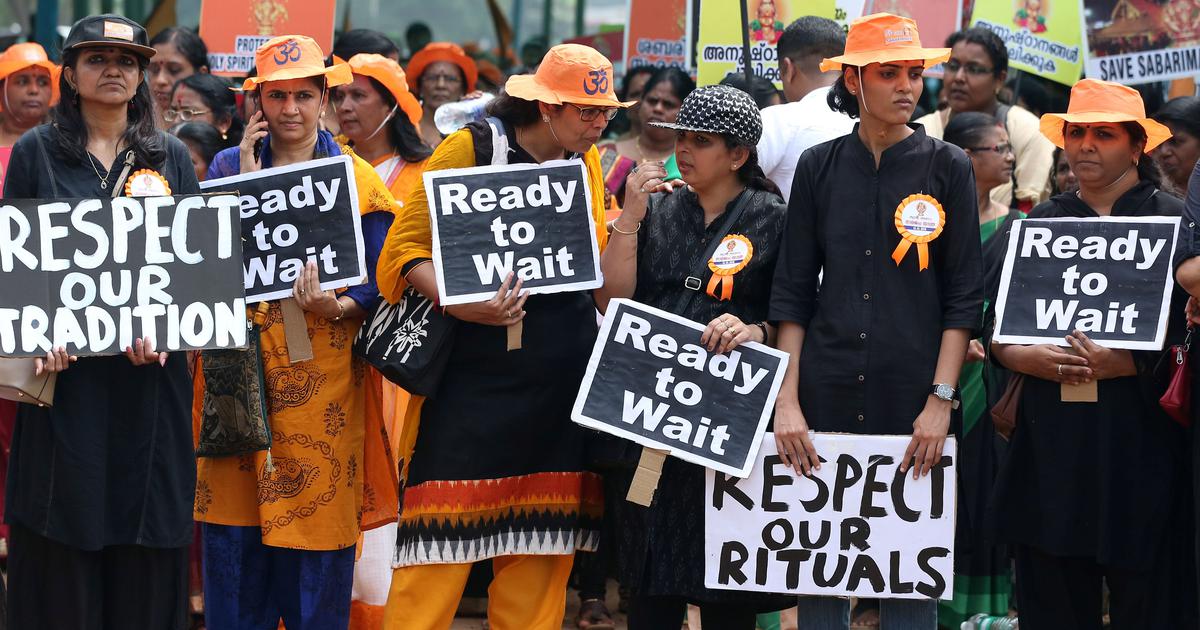
In a nation as diverse as India, the intersection of religion, tradition, and gender continues to spark intense debate. The recent Sabarimala verdict, which allowed women of all ages to enter the famous temple, stands in stark contrast to the ongoing discussions surrounding the hijab ban in educational institutions. While both issues revolve around women’s rights and religious practices, they highlight different facets of how society grapples with gender norms.
The Sabarimala verdict is significant as it challenges long-held beliefs that restricted women’s access to places of worship based on age and gender. Traditionally, the temple has barred women between the ages of 10 and 50, rooted in the belief that the deity, Lord Ayyappa, is celibate. The Supreme Court’s ruling emphasized the principle of equality and the right of women to worship, arguing that the exclusionary practices were discriminatory. This decision was celebrated by many as a progressive step towards gender equality in religious spaces.
On the other hand, the hijab controversy reflects a different struggle, grounded in personal choice and identity. The ban on wearing hijabs in educational settings has sparked protests and debates about religious freedom and secularism. Many argue that wearing a hijab is a matter of personal expression and belief, while detractors claim it contradicts the principles of a secular education system. The hijab issue brings forth questions of autonomy and the right to define one’s faith and identity in a multicultural society.
Both debates underscore how religious scriptures and traditions have historically been unkind to women. As evolutionary biologist Richard Dawkins noted, contemporary beliefs in gender equality and compassion for all beings are not derived from ancient texts but are the results of societal evolution driven by philosophical reasoning and moral debate. This evolution reflects a cultural shift where outdated, patriarchal practices are increasingly rejected in favor of progressive ideals.
While practices like female foeticide and dowry still exist in parts of India, the response from society and the legal system has been to engage in reasoned dialogue and enact laws that challenge these norms. The Sabarimala verdict is part of this broader movement to reinterpret religious texts and ensure that traditions do not hinder women’s rights. In contrast, the hijab debate invites a reconsideration of how religious identity coexists with modern educational frameworks. Both issues are vital to understanding the complex narrative of women’s rights in India, as they reveal the struggle between tradition and the quest for equality.