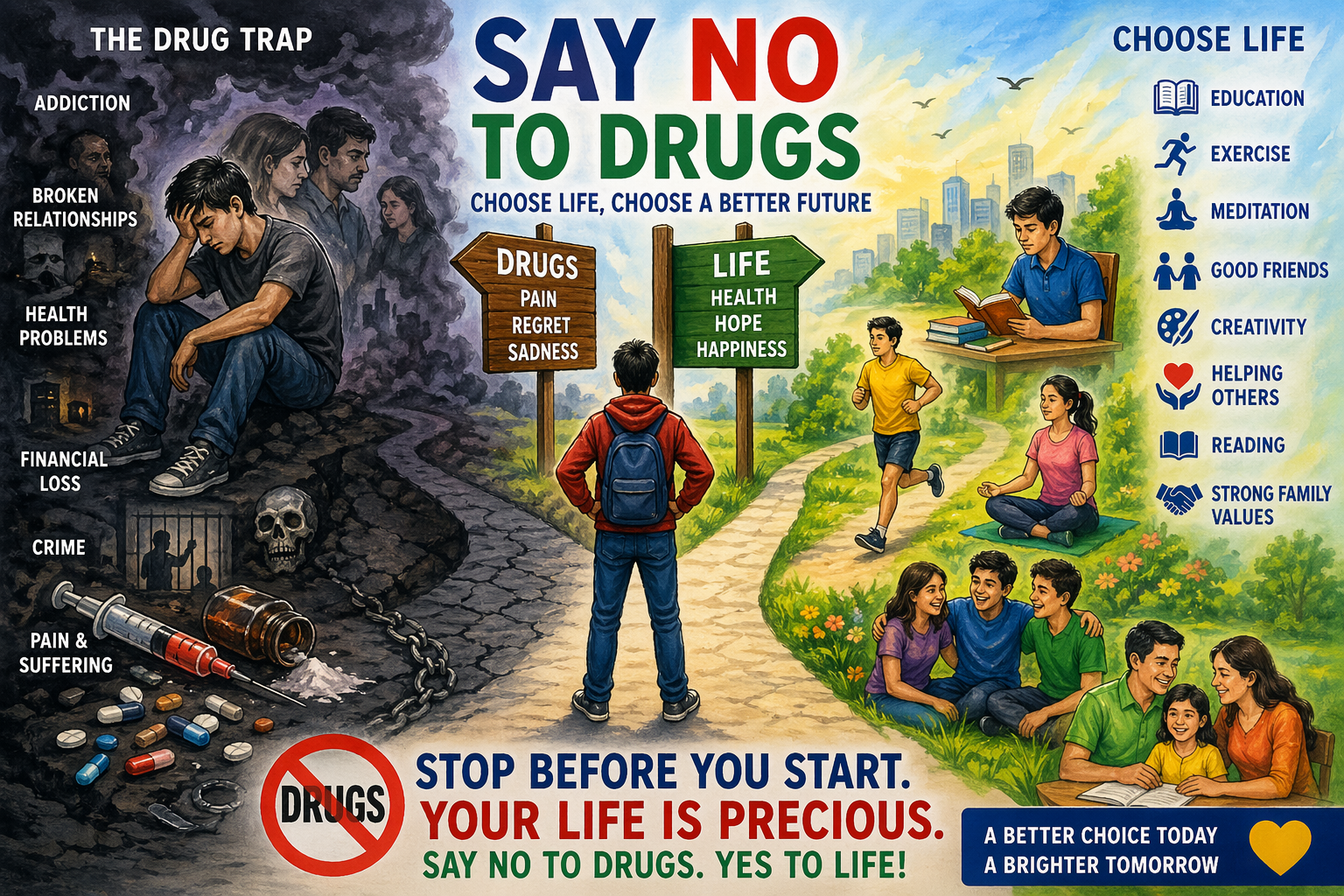
Say No to Drugs
To understand drug addiction, it must first be seen in the context of drug dependence. According to experts, drug dependence is a psychological—and sometimes physical—state characterized by a compulsion to take a drug, often to experience its psychological effects rather than for any legitimate medical purpose. In this context, the term drug refers to substances that alter mood, behaviour, perception, and mental functioning.
Drug addiction is a severe form of dependence. It develops when a drug produces physiological changes in the body, evidenced by the development of tolerance—where increasing amounts are needed to achieve the same effect—and by withdrawal symptoms once the drug’s effects wear off. These symptoms may include nausea, diarrhoea, pain, and severe discomfort.
Clinical definitions, however, reveal little about the devastation drug addiction brings. It wreaks havoc not only on individuals but also on their families, peers, and society. What begins as curiosity or the desire for a fleeting “high” can quickly spiral into dependence. During intoxication, individuals may feel heightened senses and a false sense of confidence, often ignoring potential consequences.
In reality, victims are drawn deeper into addiction. Their behaviour becomes increasingly erratic and unpredictable, swinging between manic highs and depressive lows. Over time, their physical and mental health deteriorates. Each high is followed by a deeper low—marked by despair, anxiety, and pain. When the drug wears off, the body may experience intense withdrawal symptoms such as nausea, vomiting, diarrhoea, and severe physical distress. In extreme cases, withdrawal can lead to convulsions, shock, or even death. Though many wish to quit, recovery often takes far longer than the time it took to fall into addiction.
Substance abuse is not a distant problem; it touches many lives. Most of us know someone—a friend, a family member, or an acquaintance—who has been affected. Some may have overcome addiction, while others continue to struggle, often in silence or denial. The truth remains: the earlier addiction is identified and addressed, the greater the chances of recovery. Prevention, undoubtedly, is the most effective solution—stop before you start.
Drug addiction is a social menace because it harms the individual, and individuals form the fabric of society. No person exists in complete isolation. The suffering of one addict inevitably impacts their family—the basic unit of society—and, in turn, the wider community and nation. What harms society ultimately harms us all.
Therefore, the responsibility to combat drug abuse lies with each of us. We must choose healthier paths—engage deeply in meaningful work, cultivate creativity, read, reflect, build relationships, and contribute positively to our communities. These pursuits bring lasting fulfilment and purpose, far beyond the temporary escape offered by drugs.
When life feels overwhelming, seek balance—not escape. Choose strength over weakness, awareness over illusion.
Say no to drugs. It is not just a choice—it is a commitment to life.