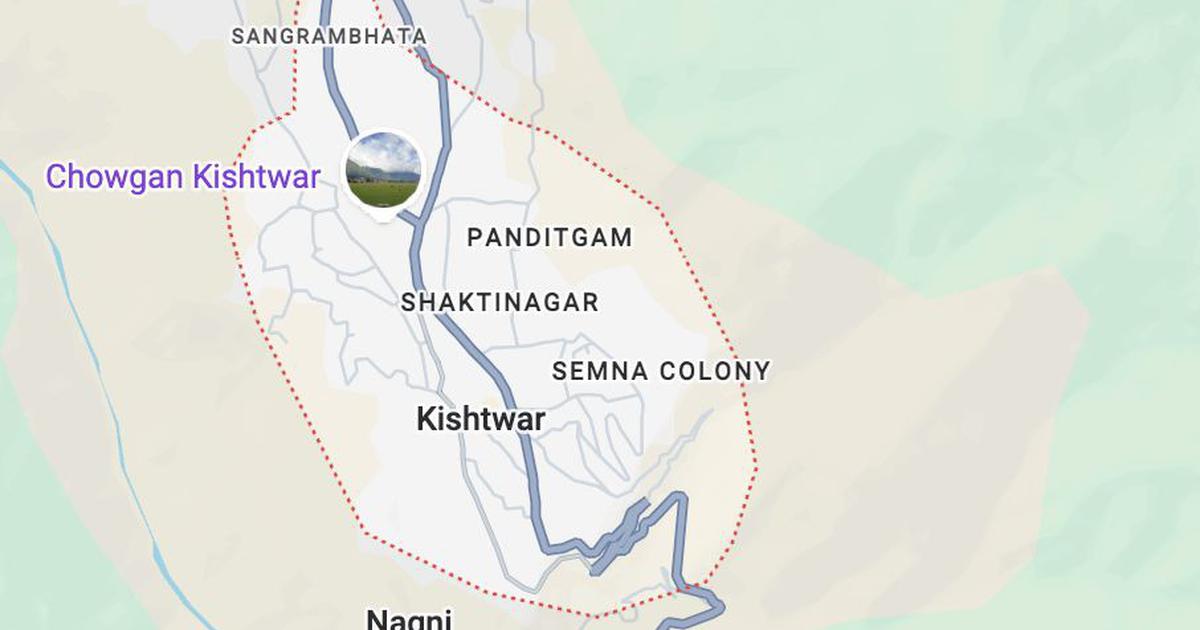
In a shocking turn of events in Jammu and Kashmir’s Kishtwar district, the local police have registered a First Information Report (FIR) against the commanding officer of the 17 Rashtriya Rifles and several army personnel. This incident revolves around allegations of assault on police officers and vandalism of public property, as reported by The Indian Express.
The FIR, lodged at the Atholi police station, stems from an incident that reportedly unfolded on Wednesday when a police team intercepted a private vehicle owned by an Army officer, citing traffic violations. Following this, a large group of approximately 30 to 40 army personnel, allegedly led by Major Vikash Sharma and Naib Subedar Shankar Gurkhe, stormed the police station in what police officials describe as a ‘pre-planned’ attack.
According to Station House Officer Amrit Kotach, the army personnel breached the police station’s security by scaling its main gate and boundary wall. They were reportedly armed with lathis, iron rods, and other weapons, further escalating the situation. Kotach emphasized that their apparent objective was not just to intimidate but to inflict serious harm on the police personnel on duty. This chilling assertion raises serious concerns about the conduct of armed forces operating in civilian areas.
One of the police officers involved, Special Police Officer Suresh Kumar, sustained injuries during the melee, reportedly being struck on the neck with a service rifle’s butt. Other officers on duty also faced physical confrontations, prompting fears about the safety of law enforcement in a region already fraught with tensions.
In response to the allegations, the Army has stated that the incident is currently under examination through proper institutional channels. They have promised that appropriate actions will be taken based on the findings of a joint investigation. This assurance comes at a time when maintaining law and order in Jammu and Kashmir is of paramount importance, given the area’s historical and ongoing strife.
The Kishtwar incident highlights the delicate balance between military authority and civil law enforcement in conflict-prone regions. As the investigation unfolds, the implications of this confrontation may resonate beyond Kishtwar, potentially impacting civil-military relations in Jammu and Kashmir.
The local community is now watching closely as the fallout from this incident may have far-reaching effects on the already strained civil-military dynamics. With both the police and the military under scrutiny, this situation is emblematic of larger issues regarding governance, accountability, and the rule of law in sensitive regions of India.