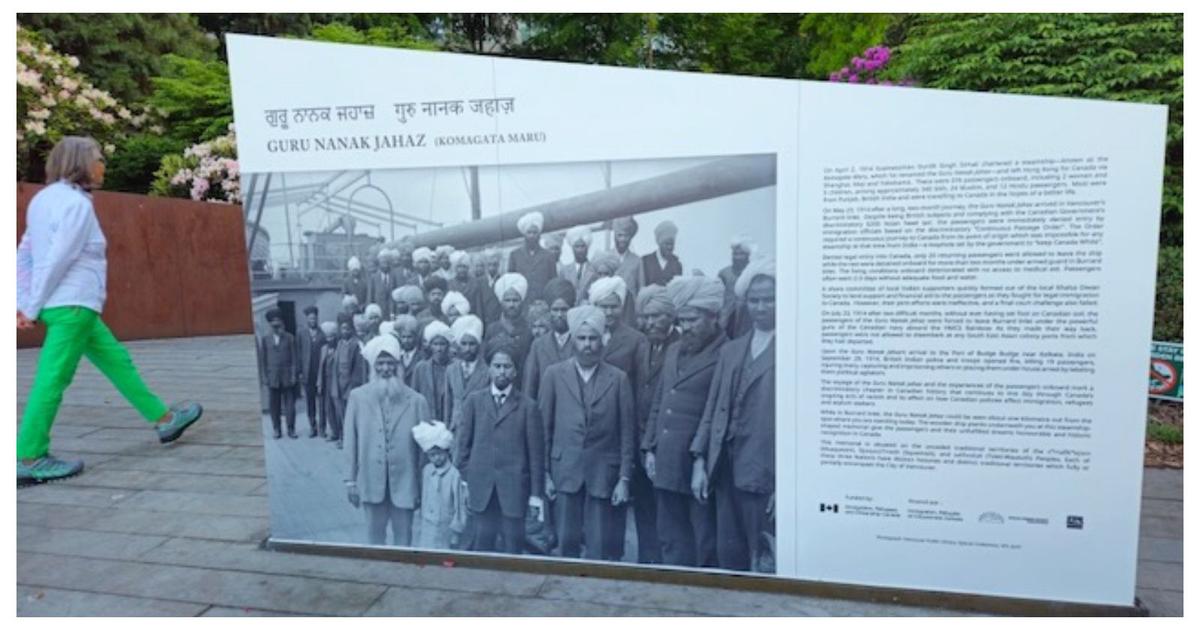
This Saturday, the city of Vancouver will unveil a newly refurbished memorial dedicated to the 376 passengers of the Komagata Maru, a Japanese steamship that became emblematic of racial exclusion in Canada’s immigration policies in 1914. The original memorial, which was inaugurated in 2012, has been updated with a new information panel that primarily refers to the vessel as the Guru Nanak Jahaz, effectively relegating the name Komagata Maru to a secondary status. This change has stirred debate about the implications of historical interpretation and the ongoing struggle against racial discrimination.
The Komagata Maru journey is not merely a historical footnote; it represents a pivotal moment in the fight against the oppressive immigration laws of the British Empire. In 1914, Gurdit Singh, a Sikh businessman living in Hong Kong, chartered the SS Komagata Maru with the intent of challenging Canada’s discriminatory practices that barred non-European immigrants. In his outreach to other Sikh individuals, he referred to the ship as the Guru Nanak Jahaz, signifying its cultural and spiritual importance within the Sikh community. Singh’s initiative was not just about immigration; it was a bold statement against the prevalent colour bar that marginalized people based on their race.
The memorial’s recent alteration presents a complex narrative. While it may appear to be an effort of historical rectification, critics argue that it oversimplifies a multifaceted story of racial injustice and resilience. By emphasizing the ship’s religious connection over its historical significance as the Komagata Maru, this reinterpretation risks sidelining the broader implications of racial discrimination that the ship’s journey symbolized. The vessel’s history is intertwined with the injustices faced by South Asian immigrants during the early 20th century, and any attempt to rewrite this history must grapple with the consequences of such an act.
Furthermore, the shift in focus raises questions about how we remember and honor the past. As Canada continues to grapple with its colonial legacy and the ongoing impacts of systemic racism, it is imperative to ensure that memorials serve as educational tools that promote a comprehensive understanding of history rather than political statements that could dilute the complex realities faced by marginalized communities. The Komagata Maru saga is a crucial part of this narrative, highlighting the struggles against racial exclusion and the fight for social justice.
As the memorial is inaugurated, it is essential for communities, particularly those connected to the history of the Komagata Maru, to engage in dialogue about how such memorials should be presented. The need for a balanced representation of history is vital in honoring the sacrifices of those who endured injustice and in educating future generations about the importance of inclusivity and empathy in a multicultural society. The Komagata Maru is not just a ship; it is a symbol of a broader struggle for dignity and rights, and its legacy must not be overshadowed by contemporary political narratives.