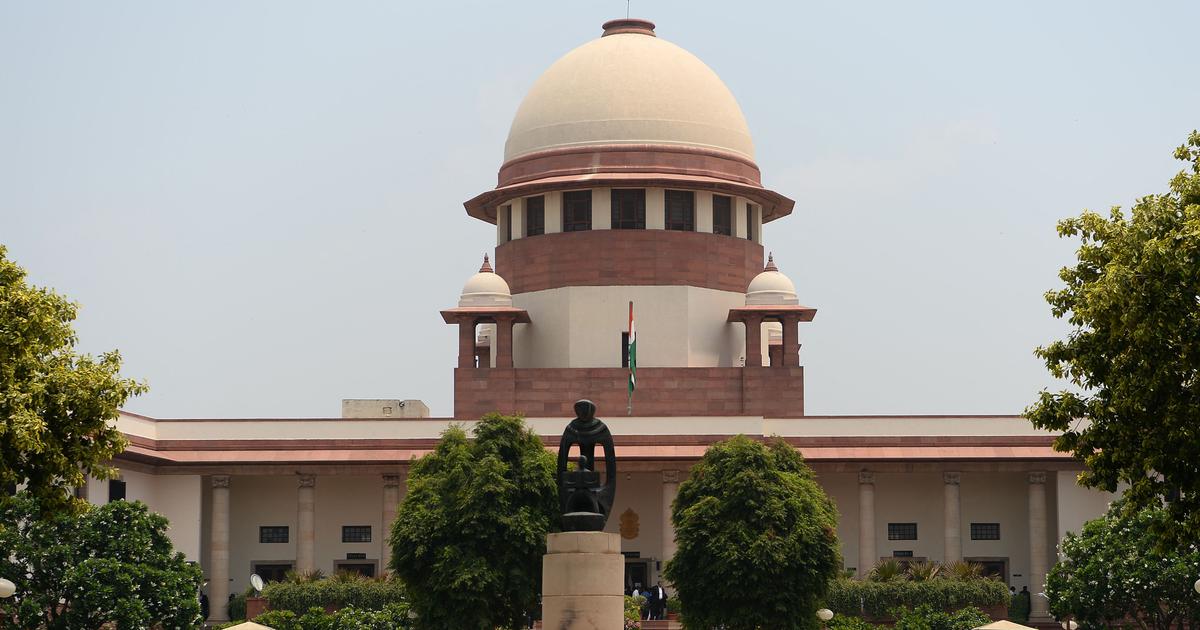
The Indian government has announced the appointment of five new judges to the Supreme Court, a significant move aimed at bolstering the functioning of the country’s apex judiciary. This decision was finalized on Monday, following President Droupadi Murmu’s approval, which came after consultations with Chief Justice Surya Kant. With this new appointment, the Supreme Court’s total number of judges will increase to 37, just one short of its sanctioned capacity of 38 judges.
The newly appointed judges include prominent legal figures: Justice Sheel Nagu, the Chief Justice of the Punjab and Haryana High Court; Justice Shree Chandrashekhar, who served as the Chief Justice of the Bombay High Court; Justice Sanjeev Sachdeva, previously the Chief Justice of the Madhya Pradesh High Court; Justice Arun Palli, the Chief Justice of the Jammu and Kashmir High Court; and Venkita Subramani Mohana, a senior advocate. Notably, Mohana is only the second woman in history to be directly elevated from the Bar to the Supreme Court after Justice Indu Malhotra, underscoring a significant milestone for gender representation in the judiciary.
This addition comes on the heels of a crucial cabinet approval on May 5, where the Union Cabinet sanctioned an increase in the Supreme Court’s strength from 34 to 38, including the Chief Justice. This move was partly motivated by the alarming backlog of nearly 92,000 pending cases currently burdening the Supreme Court. Union Minister Ashwini Vaishnaw emphasized that enhancing the number of judges would facilitate a more efficient and effective judiciary, ultimately ensuring quicker access to justice for millions of citizens.
The Supreme Court plays a pivotal role in upholding the Constitution and safeguarding the rights of individuals in India, making the appointment of new judges a matter of great public interest. With the recent changes, there is renewed hope among legal experts and the general populace that the judiciary will be better equipped to handle the increasing caseload, thus expediting the judicial process.
As the judiciary grapples with a significant backlog, the timely appointment of judges is crucial. The legal community is optimistic that these new appointments will contribute positively to the Supreme Court’s capability to administer justice. In a time when the efficiency of legal processes is under scrutiny, these changes may mark the beginning of a more robust and responsive judicial system in India.