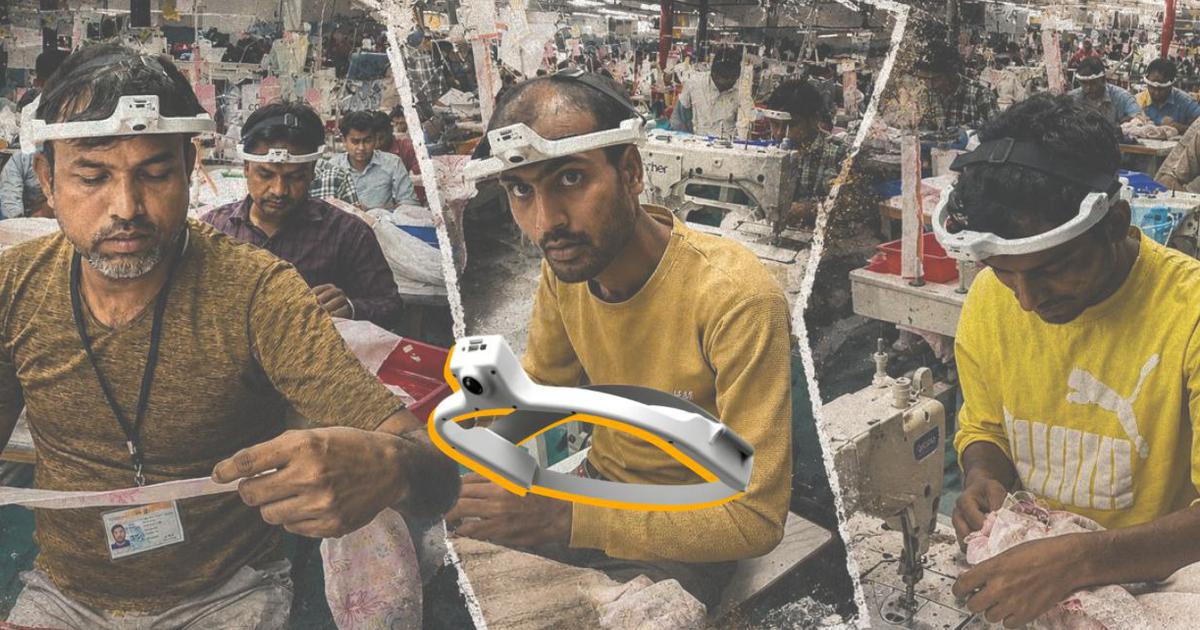
In a striking development that has raised eyebrows across India, a viral video featuring factory workers engaged in sewing garments while donning head-mounted cameras has prompted widespread speculation about the implications of using such technology in industrial settings. The footage, which amassed hundreds of thousands of views, spurred questions about whether these workers were inadvertently training artificial intelligence systems that could one day replace them. The discourse around the video, highlighted by reports from major news outlets like CNN, has unveiled a deeper narrative about the intersection of technology, labor, and the future of work in India.
Identified as employees of the Gurugram facility of Pearl Global Industries Limited, an apparel manufacturer with operations spanning ten countries, the workers shared their experiences with these unusual devices. One worker recounted, “We were required to wear the device from 10 am to 4 pm. The management stated they wanted to monitor our activities during shifts.” This raises fundamental questions about surveillance and worker autonomy in an age where data is becoming a key resource.
Interestingly, similar devices were deployed earlier this year in the facilities of Ken India, a textile firm situated in Ichalkaranji, Maharashtra. However, the purpose of these devices was reportedly different. According to a post on LinkedIn by Ken India, the technology was provided by a nascent startup, Egolab.AI, founded in early 2026 by two teenagers eager to explore the capabilities of AI in manufacturing.
The implementation of these head-mounted devices has ignited a debate on the ethical considerations surrounding worker surveillance. As industries increasingly turn to technology to boost productivity and efficiency, the potential for exploitation of workers’ data raises concerns. While companies may justify their use of such technology as necessary for enhancing operational efficiencies, the broader implications for workforce displacement and job security cannot be ignored.
Moreover, as the landscape of work continues to evolve, the Indian workforce finds itself at a critical juncture. With the rapid acceleration of AI and machine learning, the traditional fabric of labor is under threat. Workers may find themselves in a precarious position as they train machines that could eventually render their roles obsolete. This paradox of empowerment versus displacement presents a significant challenge for policymakers and industry leaders alike.
In response to the growing concerns, labor rights activists are calling for clearer regulations regarding the use of surveillance technologies in the workplace. They argue that transparency must be prioritized, ensuring that workers are informed about how their data is being collected and utilized. With India positioning itself as a global manufacturing hub, it is imperative that the rights and dignity of its workers are safeguarded amidst technological advancements.
As discussions around these technology-driven practices gather momentum, it is clear that the narrative surrounding Indian factory workers and the use of AI is just beginning. The implications of these developments will reverberate through the industry and society, making it essential for all stakeholders to engage in a thoughtful dialogue about the future of work in India.