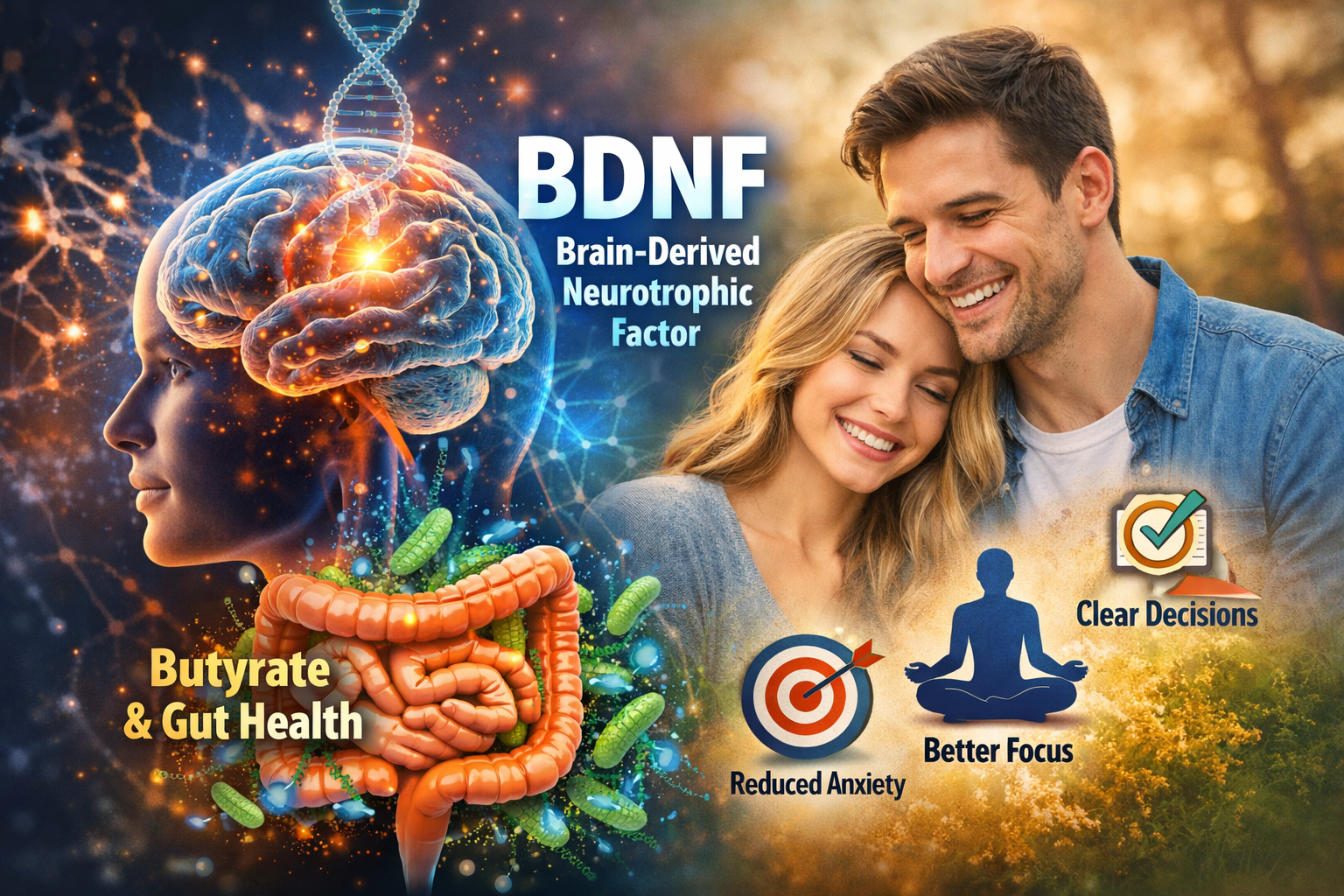
How BDNF and Gut Health May Shape Our Mind and Life
In recent years, scientists have been exploring a fascinating connection between the brain and the gut—often referred to as the gut-brain axis. At the center of this research is a protein called brain-derived neurotrophic factor (BDNF), which plays an important role in brain development, neural health, and cognitive function.
What is BDNF and Why It Matters
BDNF is often described as a kind of “support molecule” for the brain. It helps maintain existing neurons and is involved in the growth of new neural connections, a process known as neuroplasticity and in some contexts neurogenesis.
Research suggests that adequate BDNF levels may be associated with:
- Improved learning and memory
- Better cognitive performance
- Greater emotional resilience
- More efficient neural communication
On the other hand, some studies have found associations between lower BDNF levels and conditions such as depression, anxiety, and cognitive decline. However, these relationships are complex and not fully understood.
The Gut Connection: Role of Butyrate
An emerging area of research focuses on how gut bacteria may influence brain function. Beneficial gut microbes produce compounds like butyrate, a short-chain fatty acid formed during the digestion of dietary fiber.
Preliminary studies—mainly in animal models and limited human research—suggest that butyrate may:
- Support BDNF expression in the brain
- Influence brain regions involved in learning and memory, such as the hippocampus
- Help regulate inflammation, which is linked to brain health
While these findings are promising, more large-scale human studies are needed to confirm the extent of these effects.
Mental Health and Brain Function
Some research indicates that gut health may be linked to mental well-being through complex biochemical pathways, including neurotransmitter regulation and inflammation control.
Butyrate and related gut-derived compounds may play a role in:
- Supporting balanced brain signaling pathways
- Influencing neurotransmitters such as serotonin
- Potentially contributing to improved mood regulation in some cases
However, it is important to note that mental health conditions such as anxiety and depression are multifactorial and cannot be explained by a single biological pathway.
Beyond the Brain: Lifestyle Connections
Healthy brain function, including optimal BDNF activity, is associated with several aspects of daily life. Improved cognitive and emotional balance may support:
- Better focus and productivity
- Improved emotional regulation
- More thoughtful decision-making
These effects are indirect and influenced by many biological, psychological, and social factors.
Clarifying a Common Misconception: Collagen vs BDNF
It is important to clarify that BDNF and collagen serve entirely different roles in the body.
- BDNF is involved in brain function and neural health
- Collagen is a structural protein important for skin, joints, and connective tissues
There is no scientific basis for the claim that one replaces the other.
How Lifestyle May Support BDNF Levels
Research suggests that certain lifestyle habits may be associated with healthier BDNF levels, including:
- Regular physical exercise, especially aerobic activity
- A high-fiber diet that supports gut microbiome diversity
- Consumption of fermented foods and probiotics
- Adequate sleep and stress management
These factors are believed to support overall brain and gut health, though individual responses may vary.
Conclusion
The study of BDNF and the gut-brain axis is an evolving field in neuroscience. Early research suggests a meaningful connection between gut health, brain chemistry, and cognitive function, but many mechanisms are still being explored.
While it is clear that lifestyle choices can influence both gut and brain health, the science does not support simple cause-and-effect claims. Instead, it points to a complex, interconnected system where diet, microbes, and brain biology interact in subtle and significant ways.