Calcutta High Court Deliberates on TMC’s Challenge Against Union Employees in Bengal Poll Counting
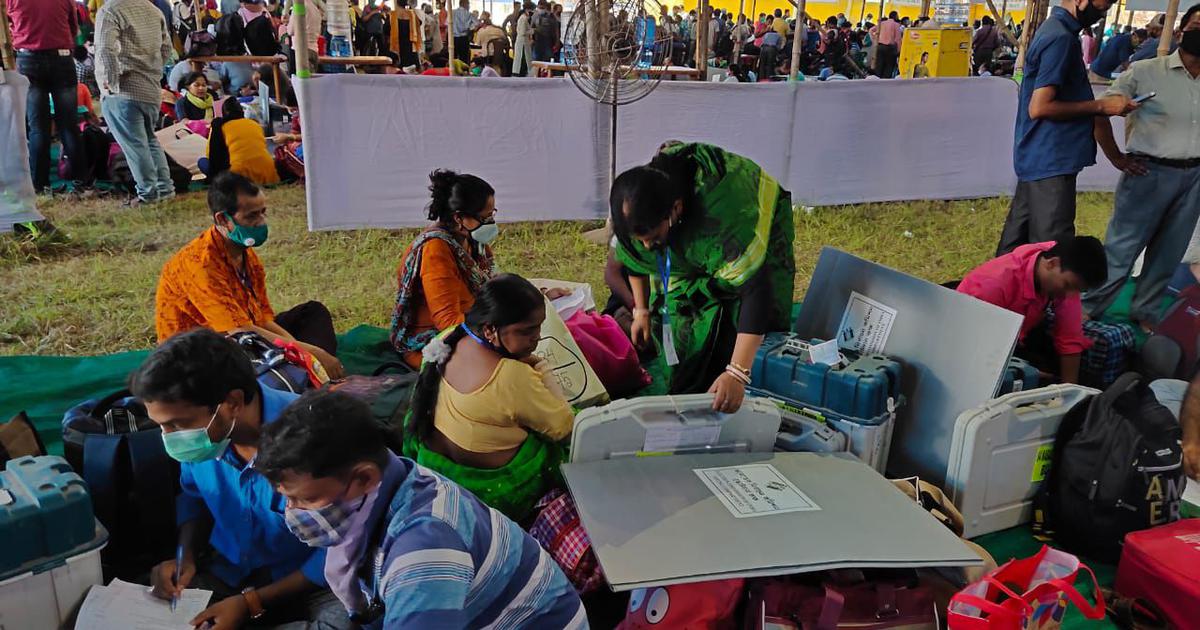
The Calcutta High Court recently reserved its decision regarding a petition filed by the Trinamool Congress (TMC) that contests the Election Commission’s directive to employ Union government employees as supervisors during the vote counting for the West Bengal elections. This judicial review comes after a significant voter turnout of 92.4% was reported in the state during the polling held in two phases on April 23 and on the recent Wednesday.
Justice Krishna Rao presided over the hearing, listening to the arguments presented by both the TMC and representatives from the Election Commission. The court’s decision will play a crucial role in determining who will oversee the counting process set to take place on Monday. The TMC’s contention hinges on the premise that the Election Commission’s order imposed undue jurisdiction beyond what is permissible under the Representation of People Act.
During the proceedings, Advocate Kalyan Bandopadhyay, representing the TMC, argued that the Election Commission’s directive to appoint at least one government employee from the Union at each counting station was an overreach of authority. Bandopadhyay stressed that the Act specifies the Chief Election Commissioner as the key figure in overseeing the electoral process, without provisions for the involvement of state-level officials. He raised concerns about the inclusion of Union employees who were not part of the election process, questioning the rationale behind their last-minute appointment after the polling had successfully concluded with state government employees managing the process.
Bandopadhyay further highlighted that the TMC is challenging the Election Commission’s decision, asserting that this intervention could disrupt the integrity of the counting process. The argument is rooted in the belief that local officials, who have been part of the electoral system, should continue to play a pivotal role in the final stages of election results. The move is seen as an unnecessary complication, especially as the elections had been conducted smoothly thus far.
This case is emblematic of the ongoing tensions between state governments and the central administration, particularly in West Bengal, where political allegiances run deep. The TMC, led by Chief Minister Mamata Banerjee, has consistently critiqued the Election Commission’s decisions, alleging that they are biased in favor of the ruling party at the Centre. As the court awaits to deliver its judgment, the implications of this decision on the electoral landscape in Bengal could be substantial, especially amidst the backdrop of a fiercely contested political environment.