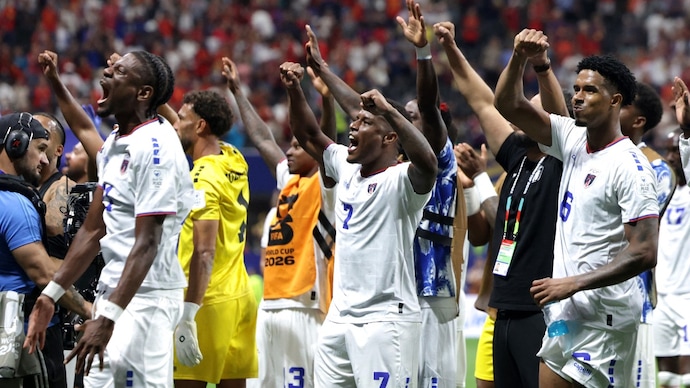
When Cape Verde stepped onto the field against European champions Spain in its first-ever FIFA World Cup match, the occasion marked a historic milestone for the island nation. The match ended in a 0-0 draw, providing one of the notable results of the opening stages of the 2026 FIFA World Cup.
For Cape Verde, officially known as Cabo Verde, participation in the tournament represents a significant achievement. The Atlantic archipelago of ten volcanic islands, located off the coast of West Africa, has a population of approximately 600,000 people, making it one of the smallest nations to qualify for a FIFA World Cup.
A key figure in the team’s progress has been head coach Pedro “Bubista” Brito. A former Cape Verde international, Bubista took charge of the national team in 2020 and guided the Blue Sharks to their first-ever World Cup qualification. Under his leadership, the team has developed a reputation for tactical organization and defensive discipline.
Cape Verde’s national team also reflects the country’s extensive global diaspora. Large Cape Verdean communities reside in countries including Portugal, France, the Netherlands, Luxembourg, the United States and Ireland. Several members of the national squad were born abroad but chose to represent their ancestral homeland at the international level.
One such player is defender Roberto “Pico” Lopes. Born and raised in Ireland, Lopes became eligible to represent Cape Verde through his family heritage. His path to international football attracted attention after he revealed that an initial approach from the Cape Verde Football Association arrived through LinkedIn, a message he initially ignored before later accepting the opportunity to represent the country.
Against Spain, Lopes played an important role in Cape Verde’s defensive effort, helping the team maintain its structure against one of Europe’s strongest sides.
Right-back Diney Borges also contributed significantly, assisting in limiting Spain’s attacking opportunities while supporting the team’s defensive organization throughout the match.
The standout performer for Cape Verde was goalkeeper Vozinha. At 40 years old, he entered the tournament as one of its most experienced players and produced a series of important saves against Spain. His performance earned him the Player of the Match award.
Following the game, Vozinha spoke about his personal journey and the sacrifices made by his family during his football career. He also noted that his mother was unable to attend the match because travel arrangements could not be completed in time.
Tactically, Cape Verde adopted a compact defensive approach against Spain. The team focused on maintaining organization between its defensive and midfield lines while limiting space in central areas. Although Spain enjoyed the majority of possession, Cape Verde’s disciplined structure helped restrict clear scoring opportunities.
The result represented a positive start to Cape Verde’s World Cup campaign and highlighted the team’s preparation and organization. While Spain controlled much of the ball, Cape Verde successfully implemented its game plan and secured a valuable point.
Regardless of its progress in the remainder of the tournament, Cape Verde’s participation in the 2026 FIFA World Cup marks an important chapter in the nation’s football history. The team’s qualification and performance on the global stage reflect the continued growth of football in the country and among Cape Verdean communities around the world.