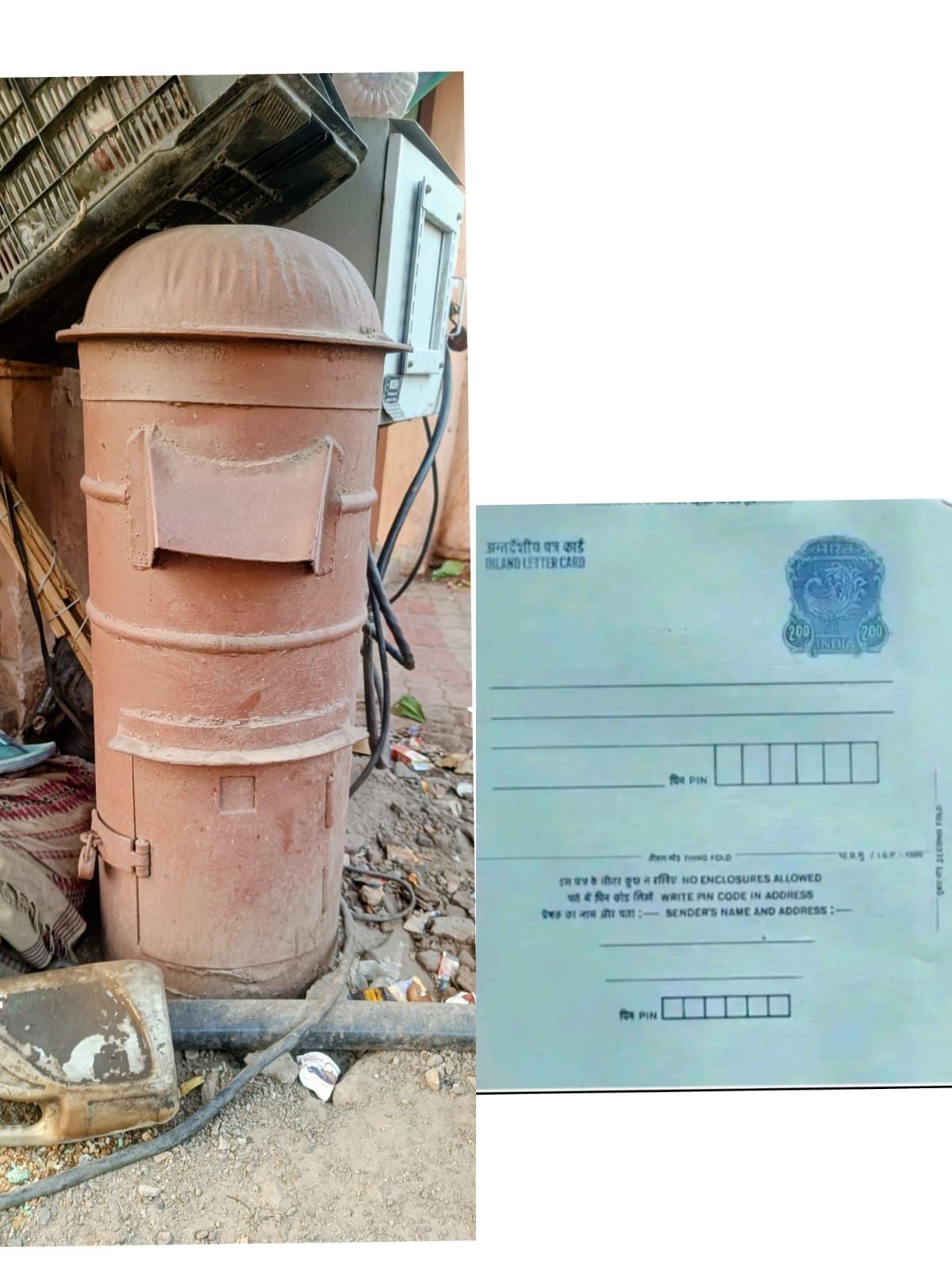
Lucknow: Once celebrated for its culture, etiquette, and literary traditions, Lucknow continues to preserve reminders of its rich past despite rapid modernization. One such reminder stands quietly at the historic Qaiserbagh roundabout — an old letter box that has witnessed decades of social and cultural change.
The letter box, still standing at its original location, serves as a symbol of an era when handwritten correspondence played a central role in daily life. For generations, letters were not merely a means of communication but also a medium through which families shared news, emotions, and personal milestones.
In those days, letters often began with traditional greetings and gradually unfolded into detailed accounts of family well-being, agricultural activities, celebrations, and challenges. News of engagements, marriages, employment opportunities, births, and bereavements frequently traveled through the postal system, connecting people across cities and villages.
Blue inland letters and postcards carried messages of affection, encouragement, and hope. Families eagerly awaited correspondence from loved ones living far away, while newly married brides and parents often treasured every letter they received. For families of soldiers serving at distant borders, letters remained an important link with their loved ones.
Over time, advances in technology have transformed communication. Mobile phones, instant messaging applications, and social media platforms have significantly reduced dependence on traditional postal correspondence. As a result, many public letter boxes that once formed an essential part of community life have become less prominent.
Yet, structures such as the Qaiserbagh letter box continue to evoke memories for many residents who remember the era of handwritten communication. For some, these reminders of the past represent a connection to personal experiences and social traditions that shaped everyday life.
The article’s author and other residents who value the city’s heritage have appealed for the preservation of historic postal infrastructure. They argue that old letter boxes can serve as tangible reminders of India’s communication history and the role the postal service played in connecting communities.
The contribution of postmen, affectionately known in many regions as “Dakiya Mama” or “Dakiya Chacha,” also remains an important part of this history. Beyond delivering letters, postal workers often assisted people who could not read or write by helping them understand correspondence and prepare replies.
As India continues to modernize, heritage structures associated with earlier forms of communication offer an opportunity to preserve and showcase aspects of the nation’s social history. Supporters of conservation efforts believe that future generations can benefit from understanding how communication evolved long before the digital age.
The old letter box at Qaiserbagh may no longer handle the volume of correspondence it once did, but it remains a visible reminder of a time when messages carried not only information, but also personal connections and shared experiences.