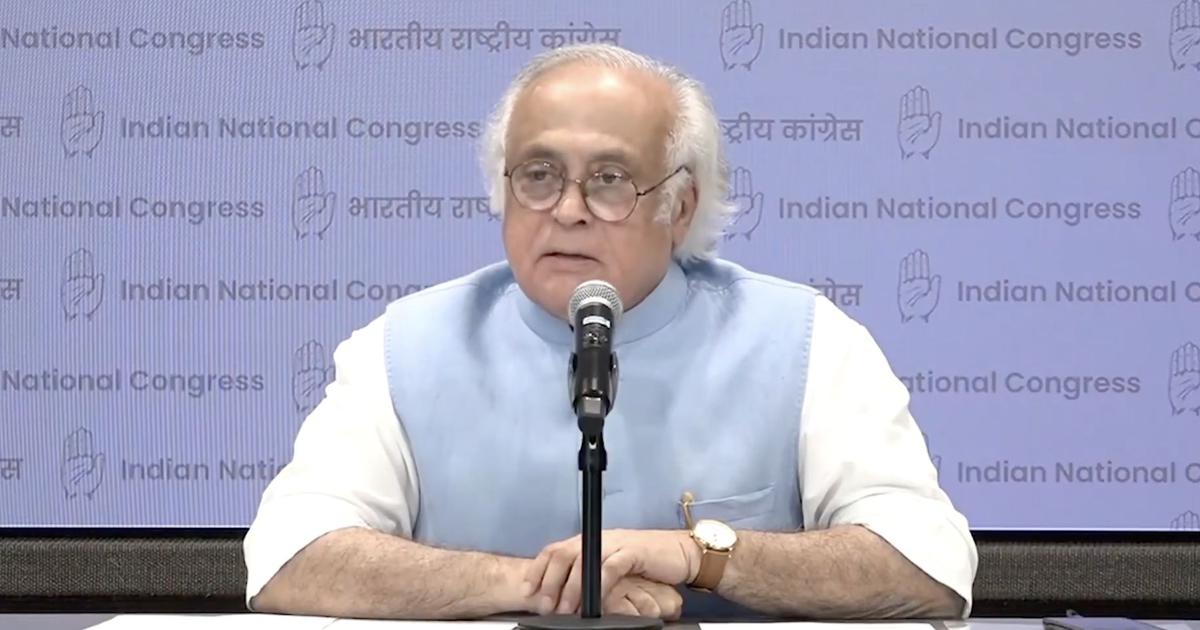
The Congress party has criticized the Indian government’s foreign policy following Pakistan’s involvement in facilitating the latest round of talks between the United States and Iran, labeling it a “monumental setback” for Prime Minister Narendra Modi’s administration. Jairam Ramesh, a prominent leader in the Congress party, expressed his concerns through a social media post, suggesting that the Modi government needs to completely revamp its diplomatic strategies, which he believes are currently inadequate.
This statement comes on the heels of a significant announcement from U.S. President Donald Trump, who revealed that a U.S. delegation was scheduled to arrive in Islamabad for discussions with Iranian representatives. However, in a twist, Iran has since declared that it will not participate in these talks, casting uncertainty over the negotiations aimed at de-escalating tensions in the region.
The backdrop of these developments is a fragile peace process that had seen the U.S. and Iran agreeing to a temporary ceasefire on April 8 to facilitate dialogue. Unfortunately, those discussions broke down just days later on April 12, raising questions about the viability of future negotiations. Ramesh underscored that despite its current economic challenges, Pakistan has managed to position itself as a key player in West Asian diplomacy, a feat that he believes highlights the shortcomings of Modi’s foreign policy.
In his remarks, Ramesh emphasized that the Modi administration’s approach to regional and global diplomacy has failed to isolate Pakistan, which he claims has gained newfound legitimacy on the international stage. He pointed out that the Pakistani military leadership has been instrumental in this diplomatic maneuvering, further complicating India’s foreign relations strategy. As the Congress party scrutinizes Modi’s foreign policy, it calls for a more effective and proactive diplomatic approach that can address the evolving geopolitical landscape.
The Congress party’s criticism raises broader questions about India’s role in regional politics and the effectiveness of its diplomatic efforts. As situations in West Asia continue to unfold, the impact of India’s foreign policy will be closely monitored, not just by domestic stakeholders but also by international observers.