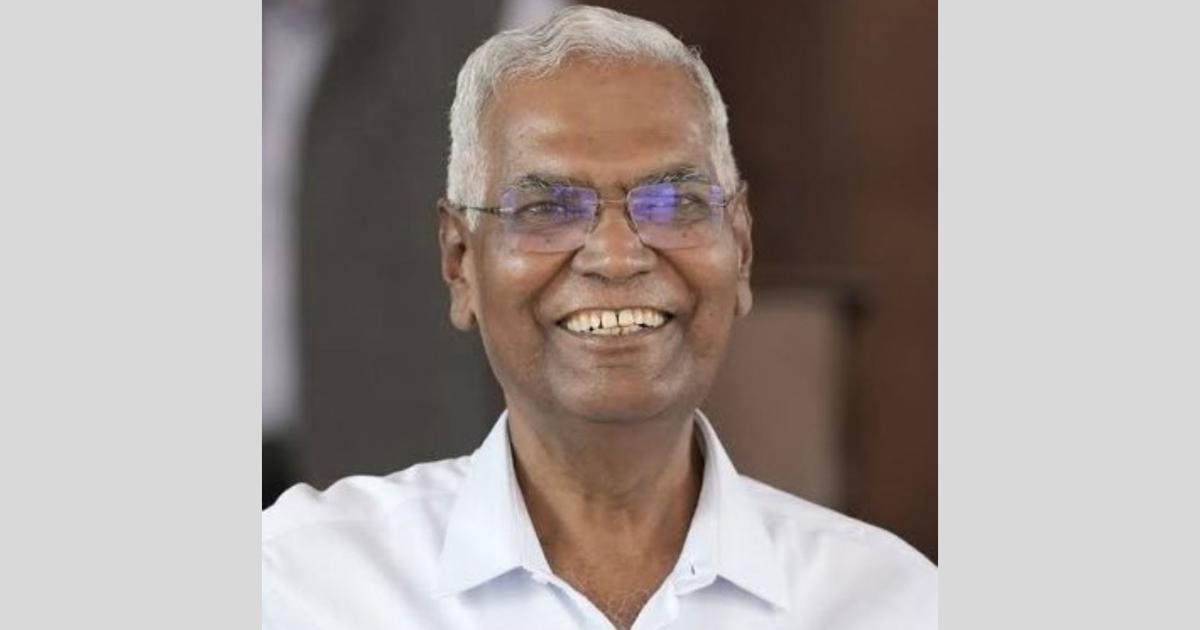
In a significant political maneuver, D. Raja, a prominent leader of the Communist Party of India (CPI), has urged Tamil Nadu Governor Rajendra Arlekar to invite the Tamilaga Vettri Kazhagam (TVK), led by actor-turned-politician Vijay, to form the government. His appeal comes as the TVK emerged as the single-largest party in the recent Tamil Nadu Assembly elections, winning 108 seats, albeit falling short of the majority threshold required to govern.
The governor’s reluctance to accept Vijay’s proposal to assume power has stirred considerable debate. Reportedly, Arlekar has indicated that he will only entertain the TVK’s request to form a government once it can demonstrate the backing of 118 MLAs, the majority needed in the 234-member Assembly. This condition places pressure on the TVK, which, despite its success in the elections, lacks the necessary support to secure a parliamentary majority.
The recent elections have illustrated a shifting landscape in Tamil Nadu’s political sphere. The Congress party, which secured five seats, has publicly pledged its support for Vijay’s TVK, yet even this alliance does not bridge the gap to the majority mark. Moreover, another minor party, the Vidhuthalai Chiruthaigal Katchi (VCK), led by Thol Thirumavalavan, has also been approached for support. However, the VCK leader has not confirmed whether his party will join forces with the TVK.
The stakes are high as the current Assembly’s tenure concludes on Saturday, creating a pressing timeline for the TVK to solidify its position. The political drama unfolds against a backdrop of increasing public interest in Vijay’s foray into politics, as well as the evolving dynamics of coalitions in Tamil Nadu’s vibrant political mosaic.
As the situation develops, all eyes remain on the governor’s next moves and the potential for the TVK to navigate the turbulent waters of coalition politics. With the Assembly’s term ending, the urgency for clarity and direction in Tamil Nadu’s governance becomes paramount.