Culinary Controversy: President Murmu’s Banquet for Vietnam Leader Sparks Online Backlash
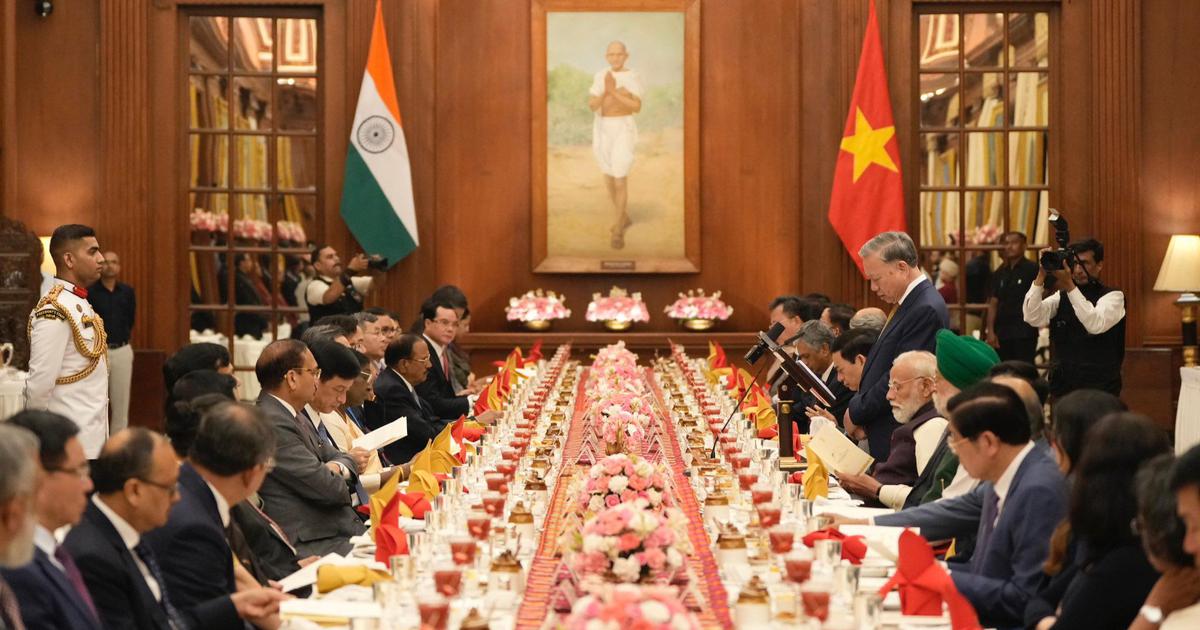
The recent state banquet hosted by President Droupadi Murmu in honor of Vietnamese President Tô Lâm has ignited a flurry of memes and jokes across social media platforms. The event, meant to showcase India’s hospitality, instead drew criticism for its menu, which many deemed lackluster and uninspired.
Guests at the banquet were served a selection that included stuffed broccoli—dubbed ‘Vilayti Gobi’—stir-fried carrots, peas, and even bajra khichdi, a traditional millet dish. However, what raised eyebrows was the complete absence of non-vegetarian dishes and the peculiar choice of “edible oil” as a standout item on the menu.
Such culinary choices have not gone unnoticed, with social media users expressing their amusement and disbelief. Notable columnist Rajyasree Sen took to Twitter to voice her disapproval, describing the menu as “utterly unimaginative,” and remarked on the irony of serving such simple fare to the leader of a nation renowned for its vibrant dining culture. Her sentiments were echoed by many who felt that the banquet did not reflect the rich diversity of Indian cuisine.
In a country like Vietnam, where food culture is deeply embedded in the daily lives of its people, the absence of meat and more exotic flavors was seen as a missed opportunity for cultural exchange. Other users joined the conversation, commenting on the presence of dishes like “matar wale chawal,” or rice with peas—a staple that, while comforting, lacks the innovation often expected at a state dinner.
The juxtaposition of the banquet’s menu against the backdrop of Indian culinary prowess highlights an ongoing dialogue about food, culture, and the importance of representation on the world stage. While many found humor in the situation, it also raises questions about the consideration of cultural nuances when hosting international dignitaries.
With the internet buzzing, this incident is likely to resonate well beyond the initial jokes. It illustrates not only the expectations surrounding state events but also the broader conversation about how India presents itself to the world, particularly through its rich gastronomic heritage.