Daryaganj Sunday Book Market: A Lifeline for Delhi’s Students Amid Educational Challenges
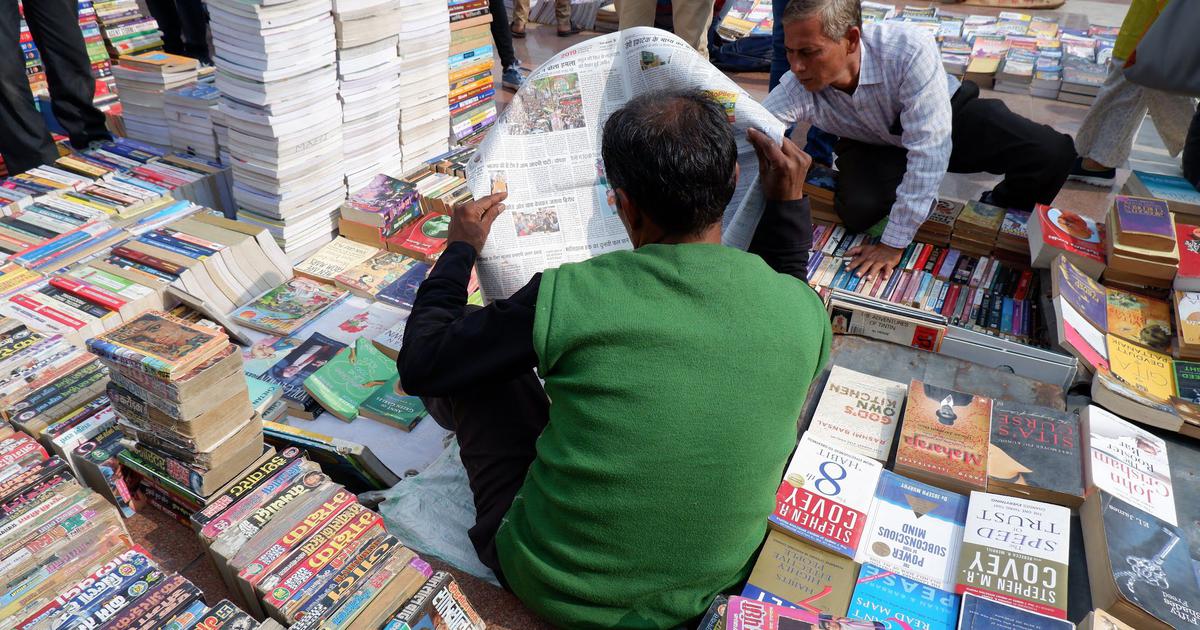
The Daryaganj Sunday Book Market has become a vital hub for students in Delhi, functioning as an invaluable resource for the city’s ever-growing student population. This weekly bazaar attracts not only undergraduates from prominent institutions like Delhi University, Jamia Millia Islamia, and Ambedkar University but also schoolchildren and young adults attending various coaching centers across the National Capital Region.
According to recent UDISE+ 2024-25 statistics, Delhi boasts over 5,556 schools, catering to approximately 4.49 million students enrolled in government, aided, and private educational institutions. For the academic year 2025-26, Delhi University alone welcomed around 72,000 undergraduate students across its 69 colleges and 79 programs. When factoring in postgraduate candidates and those from other universities and standalone colleges, this number swells significantly. Such figures emphasize not just the scale of education in the city but also its fiercely competitive nature, which is shaped by chronic underfunding, disparities in infrastructure, and an unyielding promise of advancement through educational credentials.
In this challenging landscape, where public support is dwindling and private educational costs are skyrocketing, the Daryaganj Book Market serves as an unofficial welfare infrastructure. Offering affordable textbooks, study materials, and a range of other educational resources, it fills the void left by the shortcomings of formal educational systems. Many students find themselves navigating a complex maze of options, spending hours searching for the right books at prices they can afford. This market not only provides essential resources but also fosters a sense of community among students from various backgrounds, allowing them to connect and share experiences.
Moreover, the popularity of the market reflects the broader educational ecosystem in Delhi, where thousands of coaching centers are clustered in areas like Mukherjee Nagar, Rajinder Nagar, Laxmi Nagar, and Karol Bagh. These centers offer specialized training for competitive exams, often perceived as a necessary step for upward mobility amid a saturated job market. Consequently, the Daryaganj Book Market complements these centers by providing the necessary study materials, further entrenching its role as an essential educational resource.
As Delhi’s educational landscape continues to evolve, the Daryaganj Sunday Book Market stands out as a beacon of hope for students grappling with the pressures of a demanding academic environment. By bridging the gap between public educational support and private educational expenses, it not only sustains the aspirations of countless young minds but also embodies the resilience and resourcefulness inherent in the city’s student community.