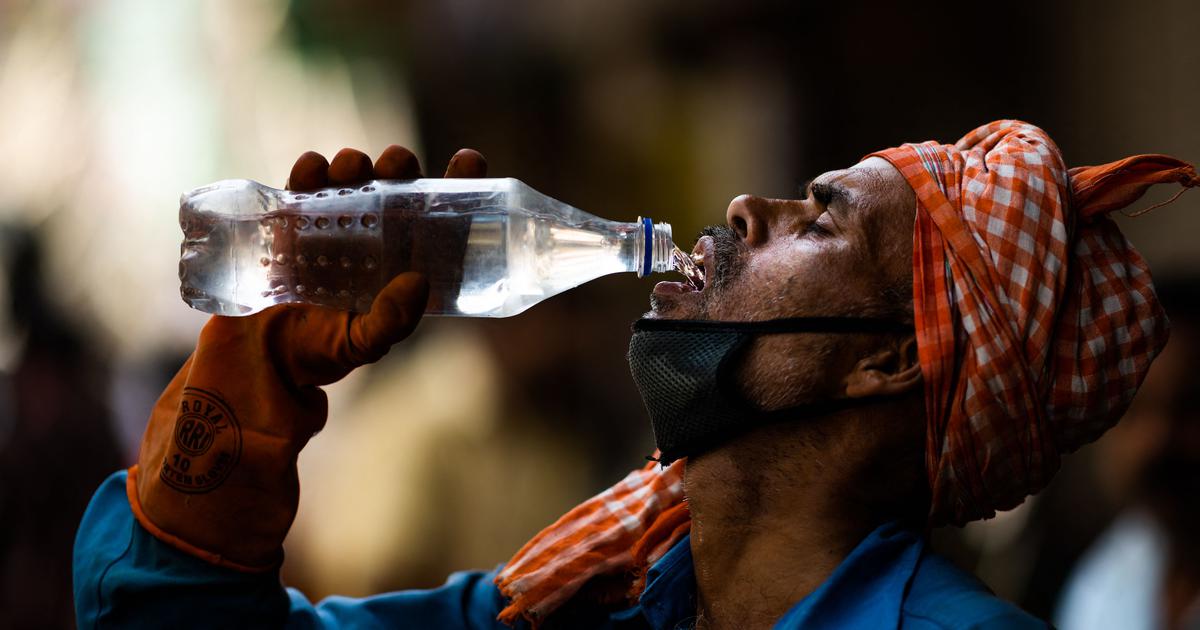
The India Meteorological Department (IMD) has issued a stern warning regarding impending heatwave conditions affecting northwest and central regions of India over the next three days. The situation has grown dire, with temperatures in the national capital, Delhi, soaring past 44 degrees Celsius, prompting concerns about public health and safety.
As summer intensifies, Delhi’s weather is expected to present a mix of partly cloudy skies, but this does little to mitigate the rising temperatures. The IMD has placed the city under an orange alert, signaling that citizens should brace for extreme weather. An orange alert suggests that local authorities should be proactive in preparing for severe conditions and implementing necessary precautions to safeguard the populace.
On Sunday morning, Delhi recorded a sweltering minimum temperature of 26.2 degrees Celsius, accompanied by a relative humidity of 43%. Such high humidity levels can exacerbate the discomfort, making it feel even hotter than the actual temperature. This combination of heat and humidity poses significant health risks, especially for vulnerable groups such as the elderly and those with pre-existing health conditions.
Moreover, the heatwave’s effects are not confined to the capital. In neighboring Uttar Pradesh, several regions have reported similarly alarming temperatures. Banda, for instance, has become one of the hottest locales in India, with the mercury reaching an astonishing 47 degrees Celsius on both Saturday and Sunday. The IMD data indicates that many districts in Uttar Pradesh are experiencing maximum temperatures exceeding 42 degrees Celsius, marking a severe heat episode across the state.
In the face of this blistering heat, it is crucial for residents to take precautions. Staying hydrated, avoiding outdoor activities during peak sun hours, and finding shaded or air-conditioned spaces can significantly mitigate the risks associated with extreme temperatures. Public health agencies are urging individuals to remain vigilant and to heed weather advisories to prevent heat-related illnesses. As India continues to grapple with the challenges posed by climate change, such extreme weather events may become more frequent, underscoring the need for sustainable strategies to adapt to these conditions.