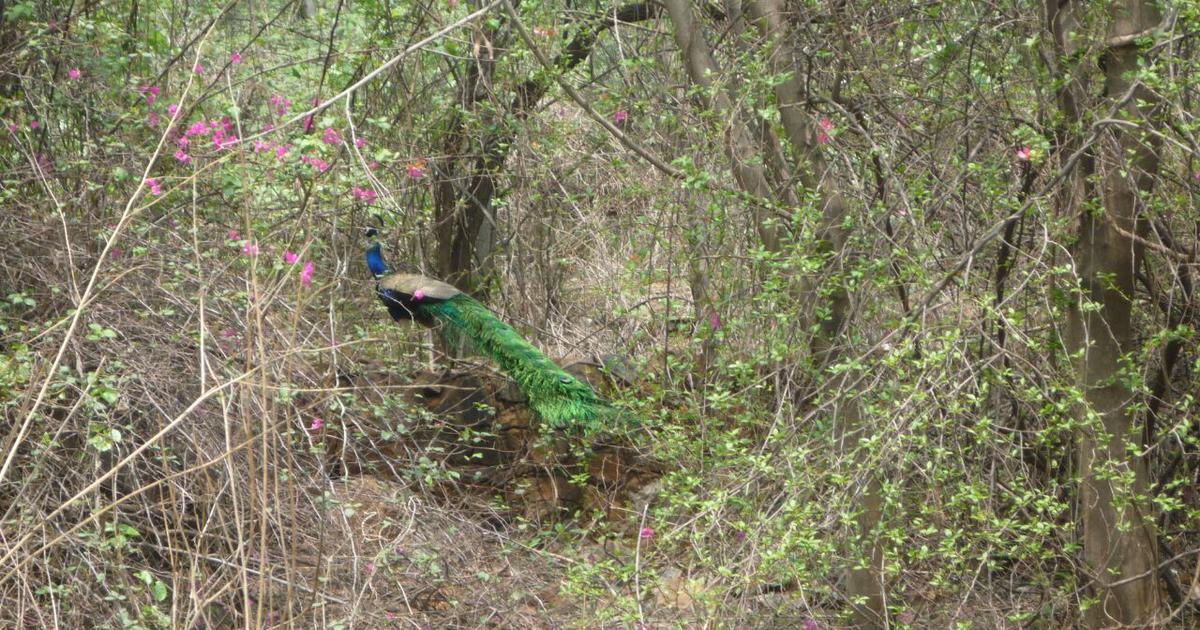
In a striking turn of events, the Central Ridge in Delhi, a historically rich forest area, is undergoing what some are calling a misguided “restoration” project. Heavy machinery has invaded this delicate ecosystem, leaving behind a stark landscape of uprooted trees and disturbed soil. Piles of fallen logs and demolished termite mounds serve as a grim reminder of the area’s ecological heritage, once thriving under the shelter of the Aravalli Hills.
Situated in the heart of Lutyen’s Delhi, the Central Ridge spans approximately 864 hectares, characterized by its rolling hills, rocky terrain, and diverse dry forests. This area has significant historical importance; during the Indian Uprising of 1857, it was stripped bare to accommodate British military encampments. Post-colonization, efforts were made to reforest the area, leading to the introduction of the invasive Vilayati Kikar (Prosopis juliflora) in 1914, which has since taken over the native flora.
These new developments have sparked outrage among environmentalists and local communities alike. Ironically, the Delhi Forest Department, an agency tasked with the protection of forests, is the institution behind this controversial project. Critics argue that instead of fostering genuine ecological restoration, the current efforts have resulted in significant damage to the local ecosystem, further pushing native species to the brink of extinction.
The Central Ridge, once a sanctuary for diverse wildlife, is now facing the grim prospect of becoming a mere urban park. This situation raises critical questions about the management of Delhi’s green spaces and the balance between urban development and ecological preservation. The implications are far-reaching, affecting not only local biodiversity but also the overall environmental health of the metropolis.
As the community watches this transformation unfold, many are calling for a reconsideration of the project. A genuine restoration should prioritize the revival of native species, rather than the planting of saplings in rows, which can result in a superficial landscape devoid of ecological integrity. The discussions around the Central Ridge’s fate highlight a broader challenge—how to harmoniously blend urban life with nature, preserving the rich history and biodiversity that once flourished here.