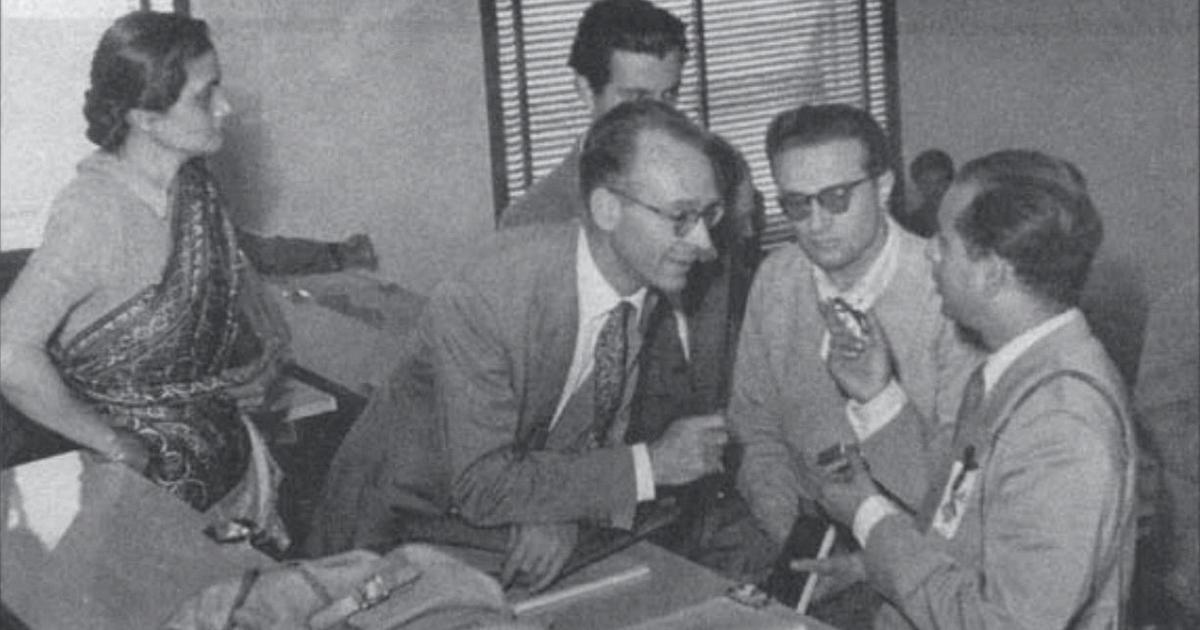
In a thought-provoking new play, audiences are invited to delve into the life of Bibha Chowdhuri, India’s first woman particle physicist, as she fights against the societal prejudices and challenges of her time. The narrative unfolds with Bibha reflecting on her early aspirations of becoming a scientist, a dream ignited by the inspiring tales of pioneering figures in Indian science.
At just nine years old, Bibha’s father introduced her to the remarkable story of Acharya Jagadish Chandra Bose, the first modern Indian scientist who emerged from a long period of colonial subjugation. In 1900, Bose captivated audiences at the Royal Institution in London by demonstrating the practical implications of electromagnetic waves, a concept theorized by James Clerk Maxwell decades earlier. This pivotal moment underscored the power of science and instilled in Bibha a longing to follow in the footsteps of such luminaries.
As she navigates her career in a male-dominated field, Bibha draws inspiration from other titans of Indian science, such as Satyendra Nath Bose, who collaborated with Albert Einstein on groundbreaking theories regarding photons. Her admiration for Meghnad Saha, whose equations helped decode the mysteries of the sun, further fueled her ambition. These figures represent not only academic brilliance but also resilience against the odds, reflecting the struggles that women in science continue to face.
The play poignantly addresses the systemic challenges that Bibha encounters as she strives for recognition and equality in her field. Her journey is emblematic of the broader fight for gender equality within the scientific community and society at large. It challenges audiences to reflect on their perceptions of women in science and the often-unacknowledged contributions of female scientists throughout history.
As the narrative unfolds, the character of Debendra Mohan Bose, another prominent scientist and Bibha’s uncle, enters the stage, bringing with him a wealth of history and familial pride. He represents both a connection to the illustrious past of Indian science and the weight of expectations that come with such a legacy. The interplay between Bibha and her uncle illustrates the generational impact of scientific inquiry and the often complex relationships that shape personal ambition.
This engaging portrayal of Bibha Chowdhuri is not just a tribute to her legacy but a call to action for contemporary society. It highlights the critical need for inclusive representation in STEM fields and serves as a reminder of the ongoing struggle against gender biases. As audiences witness Bibha’s determination, they are compelled to reconsider the narratives around women in science and the importance of fostering an environment where all scientists, regardless of gender, can thrive.