Supreme Court Dismisses Congress Leader’s Challenge Against Rajya Sabha Nomination Rejection
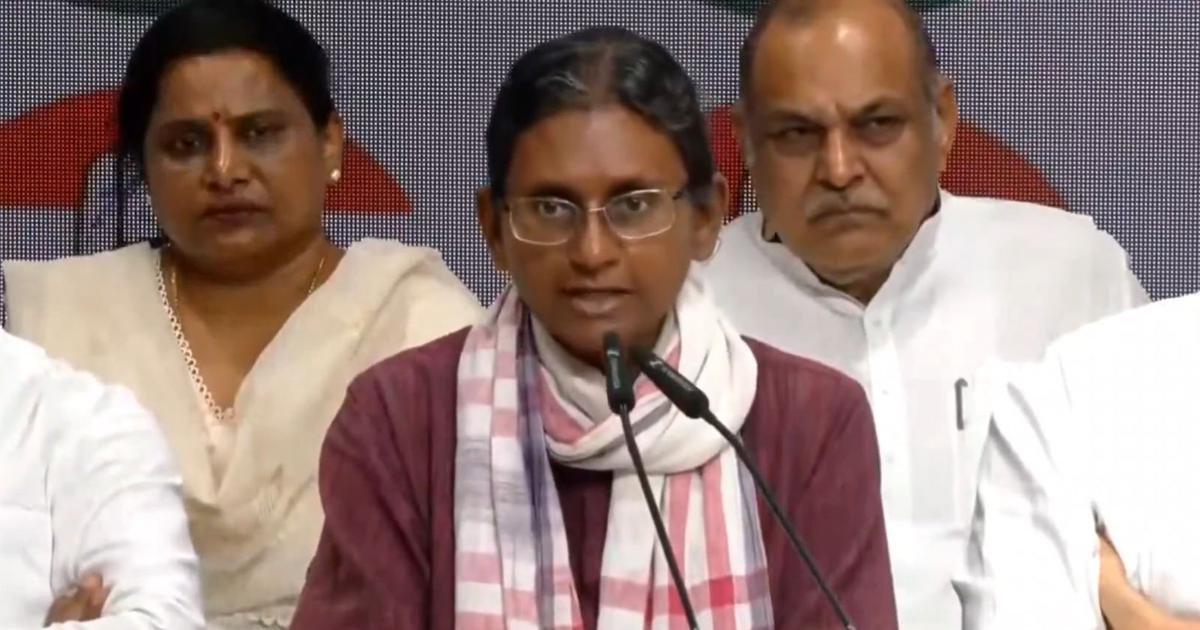
In a significant ruling on Friday, the Supreme Court of India opted not to entertain a petition filed by Congress leader Meenakshi Natarajan, who sought to contest the rejection of her nomination for the upcoming Rajya Sabha elections in Madhya Pradesh. The bench, consisting of Justices Prashant Kumar Mishra and AS Chandurkar, cited Article 329 of the Indian Constitution, which restricts judicial interference in electoral matters.
Article 329 explicitly stipulates that any electoral disputes concerning Parliament can only be addressed through an election petition, thereby limiting the scope of judicial review in such matters. The Supreme Court’s decision highlighted its reluctance to step into the political arena, affirming the constitutional boundaries that govern election processes in India.
While the bench dismissed Natarajan’s plea under its writ jurisdiction, it allowed her the option to file an election petition, leaving the door open for future legal recourse. However, the justices clarified that their ruling was not a commentary on the merits of her case, which revolves around the rejection of her nomination on grounds laid out by the Bharatiya Janata Party (BJP). The BJP claimed that Natarajan had failed to disclose crucial information, prompting the dismissal of her candidacy.
Natarajan was the sole candidate representing the Congress party for the Rajya Sabha elections scheduled for June 18. The rejection of her nomination underscores the intense political rivalry in Madhya Pradesh, with both major political parties vying for dominance in the upper house. This incident has sparked discussions about the integrity and transparency of the electoral process, particularly regarding the criteria used to evaluate nominations.
During the hearing, Natarajan had argued that the invocation of writ jurisdiction was warranted due to “glaring and manifest” errors in the rejection process. However, the Supreme Court maintained that such a reading would misinterpret the provisions set forth in Article 329, which clearly delineates the scope of judicial authority in electoral matters. The court further emphasized that Article 32, which allows citizens to approach the Supreme Court to protect their fundamental rights, could not be applied in this situation.
The political landscape in Madhya Pradesh is charged with anticipation as the Rajya Sabha elections approach, and this development adds another layer of complexity to the ongoing battle between the Congress and the BJP. As both parties prepare for the elections, the focus will likely remain on the legal implications of this ruling and its potential impact on future electoral contests.