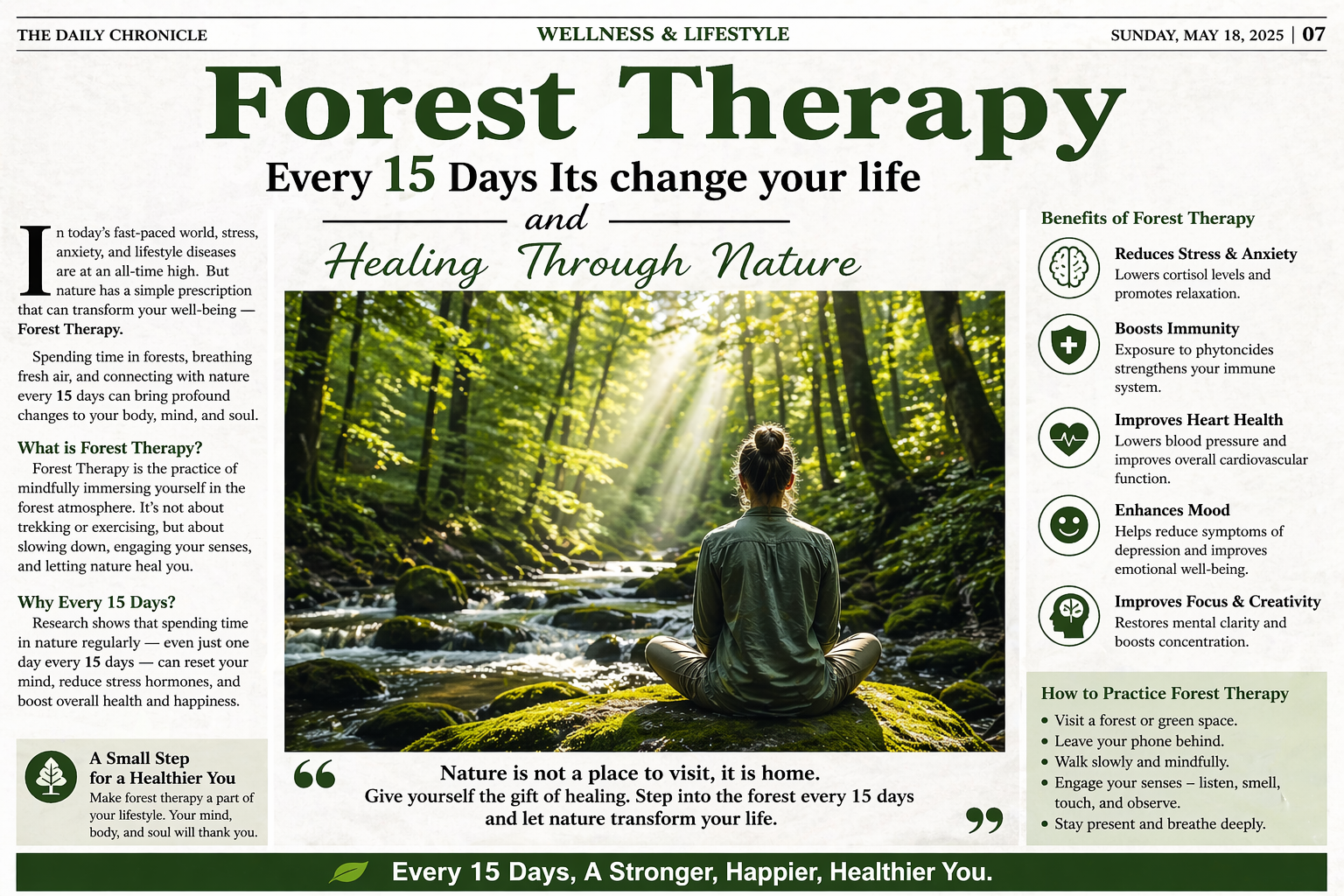
Forest Therapy: Healing Through Nature
In a world increasingly dominated by screens, noise, and relentless schedules, the idea of stepping into a forest for healing may seem almost too simple. Yet, forest therapy—also known as “forest bathing”—is gaining global recognition as a powerful method to restore mental clarity, emotional balance, and physical health. Rooted in ancient traditions and supported by modern science, forest therapy offers a natural antidote to the pressures of modern life.
What Is Forest Therapy?
Forest therapy is the practice of immersing oneself in a natural forest environment with mindful awareness. It is not about hiking, exercising, or achieving a destination. Instead, it focuses on slowing down, engaging the senses, and forming a deep connection with nature. The concept originated in Japan in the 1980s as Shinrin-yoku, which translates to “taking in the forest atmosphere.”
Unlike a regular walk in the park, forest therapy is intentional. Participants are encouraged to notice the sound of leaves rustling, the scent of soil after rain, the patterns of sunlight filtering through branches, and even the subtle textures of bark and moss. This mindful engagement creates a calming effect on the nervous system.
The Science Behind Forest Therapy
Over the past few decades, researchers have explored how time spent in forests impacts human health. The findings are compelling.
Trees release natural compounds called phytoncides—essential oils that help protect them from insects and disease. When humans inhale these compounds, studies suggest they may boost immune function by increasing natural killer (NK) cell activity, which plays a role in fighting infections and even cancer cells.
Forest environments also reduce cortisol levels—the hormone associated with stress. People who spend time in forests often experience lower blood pressure, reduced heart rate, and improved mood. Compared to urban environments, forests provide a sensory experience that is softer, more harmonious, and less overwhelming.
Moreover, exposure to green spaces has been linked to improved mental health. It can help reduce symptoms of anxiety, depression, and fatigue. For individuals facing burnout or emotional stress, forest therapy offers a gentle, non-invasive form of healing.
Mental and Emotional Benefits
One of the most immediate effects of forest therapy is a sense of calm. The natural environment encourages mindfulness, allowing individuals to step away from constant mental chatter and reconnect with the present moment.
This practice also enhances creativity and focus. Studies have shown that spending time in nature can improve cognitive function and problem-solving abilities. When the brain is not overloaded with artificial stimuli, it has the space to reset and operate more efficiently.
Emotionally, forests provide a sense of grounding. Many people report feeling more connected—not only to nature but also to themselves. This connection can foster a deeper understanding of one’s thoughts, feelings, and purpose.
Physical Health Benefits
Beyond mental well-being, forest therapy contributes to physical health in several ways:
Boosts immunity: Exposure to phytoncides enhances immune response.
Improves cardiovascular health: Lower blood pressure and heart rate reduce strain on the heart.
Enhances sleep quality: Natural light cycles and reduced stress promote better sleep.
Encourages gentle movement: Walking slowly through a forest supports joint health and mobility without intense strain.
Even short sessions—around 20 to 30 minutes—can yield noticeable benefits.
Forest Therapy in Modern Life
As urbanization continues to grow, access to forests may seem limited. However, forest therapy does not require dense wilderness. Even a small park, garden, or tree-lined area can provide similar benefits if approached mindfully.
Cities around the world are beginning to recognize the importance of green spaces. Urban planners are incorporating parks and tree corridors into city designs to improve public health. In countries like Japan and South Korea, forest therapy is even prescribed as part of preventive healthcare.
For individuals in busy cities like Mumbai, finding a quiet green space—such as a botanical garden or nature reserve—can serve as a starting point. The key is not the size of the forest but the quality of attention you bring to the experience.
How to Practice Forest Therapy
Forest therapy is simple and accessible. Here are some practical steps to begin:
Choose a natural setting: A forest, park, or garden with trees is ideal.
Slow down: Walk at a relaxed pace without a specific goal.
Engage your senses:
Listen to birds, wind, and natural sounds.
Observe colors, shapes, and movements.
Smell the air, leaves, and soil.
Touch tree bark or leaves gently.
Disconnect from technology: Avoid phones or distractions.
Breathe deeply: Take slow, mindful breaths to absorb the environment.
Stay present: Let go of worries and focus on the moment.
Even practicing once or twice a week can lead to noticeable improvements in well-being.
Cultural and Spiritual Dimensions
Forest therapy is not just a modern wellness trend—it has deep roots in cultural and spiritual traditions. Many ancient civilizations viewed forests as sacred spaces. In Hindu philosophy, forests (known as Van) were places of meditation and spiritual learning. Similarly, indigenous cultures around the world have long recognized the healing power of nature.
Spending time in forests can evoke a sense of humility and awe. The vastness and complexity of nature remind us of our place within a larger ecosystem. This perspective can be deeply comforting, especially in times of uncertainty.
Challenges and Considerations
While forest therapy is highly beneficial, it is not a replacement for medical treatment when needed. It should be seen as a complementary practice that supports overall health.
Additionally, accessibility can be a challenge for some individuals due to location, mobility, or time constraints. However, even small steps—such as spending time near trees or incorporating plants into indoor spaces—can provide partial benefits.
The Future of Forest Therapy
As awareness grows, forest therapy is becoming part of global wellness programs. Guided forest therapy sessions, eco-retreats, and nature-based therapies are gaining popularity. Healthcare systems are also beginning to explore “nature prescriptions” as a preventive measure.
With increasing concerns about mental health, climate change, and urban stress, forest therapy offers a sustainable and accessible solution. It encourages people not only to heal themselves but also to develop a deeper appreciation for the environment.
Conclusion
Forest therapy is a powerful reminder that healing does not always require complex solutions. Sometimes, the answer lies in reconnecting with what is natural, simple, and timeless. By stepping into a forest and allowing ourselves to slow down, we open the door to physical rejuvenation, mental clarity, and emotional peace.
In a fast-paced world, the forest invites us to pause, breathe, and remember that we are part of nature—not separate from it. And in that connection, true healing begins.