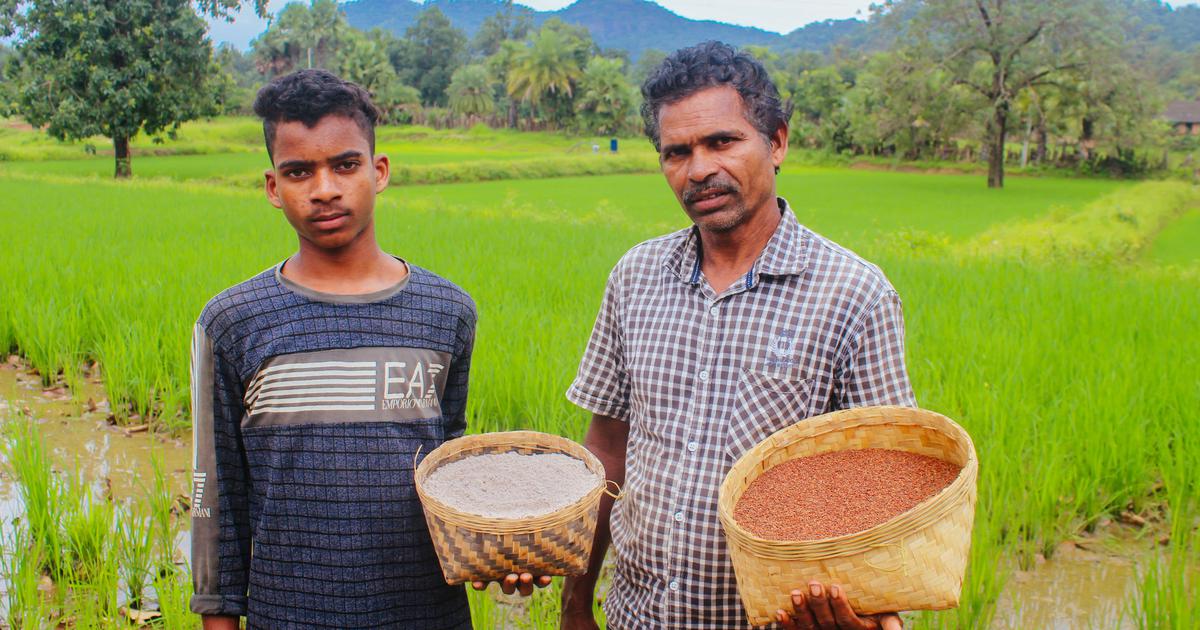
As dawn breaks over the Gonasika Hills in Odisha’s Keonjhar district, Parmedhenu Juang, a dedicated 54-year-old farmer, is already tending to his fields. It’s the early monsoon season in June, and Juang is carefully inspecting his ragi, a traditional grain, letting it slip through his fingers as he evaluates its color, weight, and shape.
“Desi bihana are like living entities,” Juang explains, using the Odia term for traditional seeds. He believes that these seeds require nurturing to thrive, stating, “If cared for, they remain resilient; if neglected, they gradually fade away.” This ethos reflects a profound respect for the land and its bounty, a sentiment shared by many in his community.
In Iruda village, the Juang family, part of one of Odisha’s Particularly Vulnerable Tribal Groups, has been the custodian of traditional seed varieties for generations. These seeds include finger millet, sorghum, little millet, pearl millet, black gram, cowpeas, green gram, and several types of paddy. Historically, these crops have played a crucial role in the subsistence of the Adivasi populations, but they now face the threat of extinction.
The transformation of India’s agricultural landscape during the Green Revolution heralded a shift toward high-yielding hybrid seeds and chemical-intensive farming methods, primarily focused on staples like wheat and rice. This shift has marginalized diverse seed varieties, particularly those cultivated outside of government procurement schemes. The result? Many indigenous seeds, once vital to local diets and cultures, are now being forgotten.
Yet, the Adivasi communities continue to preserve heirloom varieties that have been adapted over centuries to local conditions, including rainfall patterns, soil types, and regional food practices. For instance, the para dhan, a resilient paddy variety, matures in just 60 days and is well-suited to regions prone to water scarcity. Such seeds are not merely agricultural products; they embody the history and resilience of communities who have cultivated them.
The ongoing efforts of farmers like Juang are critical not just for maintaining biodiversity but also for ensuring food security in the face of climate change. As weather patterns become increasingly unpredictable, the resilience embedded within these traditional seeds could offer a solution to contemporary agricultural challenges. By preserving these varieties, the Adivasi farmers of Odisha are not only safeguarding their heritage but also contributing to a sustainable future.
In recent years, awareness about the importance of traditional seeds has grown among various stakeholders, including non-governmental organizations, agricultural scientists, and policymakers. Initiatives aimed at reviving interest in indigenous farming practices are gaining momentum, highlighting the need for conservation and sustainable agriculture. These efforts seek to educate both farmers and consumers about the nutritional and environmental benefits of diverse crops.
However, challenges remain. Many Adivasi farmers face economic pressures to adopt hybrid seeds and chemical fertilizers, which promise higher yields but come at a cost to the environment and traditional farming knowledge. The struggle to maintain their ancestral practices amid these pressures is a testament to their resilience and commitment to cultural preservation.
In a world increasingly dominated by industrial agriculture, the story of Parmedhenu Juang and his fellow farmers serves as a reminder of the vital connection between agriculture, culture, and identity. Their dedication to preserving traditional seeds is not just about farming; it is about safeguarding a way of life that honors the wisdom of generations past while cultivating hope for the future.