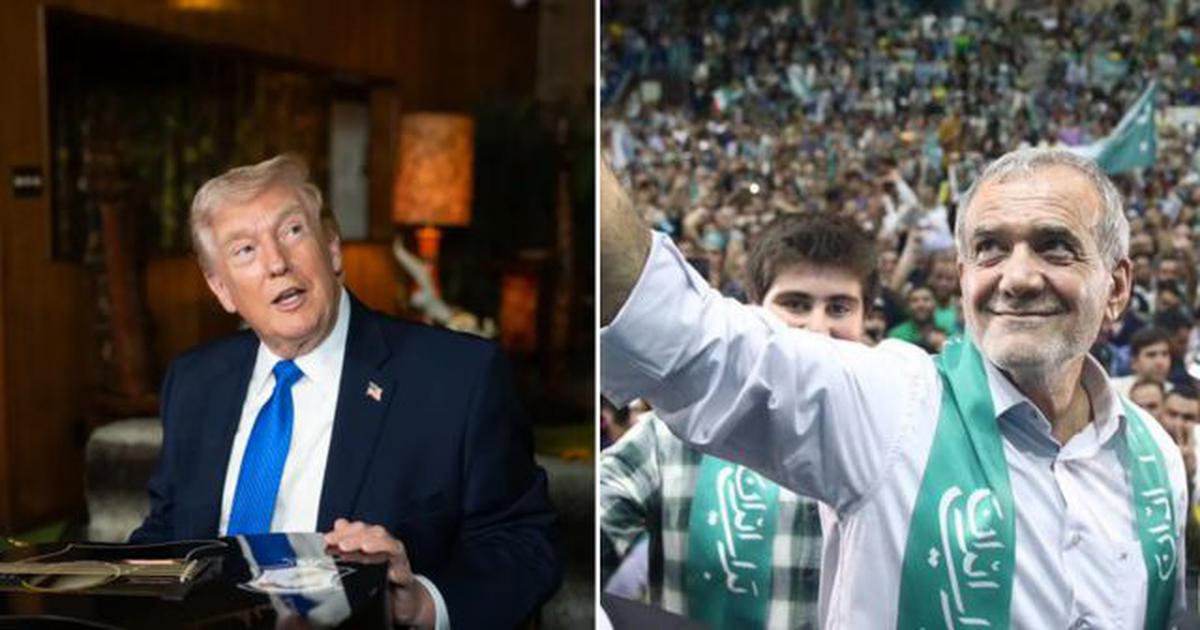
In a landmark development for West Asian politics, United States President Donald Trump and Iranian President Masoud Pezeshkian have officially signed an interim memorandum of understanding aimed at bringing an end to the long-standing conflict in the region. The signing ceremony took place at the iconic Palace of Versailles in France on Wednesday, a venue steeped in history as it was the site where the Treaty of Versailles was concluded in 1919, marking the end of the First World War.
The White House has indicated that this memorandum lays the groundwork for a 60-day negotiation period, during which both nations are committed to seeking a permanent resolution to their issues. As reported by Al Jazeera, this agreement represents a significant diplomatic breakthrough that could reshape the geopolitical landscape of West Asia.
In a statement shared on social media, Pakistani Prime Minister Shehbaz Sharif highlighted the immediate implications of the agreement: “As a first step, the Islamic Republic of Iran will immediately reopen the Strait of Hormuz, while the United States will lift the naval blockade.” This move underscores Pakistan’s critical role as a mediator in fostering dialogue between the two nations, emphasizing the need for collaborative efforts in achieving regional stability.
Furthermore, the memorandum includes provisions for the lifting of oil-related sanctions on Iran, which has faced crippling economic restrictions in recent years. The United States also plans to facilitate broader economic relief initiatives for Tehran, marking a shift in its foreign policy approach. Financial analysts are particularly interested in the proposed $300 billion reconstruction fund for Iran, which is expected to be supported by various regional partners and hinges on the success of the negotiations within the stipulated timeframe.
The initial signing was expected to include Iran’s chief negotiator and parliament speaker, Mohammad Bagher Ghalibaf, alongside US Vice President Mike Pence. However, the decision to have the presidents sign directly signifies the importance both countries place on this agreement. Observers are keenly watching how this development will impact not only U.S.-Iran relations but also the broader Middle Eastern dynamics, particularly in light of India’s interests in the region.
As news of the agreement unfolds, Indian analysts are weighing its potential effects on India’s foreign policy and economic interests in West Asia. Historically, India has maintained a careful balance in its relationships with both Iran and the United States, and the success of this memorandum could open new avenues for economic cooperation, particularly in energy trade and regional security initiatives.
While the road ahead remains uncertain, this interim agreement marks a pivotal moment that could herald a new era of peace in West Asia, contingent on the goodwill and commitment of both parties to achieve a lasting resolution.