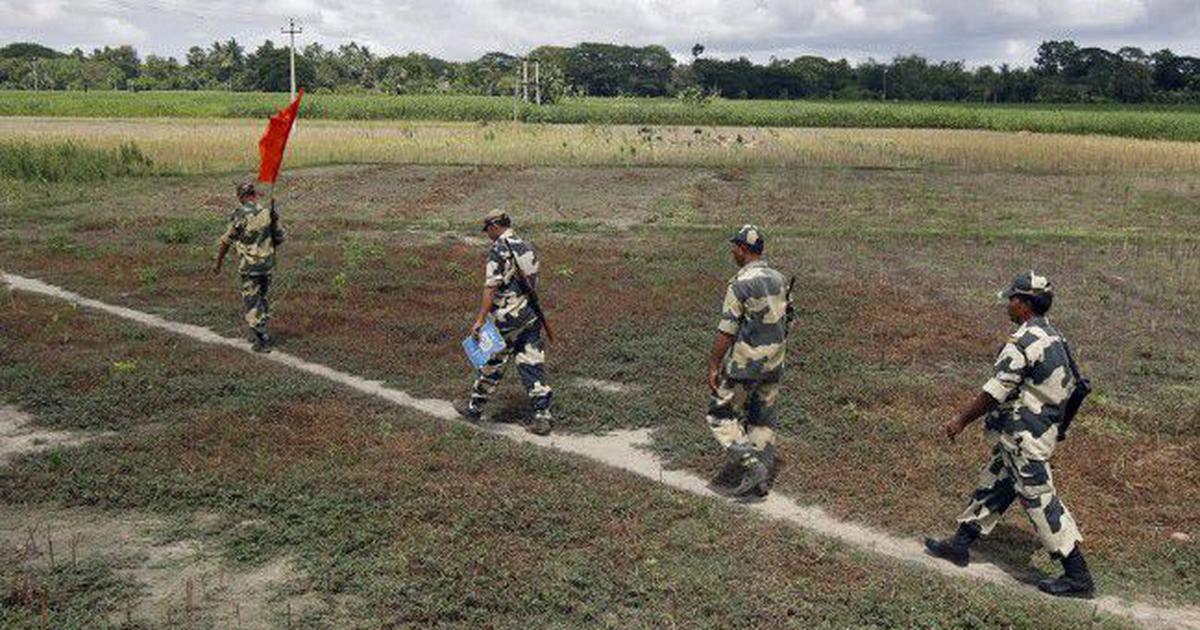
In a significant development for India-Bangladesh relations, high-level discussions took place between the Border Security Force (BSF) of India and the Border Guard Bangladesh (BGB), focusing on critical issues including illegal border crossings and related fatalities. The three-day meeting, which concluded on Thursday, aimed to tackle pressing concerns at their shared boundary, amidst allegations from Dhaka regarding forceful border maneuvers by Indian forces.
The backdrop to these talks includes a series of contentious incidents. Recently, Bangladesh officials claimed to have thwarted attempts by Indian border guards to push individuals across into their territory, prompting a stern diplomatic response. As of now, the Indian government has yet to officially address these allegations, highlighting the sensitivity of the situation.
Adding to the complexity of border management, operations in Indian states governed by the Bharatiya Janata Party (BJP) have intensified since a terrorist attack in Jammu and Kashmir’s Pahalgam in April 2025. Authorities have initiated crackdowns on Bengali-speaking individuals, predominantly Muslims, demanding proof of their citizenship. Such measures have reportedly led to the deportation of several individuals to Bangladesh under dubious circumstances, with many unable to substantiate their Indian identity and subsequently being forced across the border.
Moreover, there have been alarming instances where individuals, erroneously sent back to Bangladesh, were later found to be Indian citizens after verification by Indian state authorities. Reports from credible sources like Scroll have shed light on this troubling trend, emphasizing the lack of adherence to established deportation protocols as outlined by the Union home ministry.
In a notable shift in protocol, following the conclusion of the talks, both the BSF and the BGB opted to issue separate statements instead of conducting a joint press conference, a practice that had been the norm in previous years. This change indicates rising tensions and perhaps a reluctance to present a united front amidst ongoing disputes. The BSF’s statement emphasized a commitment to maintaining peace and order along the border, while the BGB reiterated its stance on safeguarding national interests against illegal crossings.
The evolving dynamics at the India-Bangladesh border illustrate a complex interplay of security, identity, and bilateral relations. As both nations navigate these challenges, the importance of diplomatic dialogue remains pivotal to ensuring stability and mutual cooperation. The upcoming months will likely see further scrutiny of border management policies and the humanitarian implications of forced deportations, as both nations seek to uphold their sovereignty while addressing the realities faced by those living in border regions.