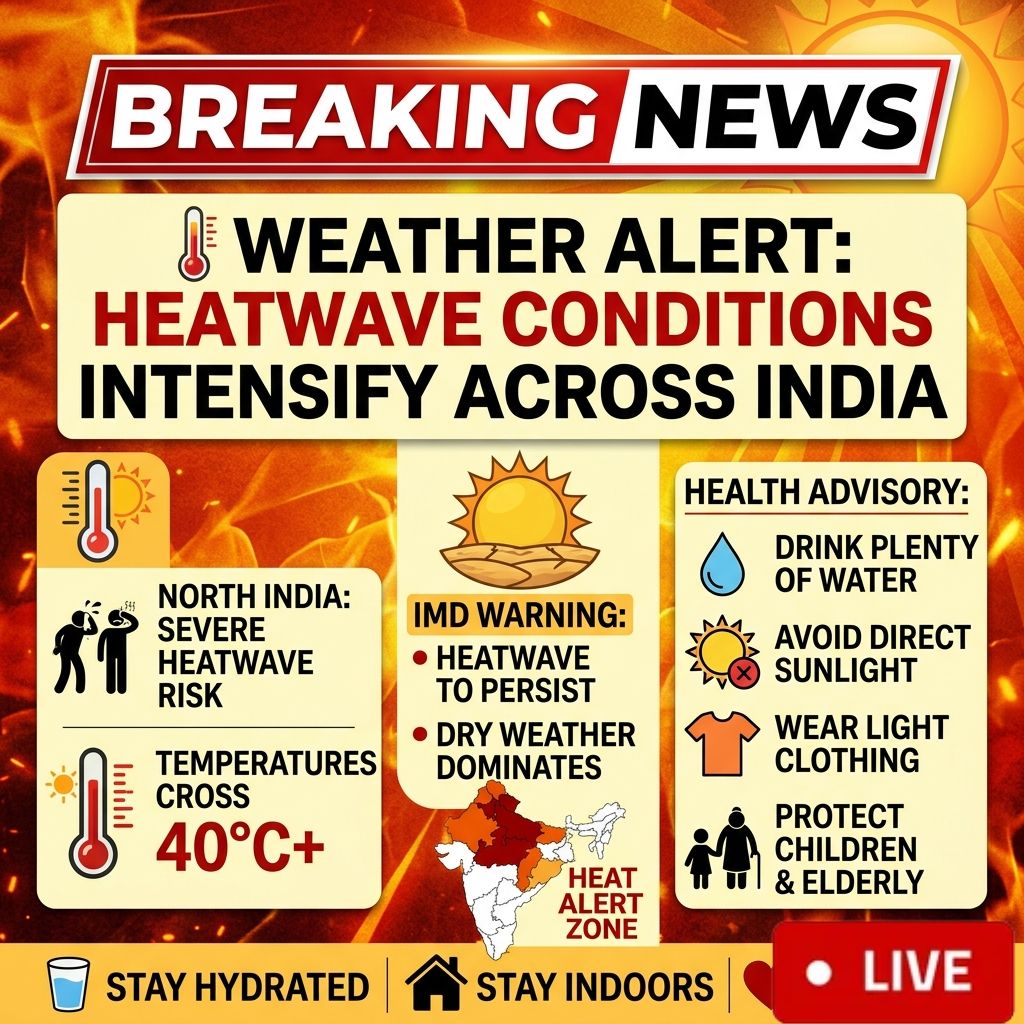
India is currently witnessing intense summer conditions across several regions, with the India Meteorological Department (IMD) issuing warnings about continued high temperatures and dry weather in multiple states.
Temperatures Continue to Rise
Large parts of North and Central India are experiencing a noticeable increase in daytime temperatures. In several regions, temperatures are expected to:
- Cross 40°C
- Remain above seasonal averages
- Bring hot and dry winds during daytime hours
Both urban and rural areas are experiencing strong heat conditions, especially during the afternoon when temperatures peak.
IMD Issues Heatwave Advisory
According to the IMD:
- Heatwave conditions may continue over the next few days
- Dry weather is likely to persist in many northern and central regions
- Night temperatures may also remain warmer than usual in some areas
Authorities have advised citizens to remain cautious during peak heat hours.
Public Health Precautions
Health experts recommend the following safety measures to reduce heat-related risks:
- Drink sufficient water regularly
- Avoid direct sunlight between 12 PM and 4 PM
- Wear light cotton clothing and cover the head outdoors
- Avoid strenuous outdoor activities during peak heat
Children, senior citizens, and outdoor workers are considered more vulnerable to heat-related illnesses.
Regional Weather Conditions
Several regions in South India, including parts of Andhra Pradesh, are also experiencing hot afternoons and warm nights. In some locations, temperatures are nearing 40°C, indicating that intense summer conditions are spreading across wider parts of the country.
Overall Weather Situation
- North India: Severe heat and dry conditions
- Central India: High temperatures with continued heat stress
- South India: Warm and humid weather with locally hot afternoons
- IMD Outlook: Continued heat conditions in the coming days
Conclusion
India is entering a critical summer phase as heatwave alerts become more frequent across multiple states. Authorities and health experts continue to advise people to stay hydrated, avoid unnecessary exposure to heat, and follow precautionary measures to remain safe during extreme weather conditions.