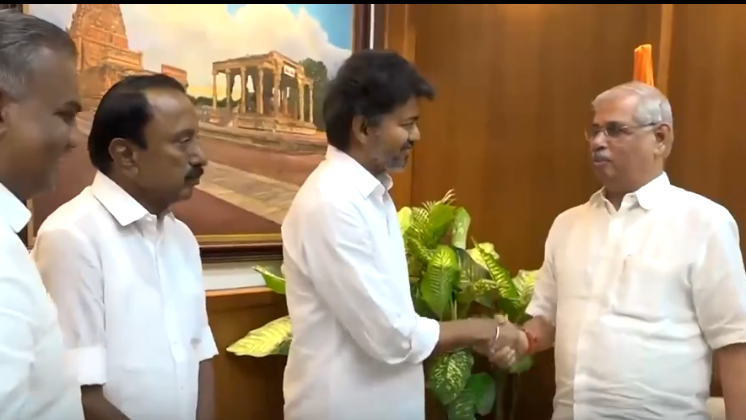
Discussions surrounding the possible delay in the swearing-in process of the Tamilaga Vettri Kazhagam (TVK) government have intensified in Tamil Nadu’s political circles. While speculation and political commentary continue, analysts suggest that the primary challenge appears to be related to legislative numbers rather than direct political obstruction from rival parties.
Despite gaining significant public attention and electoral momentum, TVK is reportedly still short of the majority mark required to comfortably form the government, even after receiving support from the Indian National Congress (INC).
Majority Arithmetic Remains Central
Political observers note that the key issue revolves around securing the required number of supporting legislators needed for stable government formation in the Assembly.
Several factors are being discussed within political circles:
Limited Alliance Options
Some analysts believe the party’s current political positioning may limit immediate alliance possibilities with certain regional or national blocs, narrowing available support channels.
Existing Ideological Alignments
Parties such as the CPI, CPM, and IUML are currently viewed as remaining aligned with their existing political alliances, reducing the likelihood of immediate political shifts.
Regional Party Equations
Certain regional parties are also considered structurally aligned with established political formations, making rapid realignment less likely in the present situation.
Political Situation Remains Fluid
Political experts suggest that negotiations, alliance discussions, and constitutional procedures may continue over the coming days as parties evaluate possible options for government formation.
At present, no official announcement has confirmed a final decision regarding the swearing-in timeline.
Conclusion
The ongoing political developments surrounding TVK appear to be driven largely by majority calculations and alliance dynamics within the Assembly. While public speculation remains high, government formation discussions are expected to continue until clearer legislative support emerges.