The recent announcement by the Bharatiya Janata Party (BJP)-led government to convene a special session of Parliament has sparked a significant discussion surrounding the proposed expansion of Lok Sabha seats. While framed as a constitutional obligation aimed at accommodating the rising electorate, this move raises critical questions about the future of democracy in India.
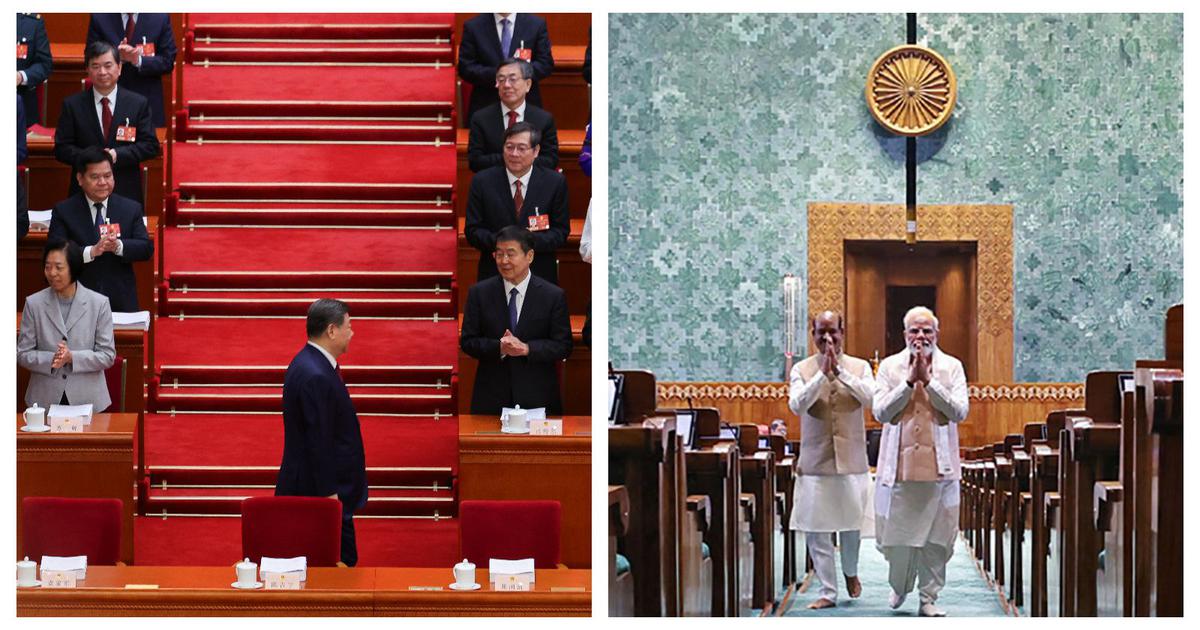
The proposal for delimitation—redrawing the electoral boundaries—could potentially lead to a massive Lok Sabha comprising over 800 members. Critics are drawing parallels to the National People’s Congress (NPC) of China, which consists of nearly 3,000 deputies who gather annually in Beijing to endorse decisions already preordained by the ruling party. This comparison highlights concerns regarding the erosion of genuine democratic discourse in favor of a more homogenized and controlled political environment.
By referencing the Chinese model of governance, where dissent is often muted and the legislature serves more as a ceremonial body, there is a growing fear that India might be heading down a similar path. The current political climate suggests a shift away from the traditional frameworks of deliberative democracy seen in Western models, such as that of the United States, which values checks and balances and emphasizes citizen engagement.
The scale of a potential new Lok Sabha raises worries about its functionality. An oversized parliament, with hundreds of representatives crammed into one chamber, could lead to inefficiency and diluted accountability. The sheer number of voices might make it harder for meaningful debates to occur, effectively transforming the parliamentary process into a mere formality.
Moreover, critics argue that the rationale of better representation is a guise for consolidating power. If the primary goal is to enhance representation, then the system should facilitate more direct engagement between representatives and constituents, rather than simply increasing the number of officials. As India navigates this pivotal moment, it is imperative to reflect on what this means for the country’s democratic ideals and the role of dissent in shaping policy.