As the summer season draws near in Jharkhand, the mahua flowers begin to bloom around late March, marking a critical time for farmers in the region. Traditionally, these fragrant flowers are not harvested directly from the trees but gathered from the ground as they fall. However, the recent spate of unseasonal rain and hailstorms has thrown a wrench into this delicate harvesting process.
Kuldeep Minj, a farmer from the Latehar district of Jharkhand, shared his concerns, stating, “This year, the rains led to many flowers rotting while they were laid out to dry.” This is a significant issue for farmers like Minj, who rely on the natural drying process under sunlight for three days to ensure proper preservation of the mahua flowers. If the flowers do not dry adequately, they become sticky and unusable, leading to substantial losses.
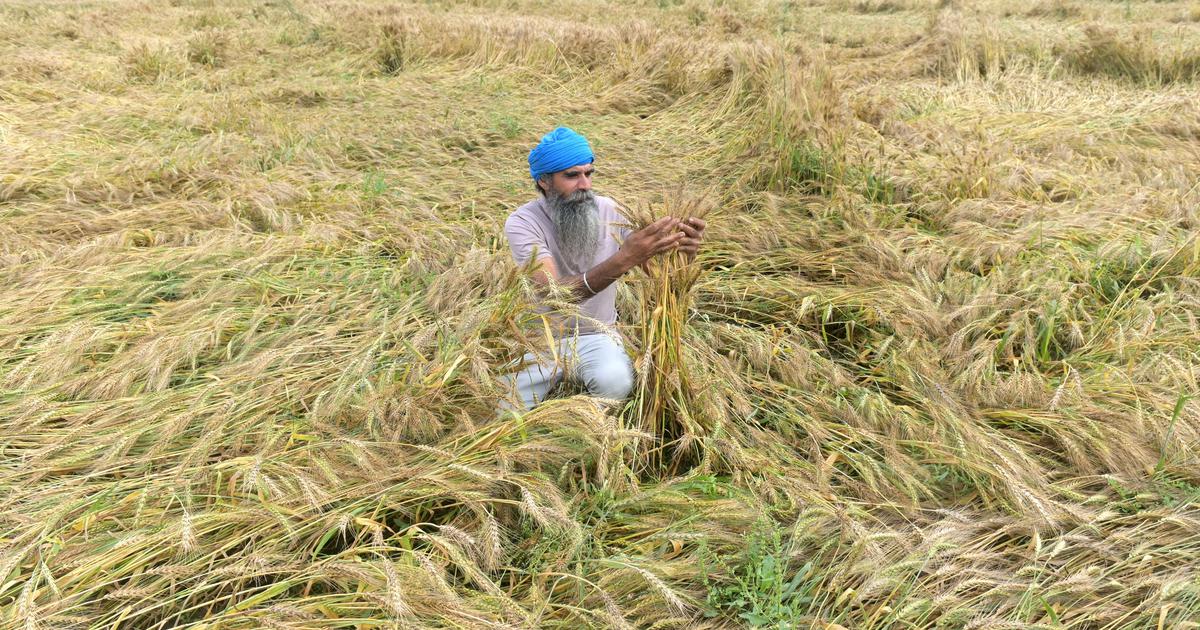
Meanwhile, in the northern region of Punjab, farmers were looking forward to a promising wheat season. Jagmeet Singh, a farmer from Kotli village in the Sri Muktsar Sahib district, expressed optimism about his crop, noting, “This year, the quality of the wheat was exceptional; typically, we have to spend Rs 1,000-1,500 per acre on insecticides to maintain quality.” Unfortunately, the hopes of many farmers, including Singh, were shattered just two weeks away from their anticipated harvest as a sudden hailstorm struck on April 4.
The hailstorm, which lasted only 35 to 40 minutes, wreaked havoc on Singh’s field, damaging nearly 80% of his wheat crop. This severe weather pattern highlights the growing unpredictability of climate conditions affecting agriculture across India. Farmers who had invested considerable time and resources into nurturing their crops now face unexpected setbacks, raising concerns about food security and economic stability for many rural families.
The recent weather disturbances are attributed to western disturbances, a meteorological phenomenon that has increasingly begun to influence weather patterns in India, stretching its impact even to the eastern states. Farmers are left grappling with the consequences of these erratic weather changes, as they not only threaten their current yields but also pose challenges for future agricultural planning.
For the agricultural community, adapting to these climatic shifts is crucial. Many farmers are beginning to explore new crops and techniques that can withstand such unpredictable weather. However, the transition is not always easy, requiring both financial investment and a willingness to change traditional practices.
As the country gears up for the harvest season, the plight of farmers facing these challenges serves as a reminder of the pressing need for more robust agricultural policies and support systems to help mitigate the impact of climate change on farming. The resilience of India’s farmers is commendable, but the growing unpredictabilities demand attention and action from all stakeholders involved.