Internet Satire and Meme Culture: How Online Trends Are Shaping Youth Expression in India
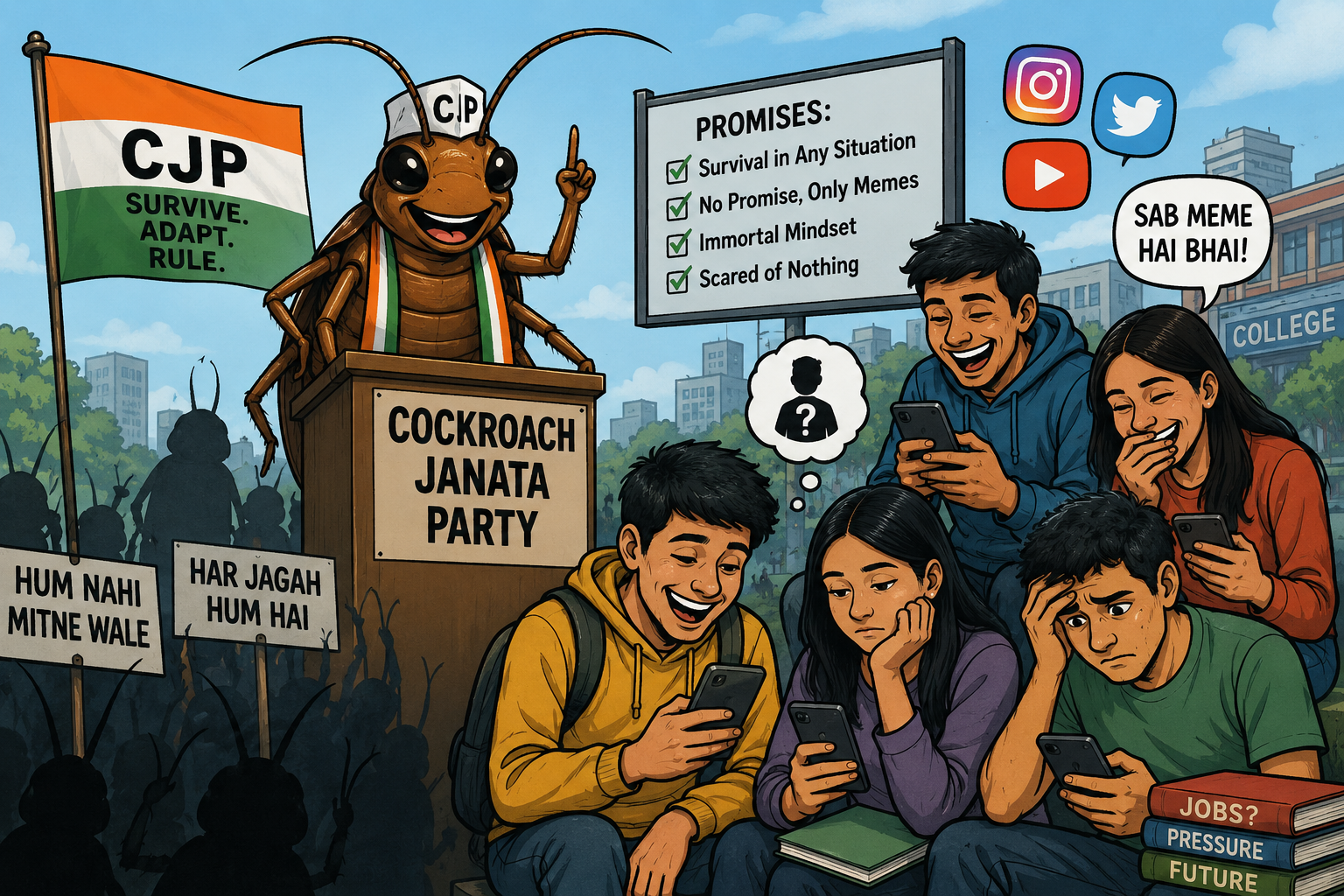
In recent years, India’s digital culture has witnessed the rapid growth of meme-based communities, parody groups, and satirical online trends that often blend humour, sarcasm, and social commentary. Among such trends, phrases like “Cockroach Janata Party” have gained visibility on social media platforms, particularly among young internet users and college students.
The term is largely used in a humorous or symbolic manner and is not associated with any officially recognised political organisation. Social media users often use such phrases as part of meme culture to express frustration, survival instincts, or reactions to social and political situations through satire.
Rise of Meme-Based Expression
Observers note that younger audiences increasingly use memes, reels, parody pages, and short-form content as a way of participating in public conversations. Rather than relying only on traditional debates or political discussions, many young users now engage with current issues through humour-driven online content.
Social media platforms including Instagram, YouTube, and X have contributed significantly to the spread of satirical digital trends and viral internet communities.
Social Media Influence on Youth Culture
Experts in digital communication believe meme culture has become an important part of how online communities interact and share opinions. Satirical content often spreads rapidly because it is simple, relatable, and easy to consume.
At the same time, educators and social observers encourage young users to balance humorous online content with verified information and thoughtful discussion. They emphasize the importance of media literacy and critical thinking while consuming political or social content online.
Reflection of Social Concerns
Many online trends gain popularity because they resonate with real-life concerns faced by young people, including academic pressure, employment uncertainty, financial stress, and social expectations. Humour and satire are often used as a form of emotional expression and community bonding on the internet.
Sociologists note that satire has historically been part of democratic societies and public discourse. In the digital age, social media has simply amplified the speed and reach of such expressions.
Importance of Responsible Digital Engagement
Experts believe online humour and satire can coexist with meaningful civic engagement when used responsibly. They encourage young people to participate in informed discussions about education, employment, governance, and social issues while maintaining respectful and constructive communication online.
As India’s internet population continues to grow, meme culture and digital satire are expected to remain influential parts of youth expression and online social interaction.