Kejriwal Declines to Appear Before Court in Liquor Policy Case as BJP Gains Ground in Rajya Sabha
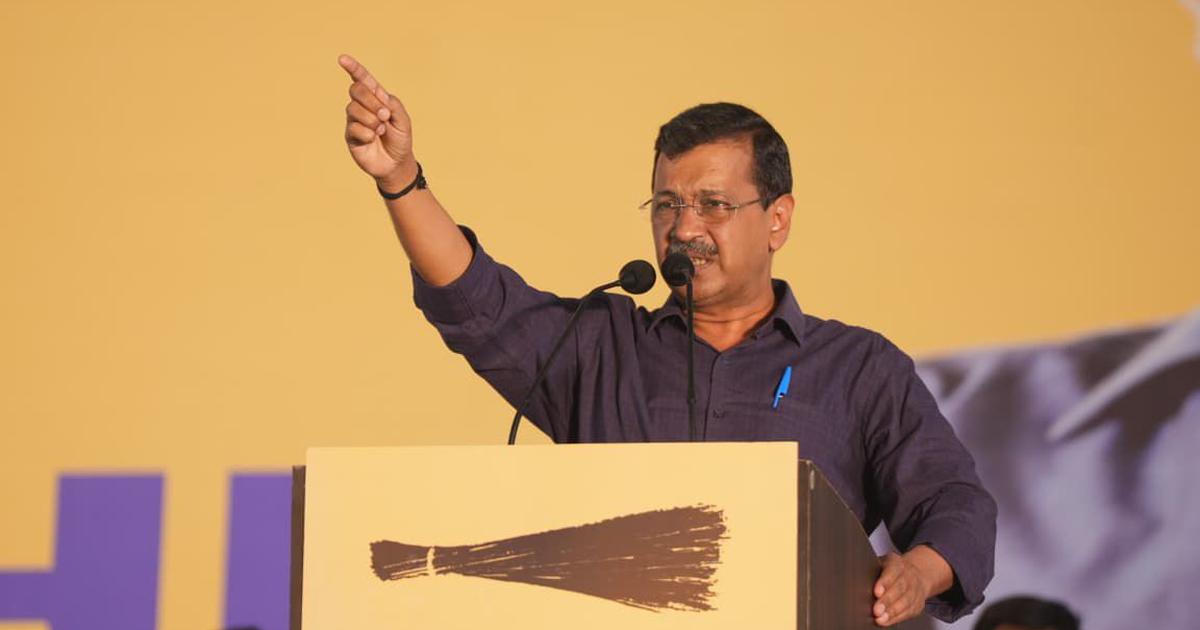
Aam Aadmi Party (AAP) leader Arvind Kejriwal has made headlines once again by refusing to appear before a Delhi High Court judge in a case involving the controversial liquor policy. This decision comes as the court examines a challenge by the Central Bureau of Investigation (CBI) regarding the discharge of Kejriwal and several other political figures linked to the case.
The Delhi High Court, presided over by Justice Swarana Kanta Sharma, has been the focal point of this legal battle. Last week, Justice Sharma rejected a plea from Kejriwal seeking her recusal, a move that has raised eyebrows and sparked further allegations from the former Delhi Chief Minister. Kejriwal voiced concerns about what he described as the judge’s ‘perceived ideological affinity’ with the ruling party, citing her prior attendance at events organized by the Rashtriya Swayamsevak Sangh (RSS).
In addition to this, Kejriwal highlighted a potential conflict of interest, pointing out that the judge’s children are empaneled as counsels for the Union government and have been assigned cases by Solicitor General Tushar Mehta, who is representing the CBI in this ongoing matter. This has led to questions about the impartiality of the judicial process, as Kejriwal continues to defend himself against the allegations.
In a parallel political development, the Bharatiya Janata Party (BJP) has seen its representation in the Rajya Sabha—India’s upper house of Parliament—rise to 113 members following the merger of the AAP’s legislature party in the Upper House. This shift in numbers is significant, as the BJP now holds a controlling position in the 245-member chamber, potentially shifting the dynamics of power in the political landscape.
The merger marks a notable transition for the AAP, which has frequently positioned itself as a vocal opponent of the BJP, particularly in Delhi. The implications of this merger could be vast, impacting legislative discussions and the nature of opposition in the Rajya Sabha. Political analysts suggest this change could bolster the BJP’s agenda and further complicate the AAP’s position in a highly competitive political environment.
As these developments unfold, they paint a complex picture of the current state of politics in India. With Kejriwal facing legal challenges and the BJP solidifying its foothold in the Rajya Sabha, the coming weeks are likely to bring more drama and strategic maneuvering as parties reposition themselves ahead of the next electoral cycle.