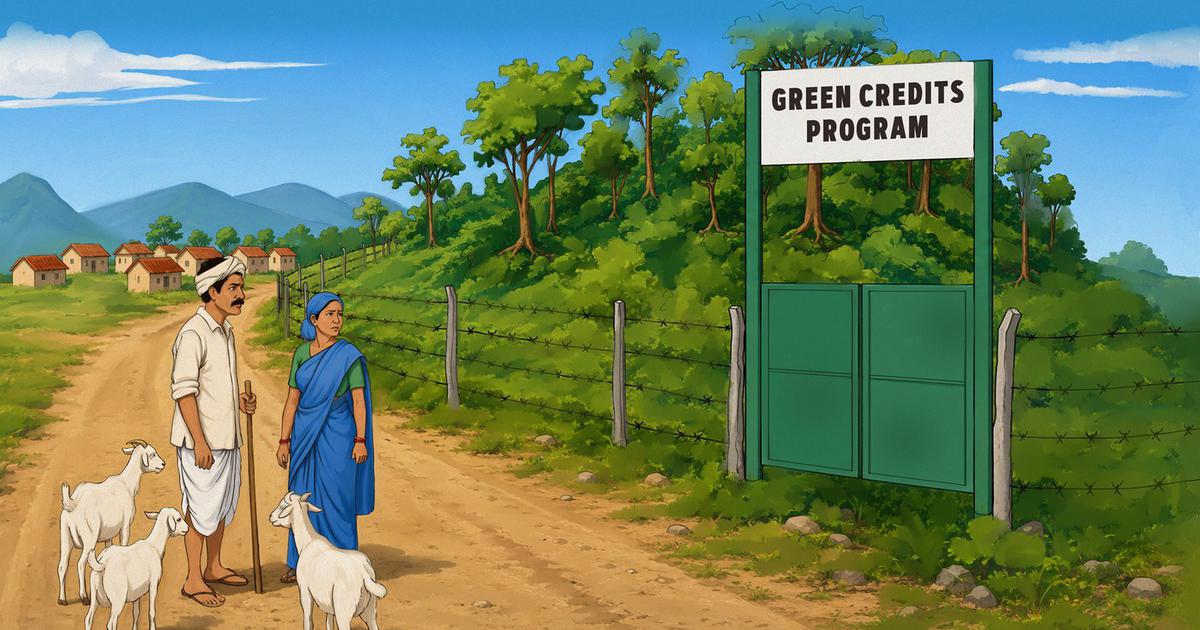
In the heart of Gujarat, a growing discord surrounds a state-sponsored initiative aimed at promoting afforestation by rewarding companies for planting trees. This program, designed to combat deforestation and enhance biodiversity, has encountered significant resistance from local villagers who feel sidelined in the decision-making process.
Dattu Valvi, a temporary worker for the state forest department, has firsthand experience of the ongoing tensions. In his village of Mogarbara, about 120 kilometers from Surat, Valvi was tasked with transporting water to newly planted saplings within designated forest areas. As he navigated through the region, he passed familiar landscapes rich with teak, timru, and mahua trees—each with their unique cultural and economic importance to the local community.
While Valvi’s job involved caring for young saplings, he could not overlook the stark changes occurring in the forests he knew so well. The forest land, once shared and nurtured by the villagers, was now cordoned off by white cement pillars and barbed wire, creating a barrier between the community and their traditional livelihoods. The fenced area, marked by a metal gate proclaiming its ownership by the forest department, transformed the landscape and raised concerns among the villagers regarding their rights and access to the land.
Many villagers, like Valvi, have cultivated nearby lands for decades, relying on the local flora and fauna for sustenance and economic activities. The Ukai dam, built in 1972, further underscores the importance of the Tapi river and its surrounding ecosystems for irrigation and daily life. However, the introduction of the tree-planting program has shifted the focus to corporate interests, leaving little room for local voices in the conversation about environmental stewardship.
Critics argue that while afforestation is essential, it should not come at the expense of local communities. The program’s reliance on companies as the primary agents of change has sparked a debate about who truly benefits from such initiatives. Many villagers feel that their traditional ecological knowledge and practices are being overlooked, leading to a disconnect between the forest management efforts and the people who have lived in harmony with these lands for generations.
The growing opposition highlights a broader issue of inclusivity in environmental policies in India. Local communities often bear the brunt of top-down decisions that fail to consider their input and needs. For the villagers of Mogarbara, the tree-planting initiative serves as a stark reminder of the need for a more participatory approach, where the voices of those who know the land best are valued and integrated into sustainable development strategies.