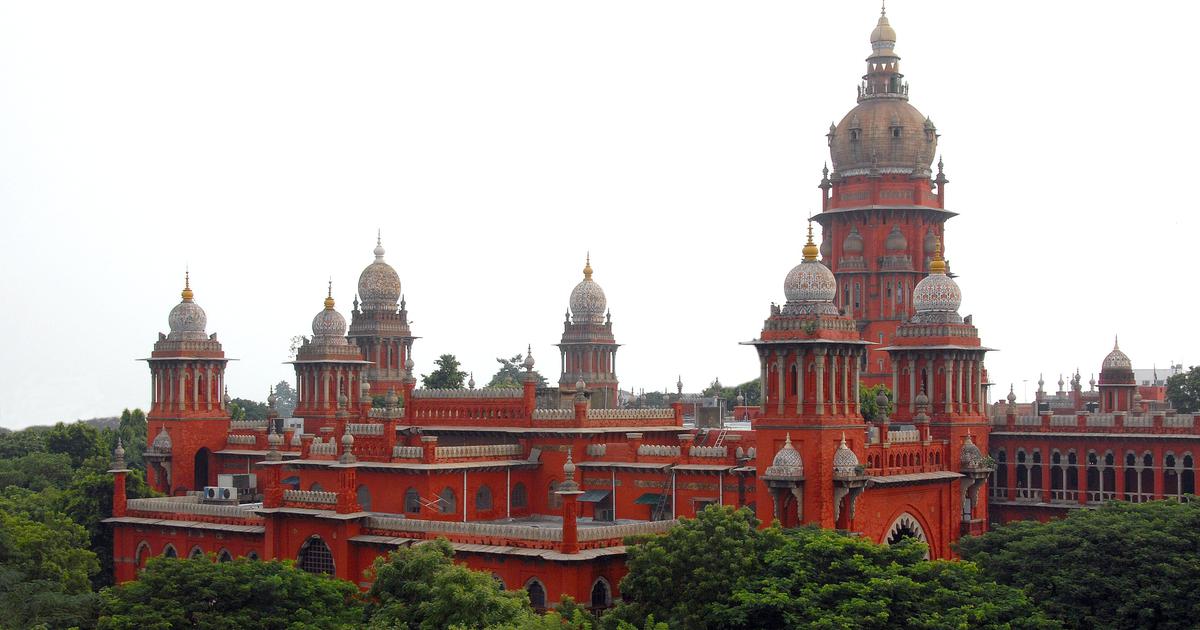
The Madras High Court delivered a significant ruling on Thursday, dismantling a Tamil Nadu government order that permitted individuals from various marginalized communities—including Backward Classes, Most Backward Classes, Denotified Communities, and Scheduled Castes—to be recognized as Backward Class Muslims upon converting to Islam. This decision has reignited discussions on religious identity and social justice within the context of India’s complex caste system.
A bench comprising Justices GR Swaminathan and PB Balaji deemed the March 2024 order unconstitutional. The court emphasized that once an individual converts to Islam, their categorization as a Backward Class Muslim is invalid. “He is only a Muslim and that’s all there is to it,” stated the bench, underscoring the court’s stance on maintaining distinct identities based on religious conversion.
The ruling arose during the proceedings of a case involving a 33-year-old man from Thoothukudi district. Born into a Hindu family, he embraced Islam in 2015, adopted a new name, and married in accordance with Islamic customs. Following his conversion, he sought a community certificate identifying him as a Muslim Lebbai—a classification recognized as Backward Class Muslims in Tamil Nadu according to the now-overturned government order. His application for the certificate was rejected by the local tahsildar, prompting him to approach the High Court for redress.
During the hearings, the petitioner argued that he was entitled to the benefits associated with the 2024 government order. In its defense, the Tamil Nadu government asserted that the order was established upon the recommendations of the state’s Backward Classes Commission. However, the court’s judgment reflects the ongoing complexities surrounding the intersection of religion and caste politics in India, particularly in how social justice measures are implemented.
This ruling is likely to have broad implications for many individuals who have converted to Islam from various marginalized backgrounds, as it raises questions about their access to affirmative action benefits designed for backward classes. The decision not only highlights the judiciary’s role in interpreting governmental policies but also emphasizes the importance of recognizing the distinct social identities tied to religious beliefs. As India navigates its multifaceted social landscape, such rulings will continue to shape the discourse on equality, justice, and religious identity.