From Madras to Chennai: A City’s Journey Through Time and Identity
Cities are more than just places—they are stories written across generations. Few Indian cities reflect this truth as vividly as Chennai, formerly known as Madras. The transformation of its name is not merely administrative; it represents a deeper reclaiming of culture, identity, and history.
The Origins of “Madras”
The name Madras dates back to the colonial era, when the British East India Company established a trading post in 1639. The settlement grew around Fort St. George, becoming one of the earliest British strongholds in India.
There are multiple theories about how “Madras” originated:
• From “Madraspatnam,” a fishing village
• Named after a local church or Portuguese family
• Derived from regional linguistic variations
Whatever its roots, Madras became synonymous with colonial administration, trade, and early urban development in South India.
The Rise of a Cultural Capital
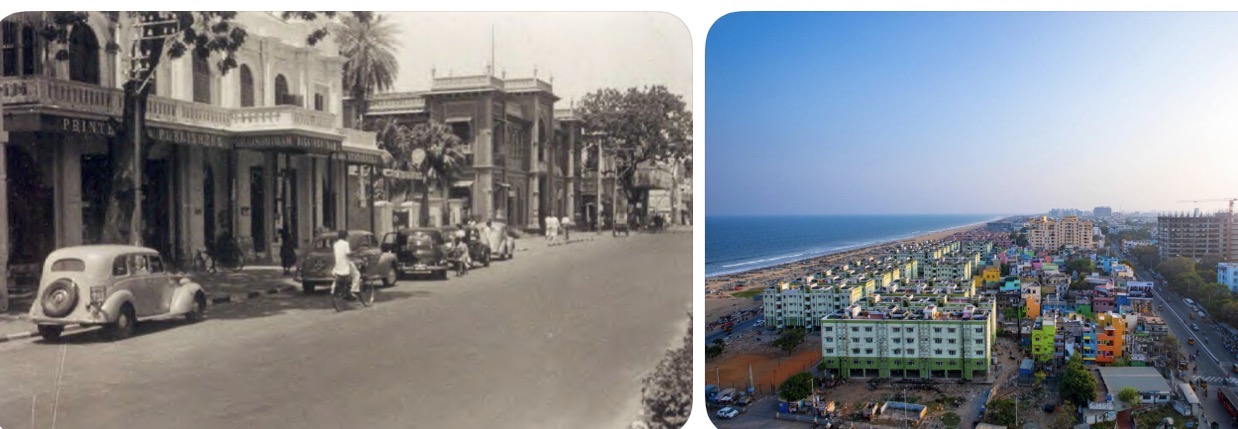
Over the centuries, Madras evolved into a vibrant cultural and intellectual hub. It became known for:
• Classical Carnatic music and Bharatanatyam
• Prestigious educational institutions
• A thriving film industry
• Strong literary and political movements
Despite colonial influence, the city retained a deeply rooted Tamil identity, visible in its language, traditions, and social life.
Why the Change to Chennai?
In 1996, the government officially renamed Madras to Chennai. This shift was part of a broader movement across India to replace colonial-era names with indigenous ones.
The name “Chennai” is believed to have originated from “Chennapatnam,” a nearby settlement that existed alongside Madraspatnam.
The renaming reflected:
• A reclaiming of Tamil heritage
• A move away from colonial legacy
• A stronger alignment with regional identity
It was not just about a new name—it was about redefining how the city saw itself.
Public Reactions and Transition
The change sparked mixed reactions:
• Older generations continued using “Madras” out of habit and nostalgia
• Younger generations embraced “Chennai” as a symbol of modern identity
• Globally, both names coexisted for years during the transition
Even today, the word “Madras” survives in cultural references—Madras music, Madras curry, and the famous “Madras checks.”
Chennai: A Modern Metropolis
Today, Chennai stands as one of India’s major metropolitan cities. It is known for:
• A booming IT corridor along OMR
• One of the largest urban beaches—Marina
• A strong automobile and manufacturing industry
• Rich traditions coexisting with rapid modernization
The city has grown into a global hub while maintaining its distinct cultural character.
A Name That Holds Two Worlds
The story of Madras to Chennai is not about erasing the past—it’s about embracing evolution. “Madras” represents history, colonial encounters, and early urban identity. “Chennai” represents pride, language, and a forward-looking spirit.
Both names, in their own way, tell the story of the same city—resilient, diverse, and constantly evolving.
Conclusion
The transformation from Madras to Chennai is a reminder that names carry meaning. They reflect who we were, who we are, and who we aspire to be.
In every street, every shoreline, and every voice—you can still hear both names echoing, telling the story of a city that never stands still.