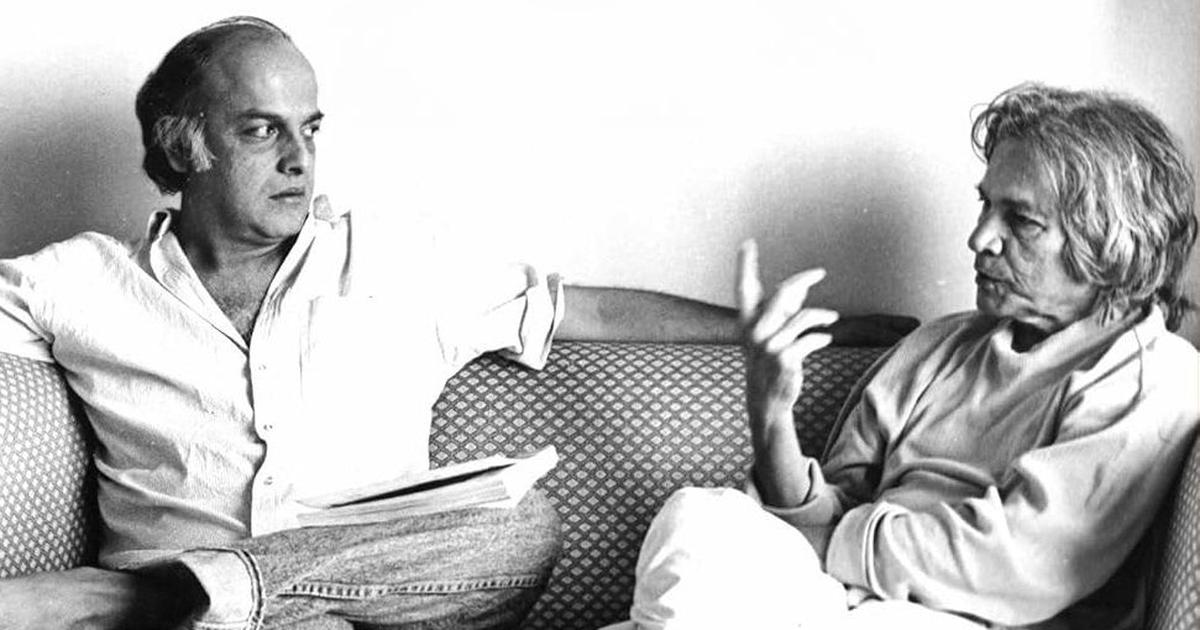
Celebrated filmmaker Mahesh Bhatt has always been known for his rich storytelling, but in his latest book, he takes a more personal turn. Titled The Ashes Are Warm – Memories of a Lifetime Spent with UG Krishnamurti (published by Rupa Publications), this work reflects Bhatt’s deep admiration for the philosopher UG Krishnamurti, whom he met in the 1970s. Their first encounter marked the beginning of a transformative relationship that would shape Bhatt’s outlook and inspire numerous writings over the years.
Bhatt vividly recalls their initial meeting, describing Krishnamurti as a serene figure dressed in white, standing at the top of a staircase. The filmmaker recounts how climbing towards him felt like traversing through a tunnel, with the philosopher’s luminous presence overshadowing the bustling world around. It was a moment filled with profound silence that resonated deeply within Bhatt, a silence that contrasted sharply with the chaotic life of the city outside.
However, the book serves not only as a tribute to Krishnamurti but also as a memoir, offering glimpses into Bhatt’s childhood and family life. In one poignant section, he writes about his mother, Shirin Bhatt, who played an influential role in shaping his identity and creativity. The essence of Shirin is captured in Bhatt’s acclaimed film Zakhm (1998), where he crafted a character inspired by her struggles and resilience. In the film, Shirin’s character, Noor, is a Muslim woman navigating the complexities of love and faith as she marries a Hindu director, ultimately facing tragic consequences during a communal riot.
Through his reflections, Bhatt emphasizes that Shirin was never defined by a single identity; she was a multifaceted personality, embodying various roles and beliefs. “She was not just one thing to herself, nor to us, or even to ‘God’,” he expresses, highlighting the intricate layers of her character. Shirin’s life story resonates with many in India, a nation where communal identities often clash, making her narrative both poignant and relevant.
As Bhatt shares memories of his upbringing in their Shivaji Park flat, he paints a picture of the warmth and chaos that defined their family life. The walls of their home, filled with stories and echoes of laughter, became a backdrop for shaping Bhatt’s artistic sensibilities. His reflections on his mother offer a deep dive into the complexities of familial bonds, cultural identities, and the often tumultuous journey of self-discovery.
Mahesh Bhatt’s heartfelt tribute to his mother not only honors her legacy but also sheds light on the intricate tapestry of Indian society, where personal stories are intertwined with larger communal narratives. As readers delve into this memoir, they are invited to explore not just the life of a filmmaker but also the profound impact of a woman who, in her myriad roles, belonged everywhere and nowhere at once.