Mumbai Suburban Rail Disruption: Commuter Concerns Over AC Train Changes Affect Western Railway Services
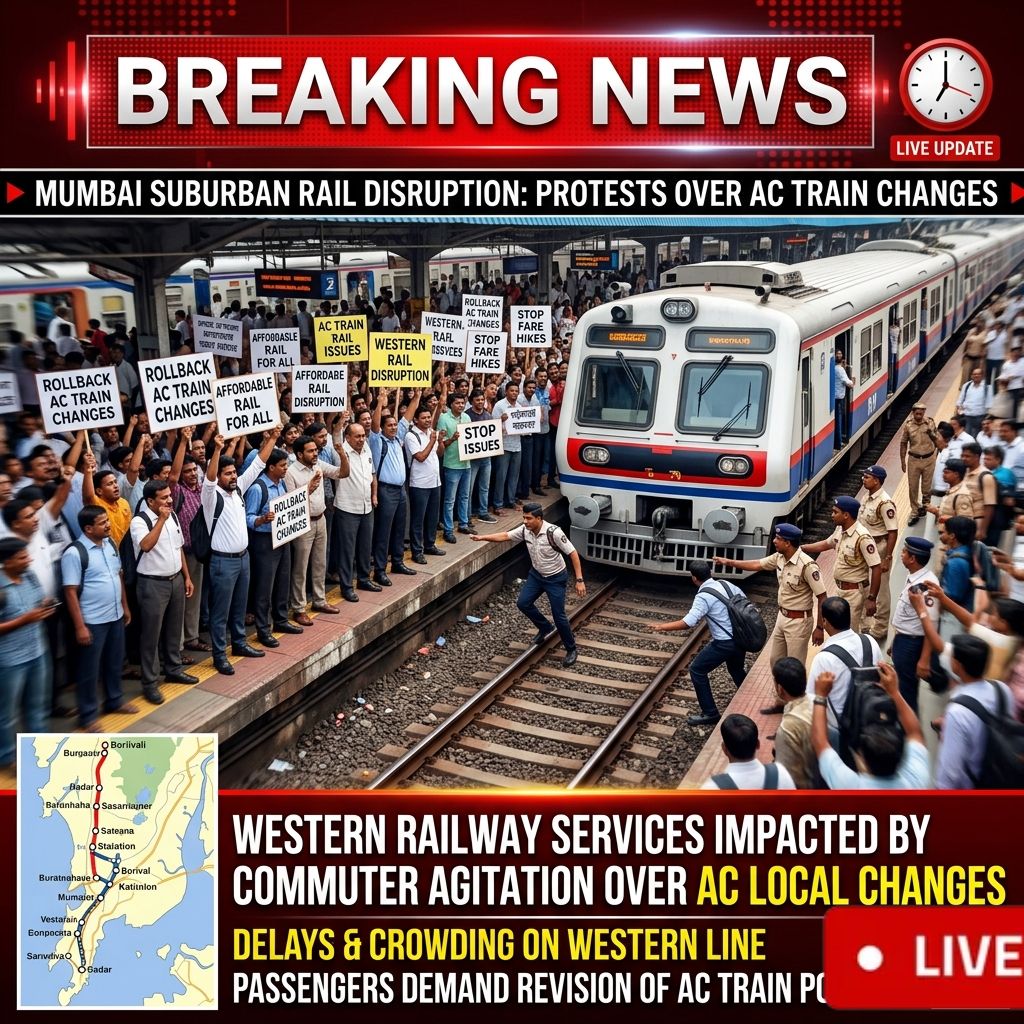
Mumbai’s suburban railway network, one of the busiest urban transport systems in the world, recently witnessed operational disruption after commuter concerns emerged regarding changes related to AC local train services. The situation affected operations on the Western Railway corridor, leading to delays, overcrowding, and temporary service adjustments during peak hours.
What Happened?
According to reports, several daily commuters expressed dissatisfaction over recent adjustments involving AC (Air-Conditioned) local train services. Commuters reportedly gathered at certain stations and raised concerns regarding the impact of these changes on regular suburban travel.
The situation affected regular train schedules, and railway authorities temporarily adjusted operations to ensure passenger safety and crowd management.
Impact on Mumbai Suburban Network
The disruption had an impact across parts of the suburban railway system, including:
- Delays in multiple Western Railway local services
- Increased crowding in some non-AC trains
- Temporary reduction in operational frequency during peak hours
- Deployment of railway staff and security personnel at key stations
As Mumbai’s suburban rail network is heavily used by daily commuters, even short operational disruptions can affect large numbers of passengers.
Why AC Train Services Became a Discussion Point
AC local trains were introduced to support:
- Better commuter comfort during extreme weather
- Reduced crowd pressure in conventional coaches
- Modernization of suburban rail services
However, some commuters reportedly raised concerns regarding:
- Fare affordability for regular travel
- Availability of non-AC train services
- Transition and implementation planning
These concerns contributed to public discussion among daily passengers, especially office commuters and middle-income travelers.
Railway Administration Response
Railway authorities and security personnel worked to normalize operations and manage passenger movement. Measures included:
- Restoring regular train movement gradually
- Managing crowd flow at stations
- Guiding passengers toward alternate services where necessary
- Monitoring the situation to avoid further disruption
Authorities are also expected to review commuter feedback regarding suburban train operations.
Broader Urban Transport Challenge
The incident also highlights broader challenges faced by urban transport systems in major metropolitan cities, including:
- Increasing passenger demand
- Balancing affordability with modernization
- Infrastructure capacity limitations
- Need for efficient and accessible public transport planning
Conclusion
The temporary disruption on Mumbai’s suburban railway network highlights the importance of balancing modernization initiatives with commuter accessibility and affordability. While AC local services are part of efforts to improve travel quality, commuter feedback and operational planning remain important for ensuring smooth public transport services in a city where railways are a daily lifeline for millions.