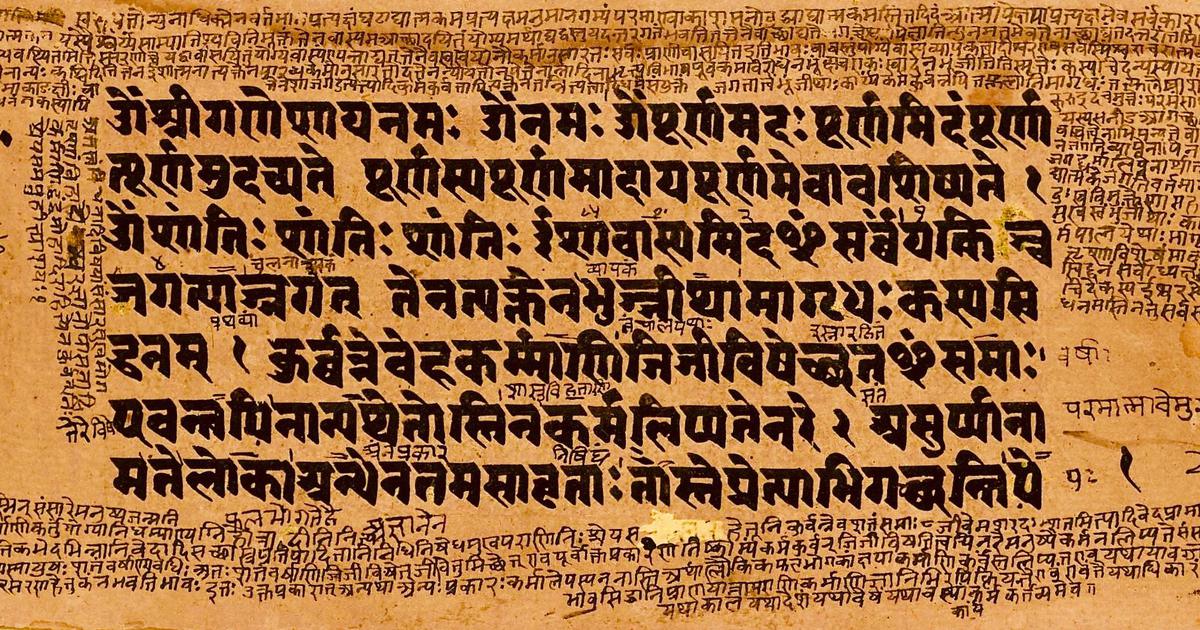
The Isa Upanishad, one of the principal texts of Vedanta philosophy, has recently been translated in a manner that resonates with contemporary readers, capturing the essence of its profound teachings. The Upanishad speaks to the fundamental truths of existence, urging individuals to embrace renunciation while recognizing the omnipresence of the divine.
At the heart of the Isa Upanishad lies the assertion that everything in the universe is enveloped by the divine essence, prompting an invitation to find joy through detachment. The text challenges the notion of ownership, asking rhetorically, ‘For whose wealth is wealth?’ This fundamental questioning invites readers to reflect on the transient nature of material possessions and the futility of coveting what belongs to others.
In this translation, the divine is identified as Īt, or the supreme self, which governs all beings while simultaneously being the essence of all life. This duality and interconnectedness emphasize that the divine operates as an inner guide and controller, urging us to look beyond the surface. The imagery of fragrance, particularly that of sandalwood, serves as a poignant metaphor in the Upanishad. Just as the scent can be tainted by external elements, so too can our understanding and experiences be clouded by ignorance.
To overcome such duality, the text advocates for contemplation of the supreme self, suggesting that introspection and meditation can help dispel the illusions of doership and enjoyership, which arise from our ignorance of our true nature. The essence here is clear: wealth and material gains are ultimately illusory, and the true wealth lies in recognizing and connecting with the self. Therefore, it becomes imperative for individuals to safeguard their understanding of the self through resolute practice and conscious awareness.
This new translation not only aims to make the ancient wisdom of the Isa Upanishad accessible to modern audiences but also emphasizes its relevance in today’s fast-paced world. It serves as a reminder of the importance of spiritual introspection, encouraging readers to explore the depths of their being and the universal connection that binds all forms of life.