Should Happiness Be Included When Measuring a Country’s Economy?
Should Happiness Be Included When Measuring a Country’s Economy?
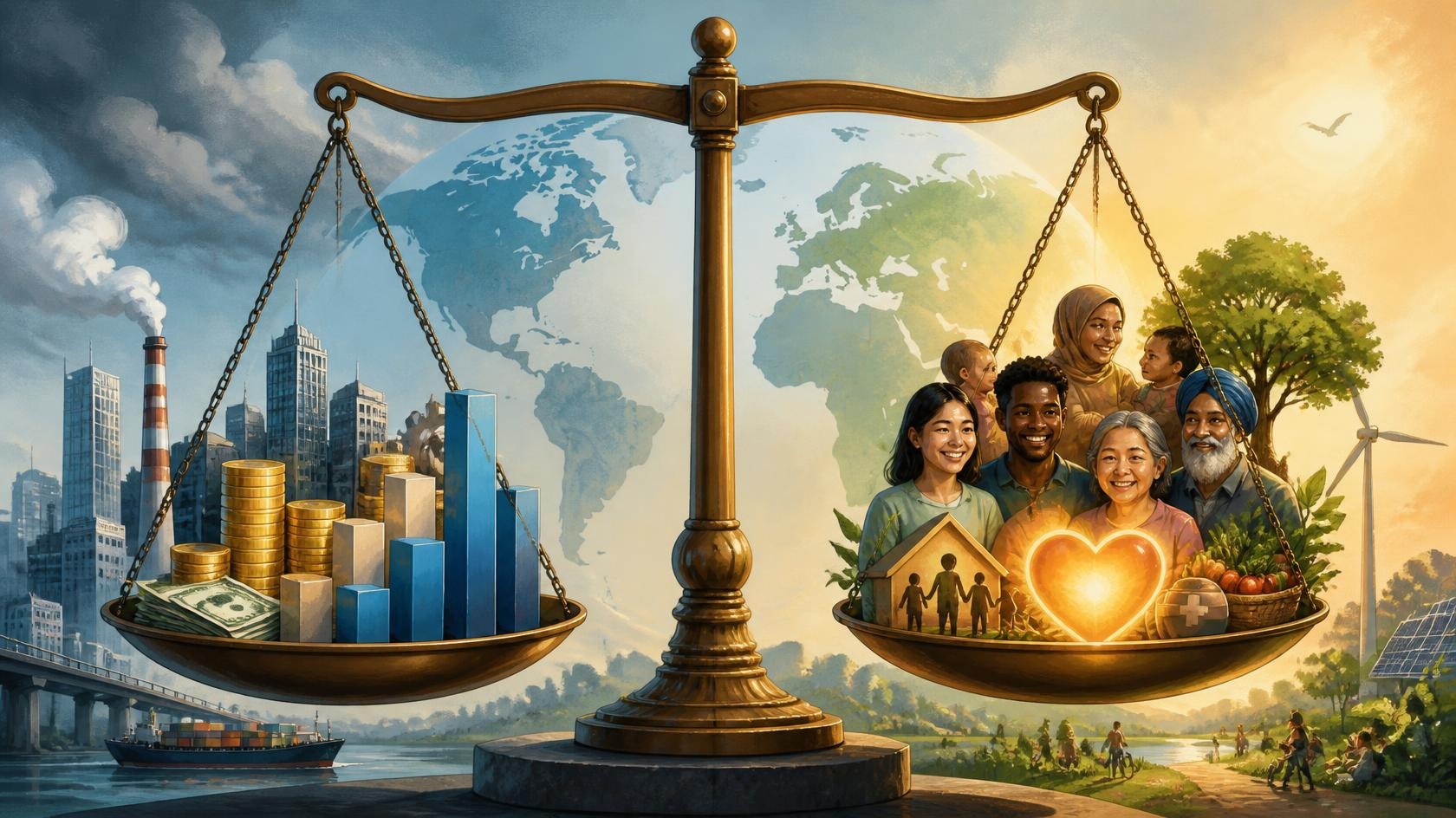
Whenever a country’s progress is discussed, the first word that comes up is GDP — Gross Domestic Product. How much was produced, how much trade happened, how much was earned — these figures decide whether a country is labeled “developed” or “developing.” But a question keeps resurfacing: can a nation’s real progress be measured by money and output alone? Shouldn’t citizens’ happiness, contentment, and mental peace also be part of that calculation?
The Limits of GDP
GDP is a useful number, but it only tells us how much money is circulating in an economy — not how people actually feel. A country where people work excessively, live under constant stress, and barely have time for relationships can still post a high GDP. On the other hand, a small nation with fewer resources but strong communities, close families, and a life connected to nature may show far higher contentment, even with a lower GDP.
This is why many economists and policymakers argue that economic figures alone don’t give the full picture of a nation’s wellbeing.
The Example of Bhutan
The country that took this idea most seriously is Bhutan, which created an index called “Gross National Happiness.” Alongside economic growth, it gives equal weight to environmental conservation, cultural values, good governance, and psychological wellbeing. This model isn’t easy for every country to fully adopt, but it sparked a global conversation that development shouldn’t mean money alone.
Attempts to Measure Happiness
Today, several international organizations publish indices like the “World Happiness Report,” which ask people about life satisfaction, social support, freedom, trust, and generosity. These reports consistently show that the wealthiest countries aren’t always the happiest ones.
The Challenges
Of course, measuring happiness isn’t as straightforward as measuring GDP. Happiness is a personal, emotional experience that varies with culture, age, habits, and circumstances, making it hard to turn into a reliable figure for policymaking. There’s also a real risk: governments might use “happiness scores” to distract from genuine economic problems like unemployment and poverty, rather than actually addressing them.
A Balanced Approach
Perhaps the wisest path isn’t to discard GDP but to place it alongside quality-of-life indicators — mental health, education, healthcare access, and social relationships — as part of official national data. This would help policymakers understand that real economic development isn’t just about more factories and bigger numbers, but about genuinely improving citizens’ lives.
Conclusion
An economy is a means, not an end. If, despite growth, people are living with stress, isolation, and dissatisfaction, then that growth tells an incomplete story. Happiness and contentment may not need to become the sole measure of progress, but they deserve a meaningful place as an indicator — so that “development” means more than tall buildings and impressive numbers, and starts to mean genuine human wellbeing.