The Silent Tax on the Middle Class : Why Prosperity Feels Increasingly Expensive in Modern India
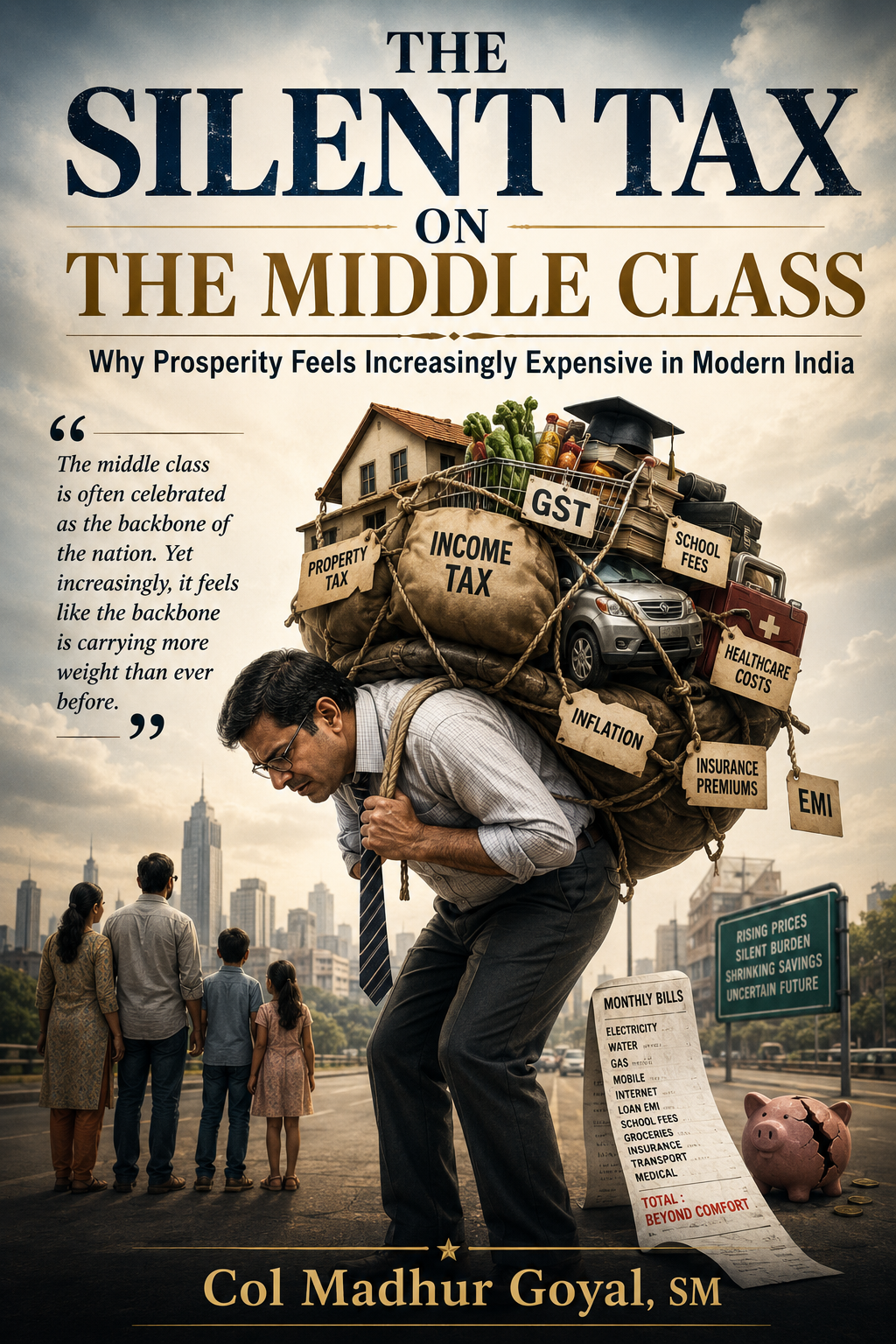
The Silent Financial Pressure on India’s Middle Class
By Col Madhur Goyal, SM
The middle class is often described as an important pillar of the economy. Yet for many families, rising expenses, taxes and financial responsibilities are making it increasingly difficult to maintain a sense of financial security.
A regular salary can provide a brief sense of stability, but monthly expenses quickly follow. Income tax, home loan instalments, school fees, fuel, insurance, electricity, healthcare and groceries can together put significant pressure on household budgets. This raises an important question: as the economy grows, why can everyday prosperity still feel increasingly expensive?
The Financial Pressure on the Middle Class
The middle class occupies an important position in the economy. It pays taxes, purchases homes, invests, supports education and healthcare spending, and contributes significantly to consumer demand. At the same time, many households are expected to save for retirement, insure themselves, educate their children and support ageing family members.
This creates a financial balancing act in which income has to meet several competing priorities. For many families, major purchases and long-term aspirations require careful planning and, in several cases, borrowing.
Beyond Income Tax
Taxation is not limited to income tax. Consumers also encounter taxes and charges when purchasing goods and services. Fuel, mobile services, travel, restaurants and various other expenses may include applicable taxes. Home purchases can also involve stamp duty, registration fees and other charges depending on the location and transaction.
Taxation is an essential source of government revenue for infrastructure, public services, defence and other national requirements. The broader concern for households is the combined effect of taxes, fees and everyday expenses on disposable income.
Inflation and Everyday Expenses
Inflation can gradually reduce the purchasing power of household income. Changes in grocery prices, education costs, healthcare expenses and housing costs can affect family budgets even when salaries increase.
For households whose incomes do not rise at the same pace as their expenses, maintaining savings and meeting long-term financial goals can become more challenging.
The Cost of Aspirations
Rising aspirations are another part of the financial equation. Families increasingly seek better education, healthcare, housing, professional opportunities and retirement security for themselves and their children. Individually, these goals may appear reasonable, but together they can create substantial financial commitments.
Insurance, investments and savings are also increasingly important as families prepare for future uncertainties. A significant part of household spending may therefore be directed toward financial security and protection against unexpected expenses.
The Confidence Factor
Economic confidence can influence household decisions about spending, investment, housing and education. When families feel financially secure, they may be more willing to make long-term commitments. When financial pressures increase, households may become more cautious about spending and investment.
A Question of Affordability
The discussion around the middle class is therefore not only about income or taxation. It is also about affordability and financial predictability. Economic growth remains important, but its impact on household confidence and purchasing power is equally significant.
The middle class continues to play an important role in supporting economic activity. Addressing concerns around living costs, access to essential services, financial security and predictable household expenses can help strengthen that confidence over the long term.
Author Note: Col Madhur Goyal, SM is an army veteran, author, essayist and commentator on society, governance, geopolitics and the human condition. His writing focuses on issues involving economics, technology, society and governance.