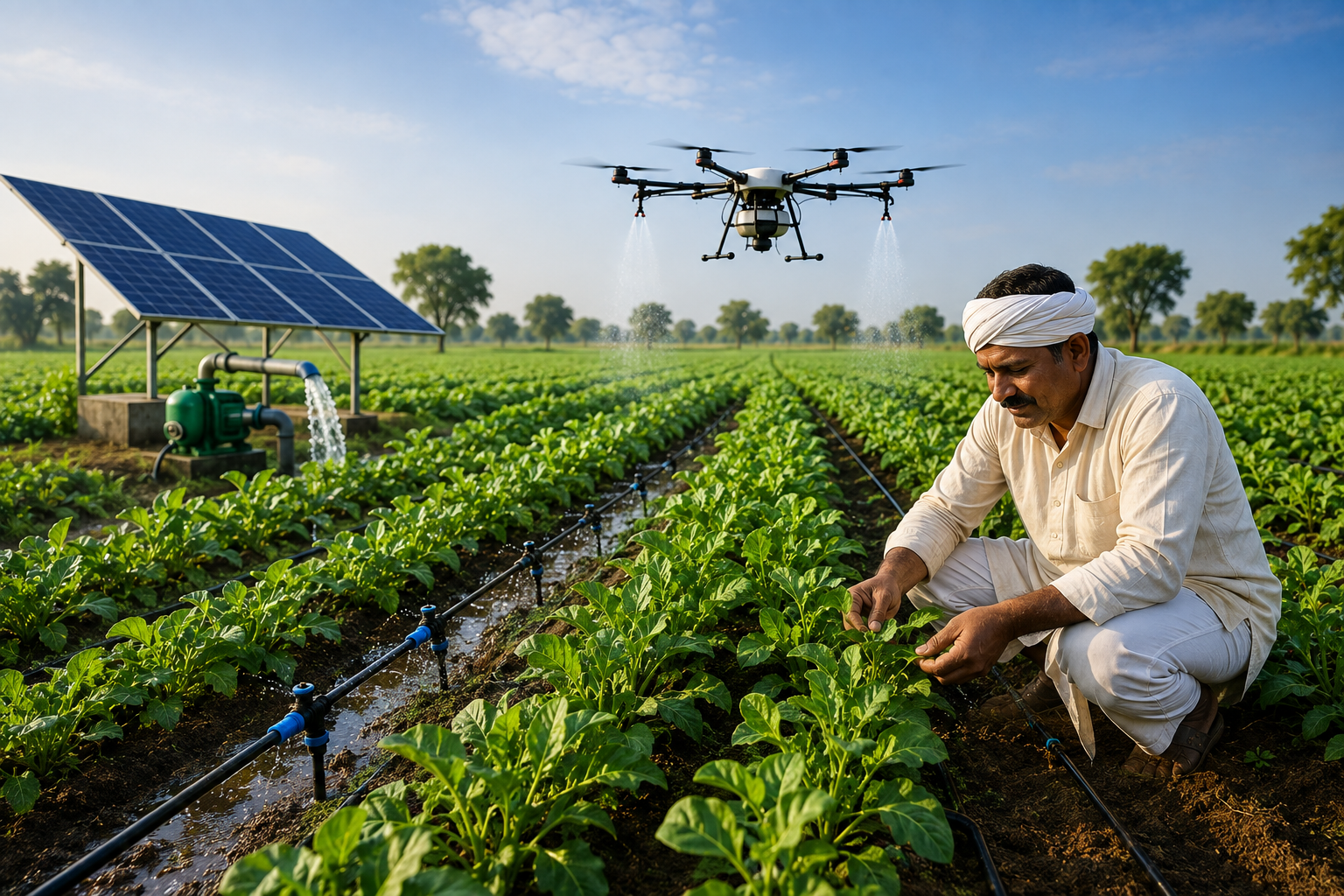
Why Are Farmers Unsuccessful?

Understanding the Real Causes Behind Farm-Level Failure in India
By District Reporter, Nalgonda, Telangana
Farmer failure should not be viewed simply as a failure of hard work. It is often the result of interconnected economic, climatic, technological and market challenges. Small and fragmented landholdings, rising input costs, inadequate irrigation, unpredictable weather, limited access to institutional credit and fluctuating crop prices can significantly reduce farm profitability.
Many farmers also face gaps in scientific extension services, quality inputs, mechanisation, storage, transportation, processing and reliable market information. When farmers sell immediately after harvest because of limited storage or financial pressure, they may have weak bargaining power and receive lower returns.
Core Principle: Farming becomes sustainable when productivity is combined with profitability, risk management, technology, value addition and assured market access.
Conclusion: The way forward is not merely to increase production, but to build profitable and resilient farm enterprises through Farmer Producer Organisations, efficient irrigation, scientific advisory services, affordable finance, post-harvest infrastructure, crop diversification, processing and stronger market linkages.
References: NITI Aayog; Indian Council of Agricultural Research (ICAR); Government of India agricultural reports.