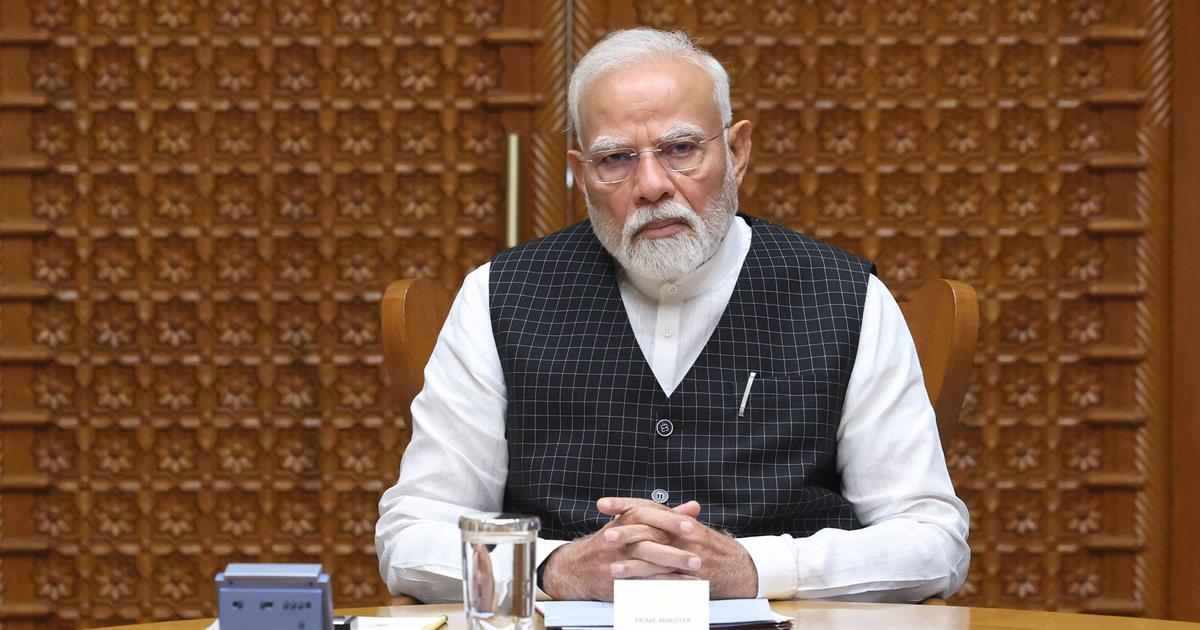
In a decisive response to recent rumors, Prime Minister Narendra Modi has categorically dismissed reports suggesting that the Indian government was considering the imposition of a tax on foreign travel. The speculation arose amidst ongoing economic pressures exacerbated by the turmoil in West Asia, which has led to rising global crude oil prices and increased import costs.
The Prime Minister took to social media to clarify the situation, labeling the reports as “totally false” and stating unequivocally that there was “not an iota of truth” in the claims. Modi emphasized that the government has no intentions of implementing any restrictions on foreign travel. Instead, he reaffirmed the administration’s commitment to enhancing the ‘Ease of Doing Business’ and ‘Ease of Living’ for the citizens of India.
The controversy ignited after a report from CNBC-TV18 suggested that the Centre was deliberating on a temporary cess aimed at mitigating the economic fallout from recent global events. The report indicated that discussions about the tax were taking place at the highest levels of government. However, in light of Modi’s strong denial, CNBC-TV18 later retracted its statement, acknowledging that their initial report was “not accurate.” This prompts a deeper examination of the current economic landscape and the government’s approach to managing it.
Just days prior to this incident, Prime Minister Modi had called for national austerity measures to navigate the economic challenges posed by international crises. During a speech, he urged citizens to recall certain work-from-home practices that gained traction during the COVID-19 pandemic and to make greater use of public transportation as a means of reducing fuel consumption. These initiatives were part of a broader strategy to conserve India’s foreign exchange reserves in the face of rising costs.
Moreover, Modi encouraged the public to limit non-essential foreign travel for a year, stressing the importance of collective efforts in preserving the nation’s economic stability. His consistent messaging underscores a critical time for the country, as it grapples with the ramifications of global economic shifts and the need for prudent fiscal management.