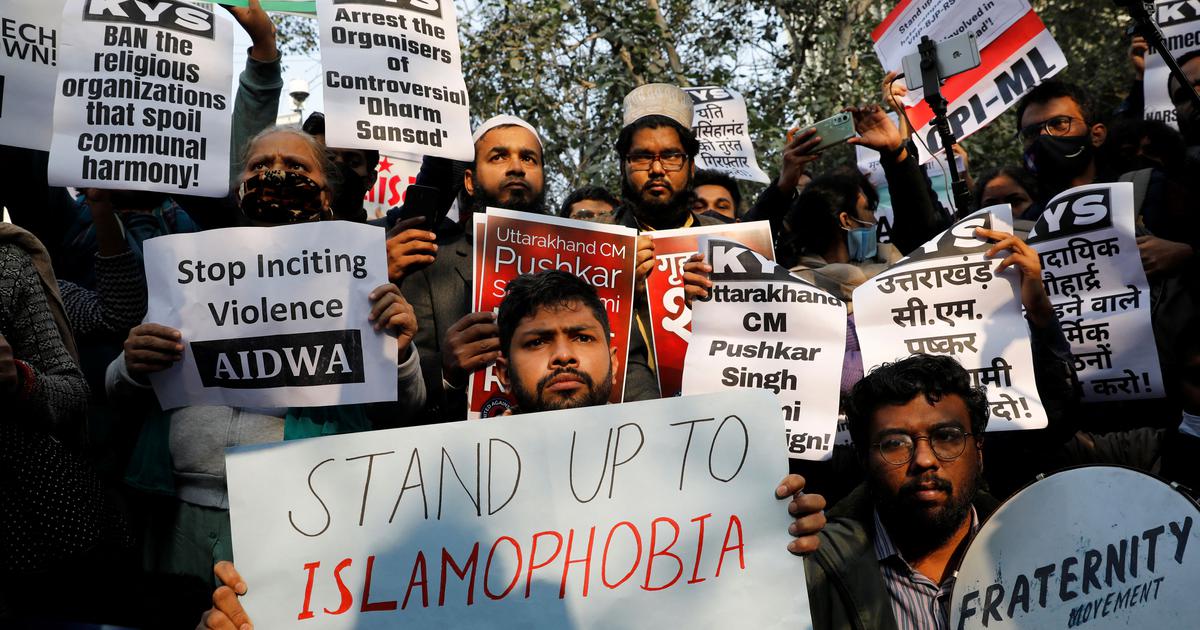
Since the rise of Narendra Modi’s government in 2014, hate speech targeting religious minorities, particularly Muslims and Christians, has unfortunately become a normalized aspect of India’s societal landscape. This troubling trend has found its way into political discourse, with inflammatory rhetoric becoming a staple in election campaigns and religious dialogues alike. It echoes across various media platforms—from the halls of political rallies to social media feeds, newsprint, and even cinema.
The persistent nature of hate speech reflects a broader issue, marked by a notable inaction from law enforcement and judicial authorities at all levels. The reluctance of police and courts to address hate speech seriously has allowed such dangerous rhetoric to proliferate. This atmosphere has fostered a distorted narrative portraying Muslims as treacherous and violent, while Christians are characterized as individuals swayed by financial incentives to forsake their original faith. Such portrayals serve to deepen societal divides and perpetuate hostility, undermining the foundational principles of pluralism and coexistence.
In light of the growing concern surrounding the failure of the legal system to curb hate speech, many citizens advocate for the introduction of explicit hate speech laws. The belief is that a dedicated statute could act as a robust deterrent against the spread of hate and division within the community. Recent legislative moves in Congress-led states like Karnataka and Telangana reflect this sentiment, with both states having passed laws aimed at addressing hate speech. Karnataka’s law, in particular, is currently pending formal implementation.
Critics, however, caution that legislation alone may not be the panacea for the deep-rooted issues of hate speech in India. They argue that the problem is not merely one of legality but one that is interwoven with the very fabric of societal attitudes and political rhetoric. For laws to be effective, there needs to be a significant shift in cultural perceptions and a robust commitment from the state to enforce these laws impartially. Without such a commitment, there is a risk that new legislation may fall victim to the same apathy that has allowed hate speech to thrive.
As the conversation around hate speech continues to unfold, it is imperative for all stakeholders—citizens, lawmakers, and civil society—to engage in a constructive dialogue that prioritizes the protection of marginalized communities while promoting a culture of mutual respect and understanding. Only then can India hope to navigate the challenges posed by hate speech and work towards a more inclusive and harmonious society.