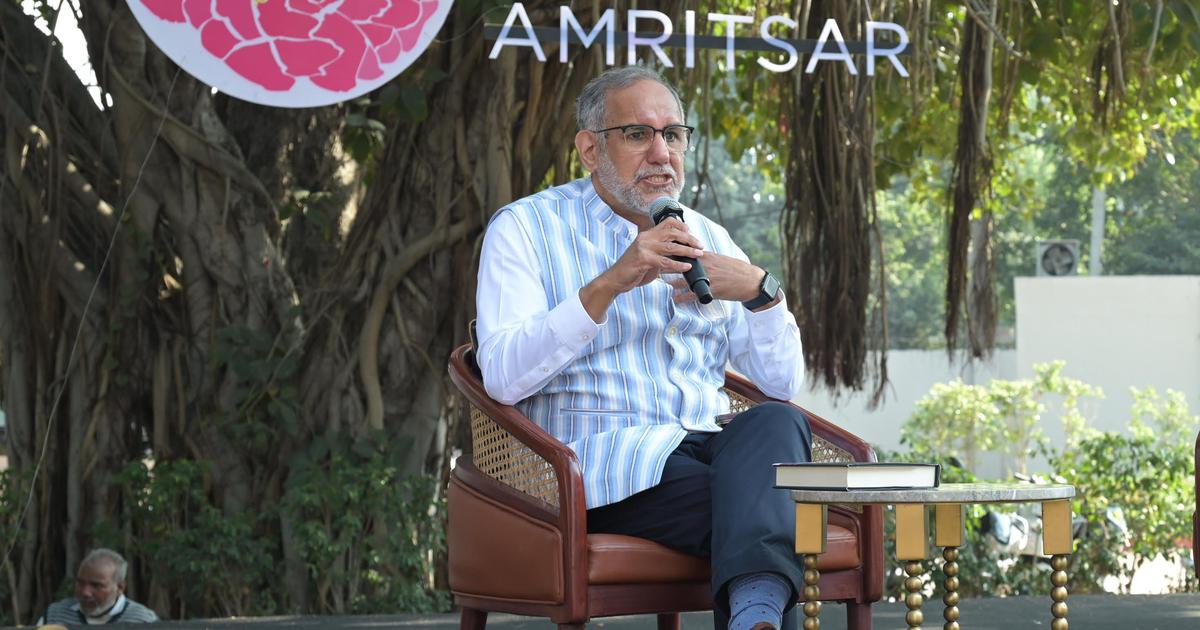
In a world increasingly driven by technology, the art of translation remains a vital bridge between cultures, transcending political boundaries. Navdeep Suri, a distinguished Punjabi translator, recently shared his insights on the multifaceted role of translators during the Sacred Amritsar cultural festival. His English rendition of Nanak Singh’s Punjabi classic, Agg Di Khed (1948), titled A Game of Fire, garnered the Jury’s Special Commendation at the Muse India-GSP Rao Translation Awards 2025, highlighting the significance of cultural preservation through language.
Suri’s passion for translation goes beyond mere linguistic accuracy. He emphasizes that a translator’s life experiences and personal worldview significantly shape how they interpret and convey texts. As publishers increasingly turn to AI-driven translation tools to reduce costs and streamline processes, Suri cautions against losing the human touch that enriches literary works. The nuances embedded in human experience, he argues, are irreplaceable and bring depth to the translation process.
Having translated various works by his grandfather, Nanak Singh, including Khooni Vaisakhi and Pavitra Paapi, Suri is actively engaged in the Nanak Singh Literary Foundation, dedicated to preserving the literary heritage of one of Punjab’s most revered writers. Suri’s commitment to maintaining the cultural essence of these texts serves as a testament to the power of literature in preserving identity and fostering a sense of community.
With a rich background in diplomacy, having served as India’s Consul General in Johannesburg and Ambassador to the UAE and Egypt, Suri brings a unique perspective to his translations. He believes that translation is inherently a political act, as it involves choices that can influence how cultures perceive one another. By bridging linguistic gaps, translators play a crucial role in shaping diplomatic narratives and fostering mutual understanding between nations.
As Suri continues to navigate the delicate interplay between language, culture, and politics, his work stands as a reminder that the ties of language and culture often run deeper than the political borders that divide us. In an age where instant gratification and technology dominate, the art of translation demands a balance between efficiency and the rich, nuanced understanding of human experience.