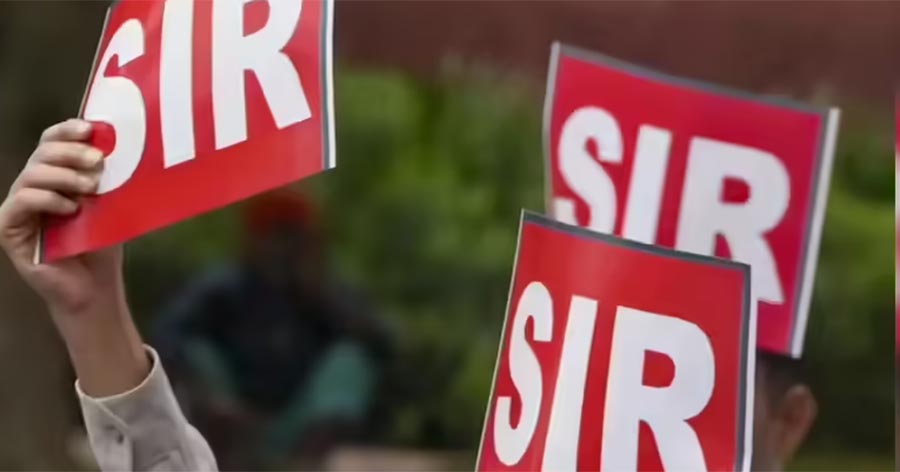
Bengaluru/Karnataka: According to the Election Commission of India (ECI), Karnataka has been included in Phase III of the Special Intensive Revision (SIR) of electoral rolls announced on May 14, 2026. The phase also includes Meghalaya, Maharashtra, Jharkhand, and Delhi.
As per the schedule announced by election authorities, preparatory activities, training programmes, and printing of forms are scheduled from June 20 to June 29, 2026. Booth Level Officers (BLOs) are expected to conduct house-to-house visits from June 30 to July 29, 2026.
The Special Intensive Revision is being conducted across Karnataka, and election authorities have indicated that constituencies in Bengaluru and other parts of the state are expected to follow the same timeline, subject to any revisions issued by the Election Commission.
Key Dates
- BLO Training and Form Printing: June 20–29, 2026
- House-to-House Enumeration (BLO Visits): June 30–July 29, 2026
- Polling Station Rationalisation: By July 29, 2026
- Publication of Draft Electoral Roll: August 5, 2026
- Claims and Objections Period: August 5–September 4, 2026
- Disposal of Claims and Objections: By October 3, 2026
- Publication of Final Electoral Roll: October 7, 2026
The qualifying date for this revision is October 1, 2026, which serves as the reference date for age eligibility and ordinary residence requirements.
Revision Process
Election authorities advise voters to verify their details in the existing electoral roll through official Election Commission platforms before the commencement of BLO visits.
During the enumeration period, Booth Level Officers will visit households to collect relevant information and forms. If residents are unavailable during the visit, BLOs may leave forms for later submission. Authorities have stated that multiple visits may be conducted where necessary.
Voters are required to fill in personal and family details and submit supporting documents, where applicable. Individuals who appeared in earlier electoral rolls may be asked to provide relevant references or extracts for verification purposes.
Completed forms may be submitted through BLOs, designated revision centres, or approved online platforms, including the National Voters’ Service Portal (NVSP), the Voter Helpline App, and official election websites.
After submission, voters are advised to retain the acknowledgment or reference number to track the status of their application.
Verification and Claims Process
Following field verification by election officials, the draft electoral roll is scheduled to be published on August 5, 2026.
Voters who find errors, omissions, or incorrect entries may submit claims or objections during the prescribed period. Applications for inclusion, correction, deletion, or objection may be filed through the appropriate forms as notified by election authorities.
Election Registration Officers (EROs) will examine and dispose of claims and objections before the publication of the final electoral roll on October 7, 2026.
Documents
Election authorities have indicated that supporting documents may include proof of age, proof of residence, educational records, passports, government-issued certificates, and other documents specified under Election Commission guidelines. The exact requirements may vary depending on the applicant’s circumstances and verification needs.
Voters are encouraged to refer to official Election Commission notifications and the Chief Electoral Officer (CEO) Karnataka website for the latest instructions, schedules, and document requirements.
Election authorities have also advised residents of apartment complexes and gated communities to coordinate with local associations to facilitate smooth access for Booth Level Officers during the verification process.