SpiceJet Cancellations and Delays from Mumbai Trigger Passenger Chaos, Raise Reliability Concerns
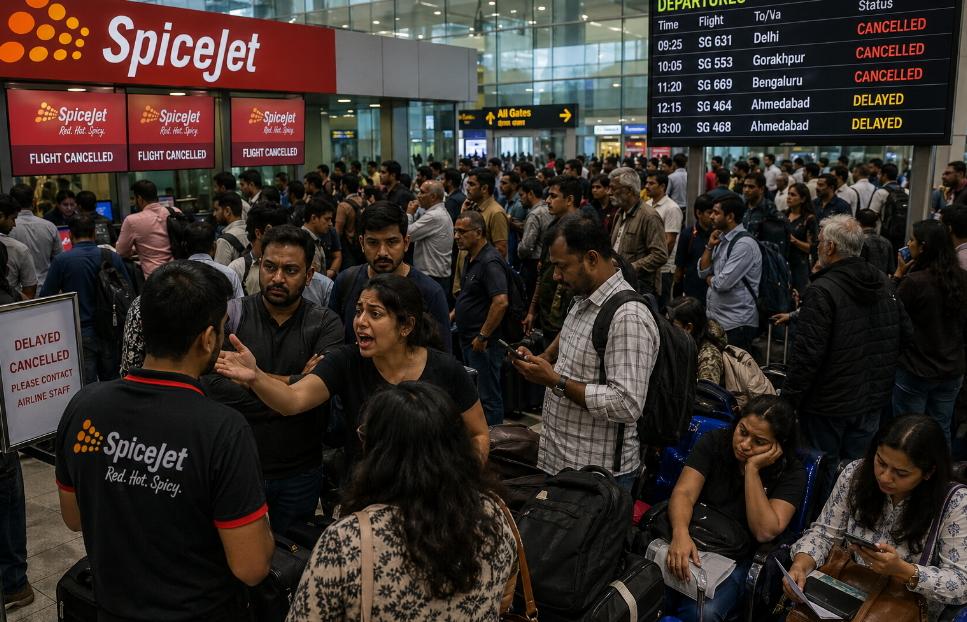
Operations of SpiceJet came under sharp scrutiny on April 29 after multiple flight cancellations and delays from Mumbai triggered chaos, passenger outrage, and fresh concerns over the airline’s operational reliability.
At least three departures — SG 631 (Mumbai–Delhi), SG 553 (Mumbai–Gorakhpur) and SG 669 (Mumbai–Bengaluru) — were cancelled at short notice. The airline attributed the disruption to operational reasons, including the grounding of an aircraft and cascading weather-related impacts at a previous station, Bagdogra, which affected aircraft availability. The situation was further compounded by Flight Duty Time Limitation (FDTL) constraints, leaving the airline unable to deploy crew for the scheduled services.
Two additional Mumbai–Ahmedabad flights were also delayed after their inbound aircraft were impacted by adverse weather at Varanasi and Bagdogra. Both flights eventually departed behind schedule, adding to the disruption.
The impact on passengers was significant. Flyers reported being stranded at the airport for hours following last-minute cancellations, with many forced to rework travel plans or seek alternative bookings at higher fares. Long queues were seen at airline counters as passengers struggled to obtain clear information on rescheduling, refunds, or accommodation.
Several passengers also flagged gaps in communication and on-ground assistance, stating that updates from the airline were either delayed or unclear. In some cases, travellers with onward connections missed subsequent flights, further compounding the inconvenience.
The disruption also led to visible anger among passengers, with reports of chaotic scenes and overcrowding near help desks as affected travellers sought immediate resolution. The situation highlighted the cascading impact that operational constraints within an airline can have when recovery mechanisms are limited.
This is not an isolated instance, with recent reports pointing to recurring delays and operational strain across sections of the airline’s network. Industry observers note that tight aircraft utilisation and limited buffer capacity can amplify disruptions, particularly when combined with crew duty time restrictions.
SpiceJet said it is operating additional flights on April 30 to accommodate affected passengers and clear the backlog created by the disruption. “We regret the inconvenience caused to our passengers and appreciate their understanding,” a spokesperson said.