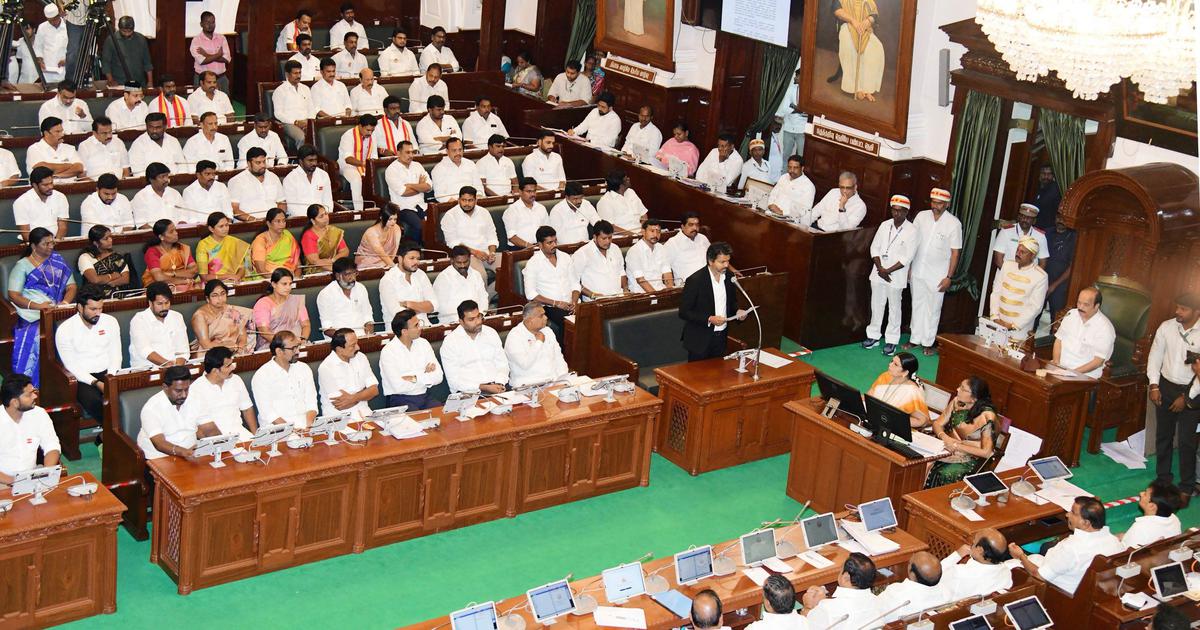
The Tamil Nadu Assembly made a significant decision on Friday by unanimously passing a resolution against the proposed construction of the Mekedatu dam by the Karnataka government on the Cauvery river. Chief Minister M.K. Stalin introduced the resolution, highlighting the state’s strong objection to what he termed a ‘unilateral move’ by Karnataka, arguing that it disregards the established guidelines set forth by the Cauvery Water Disputes Tribunal in 2007 and the Supreme Court’s ruling in 2018.
The Mekedatu project, envisioned to be a reservoir located at the confluence of the Cauvery river and its tributary, the Arkavathi, aims to provide drinking water to Bengaluru and nearby regions while also generating an estimated 400 megawatts of electricity. The financial outlay for this venture is projected to be around Rs 9,000 crore. However, Tamil Nadu officials have raised grave concerns that the dam would disrupt the natural flow of water into their state, aggravating an already contentious water-sharing dispute.
The ongoing conflict over Cauvery water allocation has historical roots, tracing back to agreements made in 1892 and 1924 between the former Madras Presidency and the Princely State of Mysore. To address these long-standing issues, the Union government constituted the Cauvery Water Disputes Tribunal in 1990, which ultimately delivered its verdict in 2007. This decision allocated 419 thousand million cubic feet of water annually to Tamil Nadu, while Karnataka was allotted 270 thousand million cubic feet. Despite this legal framework, tensions continue to flare between the two states, making the Mekedatu proposal a flashpoint in regional politics.
In his address to the Assembly, Chief Minister Stalin emphasized that the people of Tamil Nadu have a right to protect their water resources, urging the Karnataka government to reconsider its plans. The resolution also reflects the sentiments of Tamil Nadu’s residents who fear that the dam will lead to water scarcity in their state, further exacerbating agricultural and domestic water needs.
As discussions around the Mekedatu project continue, the Tamil Nadu government has vowed to pursue all available legal avenues to protect its water rights. The situation remains delicate, with both state governments needing to navigate this complex issue carefully to avoid further escalating tensions. The resolution passed by the Tamil Nadu Assembly is a crucial indicator of the state’s commitment to assert its rights over the Cauvery river, and it remains to be seen how the Karnataka government will respond to this challenge.