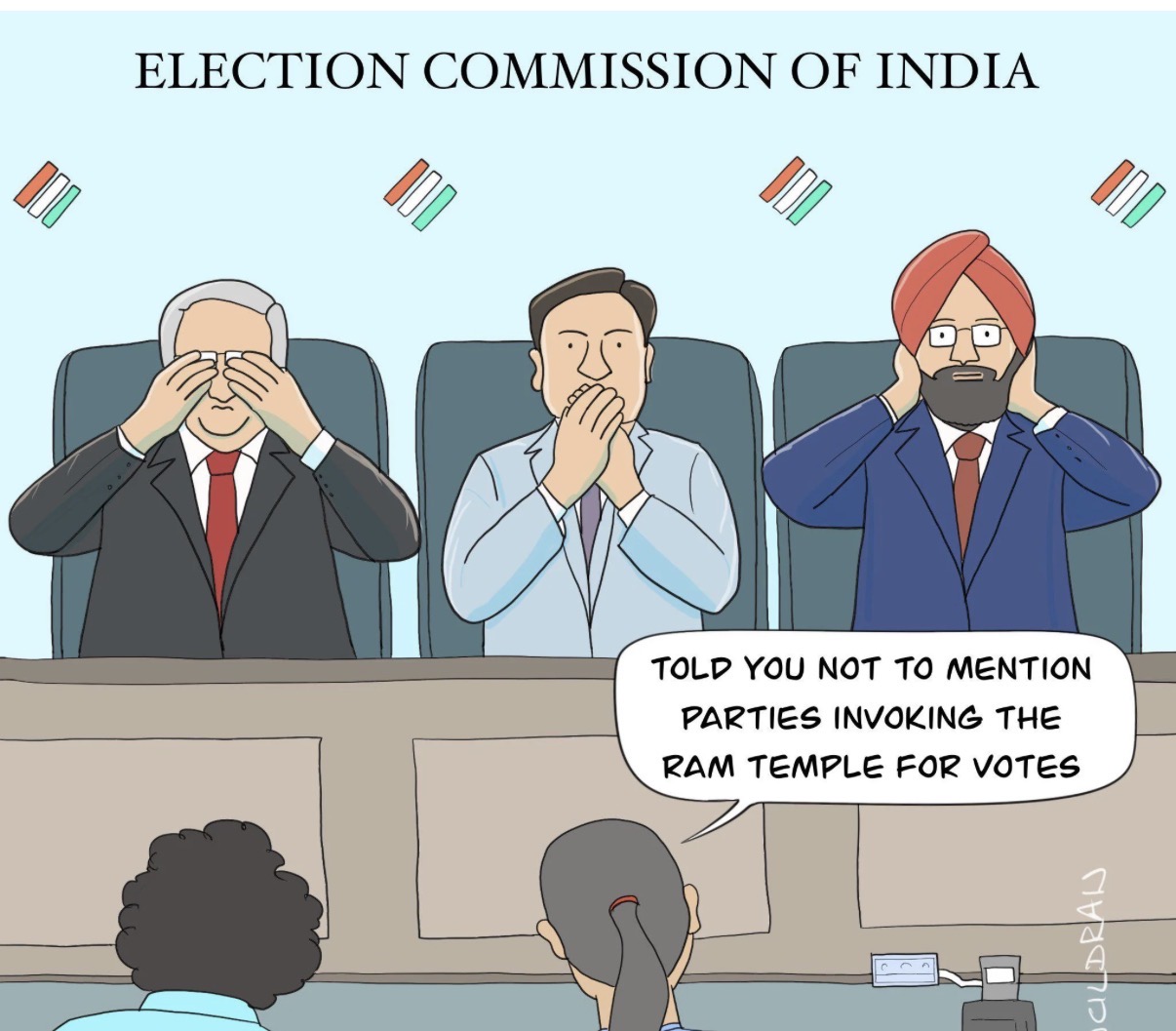
The BJP using central forces and election commission of India for one party benefit and that is BJP
Jaharul-The Rising Influence of Central Forces in West Bengal’s Political Landscape: A Threat to Democracy
In recent times, political battles in West Bengal have become more intense, with the Bharatiya Janata Party (BJP) emerging as a key contender for power. While debates around governance and development promises usually dominate election discourse, there is a worrying trend that has taken center stage: the increasing influence of central forces, especially the Election Commission of India (ECI) and the Central Reserve Police Force (CRPF), which have been allegedly used to further the interests of the ruling party, the BJP. This shift in power dynamics, when examined closely, raises serious questions about the integrity of the electoral process and its implications for Indian democracy.
The BJP’s Strategy: Fueling Hatred Rather than Promises of Development
At the heart of BJP’s strategy in West Bengal lies not a commitment to development or public welfare, but an overwhelming focus on fostering an atmosphere of division, animosity, and hatred. The party has, over time, embraced a divisive rhetoric that polarizes communities, promotes communal tensions, and seeks to create an “us vs. them” narrative. This approach, rather than uniting the people of Bengal around ideas of progress and prosperity, aims to stoke fear and distrust among voters.
This strategy, centered on divisiveness, is not new to the political landscape of India. However, what is increasingly alarming is the way in which the BJP has sought to institutionalize these tactics through the instrumentalization of state machinery and central forces. Rather than focusing on building a robust economic or welfare-oriented narrative, the BJP seems to have placed its bets on creating an environment of tension and fear.
Central Forces: A Tool of Political Influence?
One of the most concerning trends emerging from the BJP’s electoral campaign in West Bengal is the alleged use of central forces, like the CRPF, to sway public sentiment and influence the election outcomes. Central forces, intended to maintain law and order and ensure a free and fair election, are increasingly being deployed in ways that suggest their roles have been politicized for the benefit of a single party.
It is a known fact that in a democracy, the role of central forces is supposed to be neutral. They are there to protect the electoral process, prevent violence, and ensure a peaceful election atmosphere. However, the widespread reports of biased conduct, favoritism, and an apparent alignment with the BJP’s interests raises critical concerns about their neutrality. The Election Commission of India (ECI), an independent constitutional body tasked with ensuring the fairness of elections, also appears to have become embroiled in controversies, often accused of acting in favor of BJP’s interests.
Unconstitutional Use of State Machinery
The crux of the issue lies in the potential violation of constitutional principles. The Indian Constitution envisions a system where electoral processes are free from any undue interference, particularly by the ruling establishment. The BJP’s increasing reliance on central forces in its election campaigns is seen by many as a direct violation of this fundamental democratic principle.
While the presence of central forces is not inherently unconstitutional, their use as a tool to bolster the interests of one particular party can be seen as a gross abuse of power. The neutrality of these institutions is paramount for the smooth functioning of a democracy. If such entities become pawns in the political game, it undermines the very core of democratic principles, creating a dangerous precedent for future elections.
Moreover, the indiscriminate use of central forces to suppress opposition or intimidate voters further intensifies the narrative that elections in Bengal are being conducted under a cloud of coercion and manipulation. The chilling effect on free speech and political participation in such an environment is undeniable.
The Bigger Picture: Is Democracy at Risk?
The current situation in West Bengal highlights a much broader issue: the erosion of democratic norms in India. When central forces and constitutional bodies like the ECI are used to serve the interests of a single party, the integrity of India’s democratic system is severely compromised. The notion of a “free and fair” election is put in jeopardy, and voters are left with little choice but to vote under duress or fear.
In such a climate, political engagement becomes a matter of survival rather than democratic expression. Citizens are not merely casting ballots for a better future but are also compelled to defend their right to participate in an unbiased, uncoerced electoral process.
Conclusion: A Call for Accountability
As the elections in West Bengal approach, it is imperative for all democratic institutions—be it the Election Commission, central forces, or political parties—to uphold their constitutional duties. The focus must shift back to development promises, public welfare, and responsible governance, not divisive politics and the misuse of state machinery. Only then can we truly ensure that the will of the people is respected and that the integrity of the democratic process is maintained.
India must take a hard look at how far the line between political power and constitutional neutrality has been blurred. As citizens of a democracy, it is our responsibility to hold our leaders and institutions accountable. Only through such vigilance can we safeguard the democratic fabric of our nation.