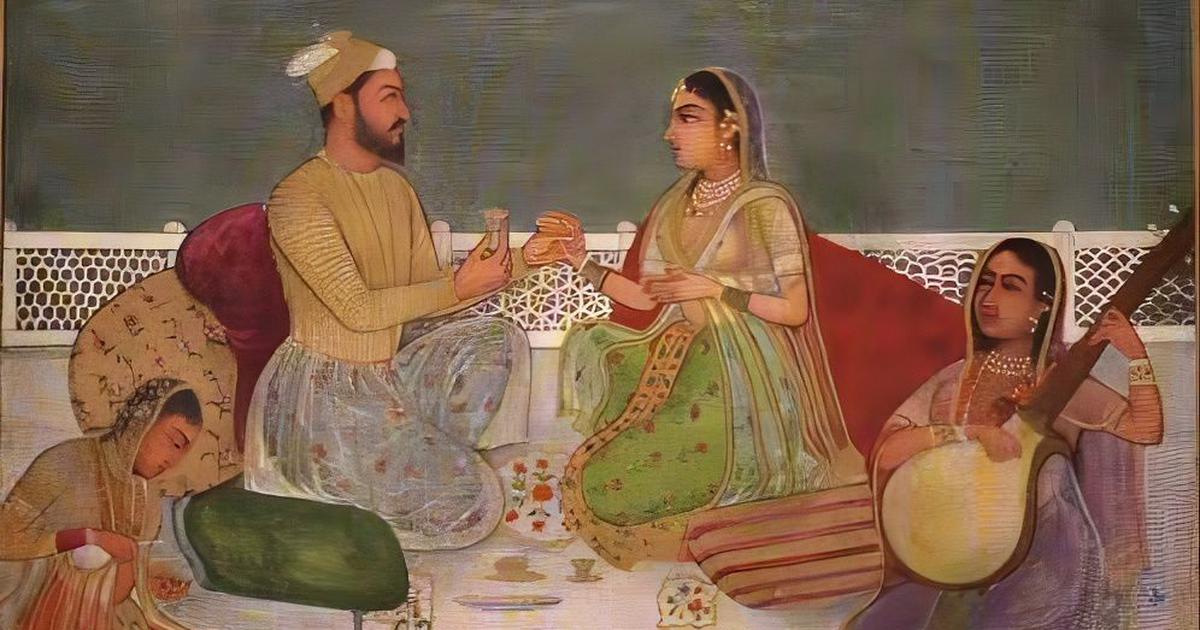
The Mughal era is often celebrated for its grand palaces and opulent lifestyles, yet beneath the surface lay complex human emotions and narratives of love that defied social norms. Among these poignant tales is the romance between Dara Shikoh, the eldest son of Emperor Shah Jahan, and Rana Dil, a talented dancer. Their love story illuminates the struggles faced by those who dared to defy the rigid structures of Mughal society.
In the context of Mughal history, unions between royal heirs and women from lower social standings were not common, with marriages often seen as a privilege reserved for the elite. Emperors rarely permitted their sons to wed dancers, relegating them instead to the status of concubines within the harem. The legendary romance of Salim and Anarkali serves as a historical reminder of this restriction, where love was often crushed by imperial authority. However, the tale of Dara Shikoh and Rana Dil unfolded differently, primarily orchestrated not by the edicts of kings but rather by the cruel hand of fate.
Dara Shikoh, unlike many of his contemporaries, was not just a warrior but a poet and a philosopher, deeply influenced by Sufi ideals. His bond with Rana Dil emerged during a time when his life was marked by both privilege and expectation. Despite being wed to Nadira Banu Begum, a union orchestrated by familial ties, Dara’s heart found a unique connection with Rana Dil, who captivated him with her artistic grace and charm.
In an era where love was often overshadowed by political alliances and dynastic ambitions, Dara’s affection for Rana Dil blossomed quietly, allowing them moments of joy despite societal disapproval. Their relationship was a dance of passion and secrecy, a stark contrast to the broader conventions of the Mughal court, where love often took a backseat to duty. Dara’s marriage to Nadira was harmonious and filled with warmth, yet his emotional landscape remained complex, as he viewed his wife not only as a partner but also as a confidante.
As a testament to his unorthodox yet genuine feelings, Dara gifted Nadira a Muraqqa, an exquisite compilation of paintings and calligraphy, which highlighted his appreciation for art and beauty. Some of these magnificent pieces, now housed in British museums, serve as silent witnesses to Dara’s multifaceted nature—a blend of artist, lover, and ruler-in-waiting.
Tragically, the love story of Dara Shikoh and Rana Dil was cut short not by royal decree but by the untimely demise of Dara himself, a loss that reverberated through the annals of history. His death marked not only the end of a budding romance but also a pivotal moment in Mughal history, altering the course of succession and power dynamics within the empire. Dara was a visionary who sought to bridge the gap between different cultures and philosophies, and his passing left a void that was felt deeply across the empire.
In conclusion, the love story of Dara Shikoh and Rana Dil is a poignant reminder of the human capacity for love and creativity in the face of societal constraints. While the Mughal court was known for its grandeur, it was these personal stories—filled with longing, affection, and tragedy—that truly encapsulated the essence of an era.