




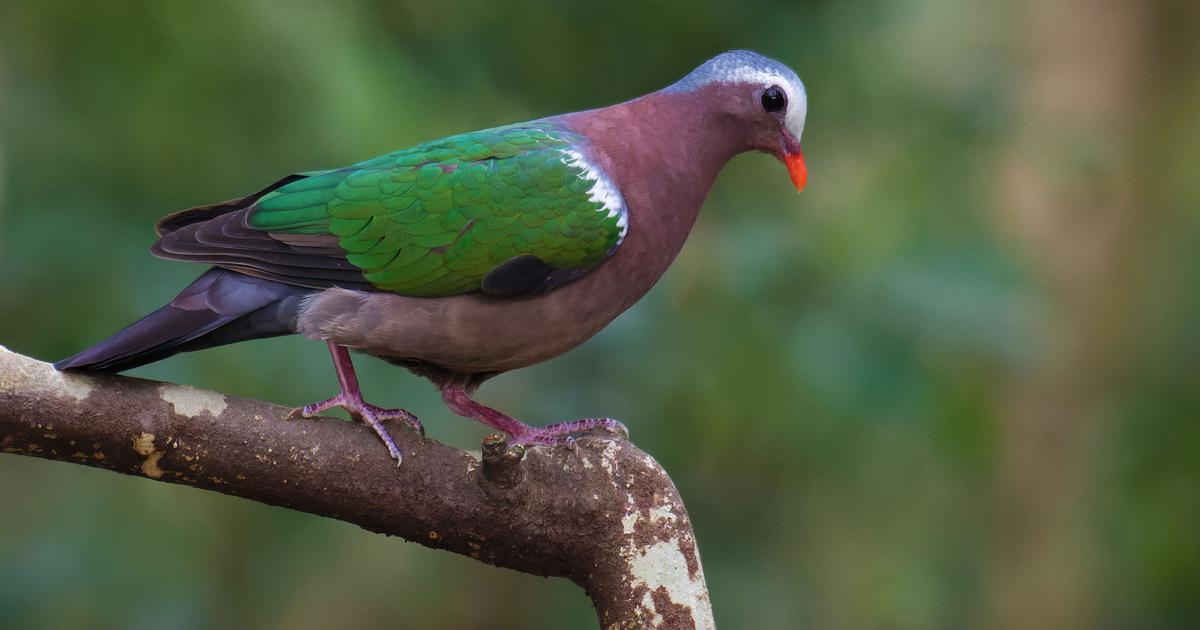
The vibrant emerald dove, with its shimmering green plumage, glides gracefully through the trees. However, to these beautiful birds, the glass surfaces reflecting the sky or surrounding foliage create a deceptive illusion of open air. The grim reality becomes evident when they collide with these transparent barriers, often resulting in fatal consequences.
Peeyush Sekhsaria, an architect and avid birdwatcher, vividly recalls a shocking incident from 2007. While at a tourist lodge in Coorg, he heard a jarring sound akin to an explosion when an emerald dove flew directly into a window. Strikingly, this was not a contemporary glass skyscraper but rather a typical building. Nearly twenty years later, the haunting memory of that moment lingers in Sekhsaria’s mind, compounded by the alarming lack of systematic research on bird collisions with glass in India.
Unlike North America, where it is estimated that over a billion birds are killed each year due to collisions with buildings, India does not maintain a comprehensive national database on this critical issue. The absence of such documentation raises significant concerns regarding the impact of glass surfaces on avian populations across the country. The threat posed by glass is an invisible one, often overlooked by both wildlife enthusiasts and urban planners.
The problem lies in how birds perceive their surroundings. Transparent glass panes can be mistaken for free flight paths, while reflective surfaces cleverly mimic the natural habitat—mirroring trees and skies. As birds attempt to navigate these illusions, they often collide at alarming speeds, leading to injury or death. Reports of such incidents emerge sporadically from various states in India. For instance, in Gujarat, there have been instances of migratory rosy starlings crashing into glass structures, while in Meghalaya, long-tailed broadbills have been found lifeless after hitting an automobile showroom’s façade.
Many of these incidents remain confined to informal discussions within birdwatching communities or circulate on social media platforms. Observations include instances of stunned barbets found beneath buildings or the unsettling thud of a bird striking an apartment window. As Ashwin Viswanathan, an ecologist at the Nature Conservation Foundation, notes, “We really don’t know the scale of this issue.” The lack of comprehensive data leaves a significant gap in understanding the full extent of this avian crisis.
As urbanization continues to expand in India, the implications of these silent fatalities become increasingly severe. The growing use of glass in architecture raises urgent questions about how we can protect our feathered friends. It’s imperative that policymakers and environmentalists work together to create awareness and develop strategies aimed not only at minimizing collisions but also at preserving the rich biodiversity of India. This could involve introducing regulations for building designs that prioritize bird safety, such as using bird-safe glass or incorporating visual markers that alert birds to the presence of glass.
In conclusion, while the problem of bird collisions with glass surfaces may not be immediately visible, it poses a significant threat to avian populations in India. By shedding light on this overlooked issue, we can begin to take the necessary steps towards safeguarding our wildlife and maintaining the delicate balance of our ecosystems.

