Introduction
As of May 2026, India finds itself at a unique crossroads of technological self-reliance and geopolitical maneuvering. While the global landscape remains volatile due to escalating maritime tensions in the Middle East, New Delhi is pivoting toward a “fortress of systems”—strengthening its physical borders with advanced weaponry and its digital infrastructure with indigenous safety protocols.
The Shield: LR-AShM and Strategic Autonomy
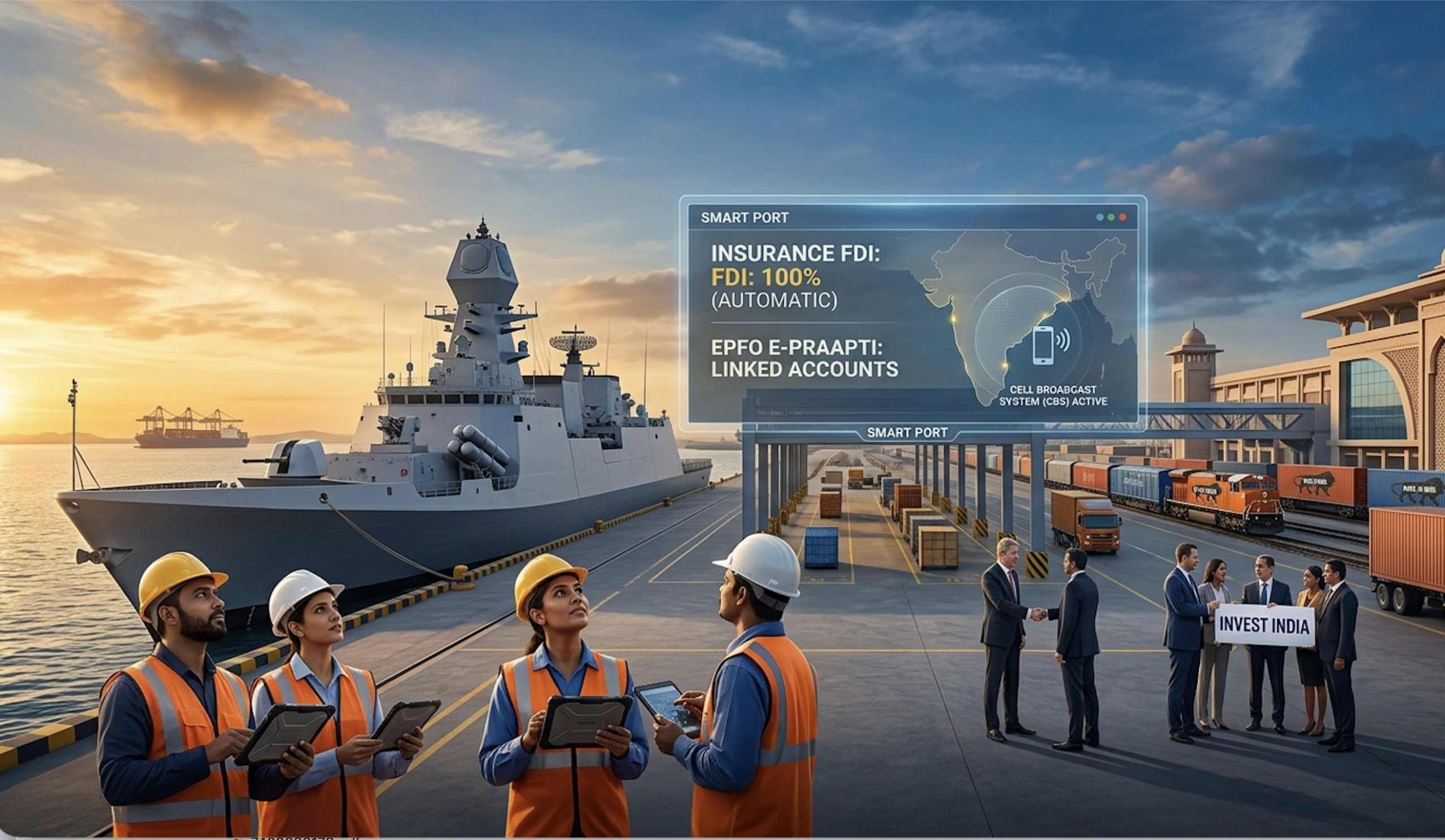
The successful second flight-test of the Long-Range Hypersonic Anti-ship Missile (LR-AShM) off the Odisha coast this week is more than a technical win; it is a clear signal of intent. In a period where the Strait of Hormuz faces unprecedented blockades, India’s ability to deploy hypersonic deterrents ensures that the Indian Navy remains a “net security provider” in the region. This indigenous milestone reduces reliance on foreign defense corridors and cements India’s seat at the high table of military innovation.
The Safety Net: Digital Governance for the Common Man
Simultaneously, the domestic focus has shifted toward hyper-local governance. The launch of the Cell Broadcast System (CBS) by the Ministry of Communications marks a departure from traditional disaster management. By utilizing indigenous technology to warn citizens of emergencies in real-time without the need for internet connectivity, India is bridging the “last-mile” safety gap.
Furthermore, the Employees’ Provident Fund Organisation’s (EPFO) rollout of E-PRAAPTI addresses a long-standing grievance: the billions of rupees lying in inoperative accounts. By leveraging Aadhaar-based tracking to link old UANs, the government is not just digitizing records but restoring financial dignity to millions of retired and transitioning workers.
The Economic Catalyst: 100% FDI in Insurance
The Ministry of Finance’s recent notification allowing 100% Foreign Direct Investment (FDI) in insurance via the automatic route is perhaps the most significant economic reform of the quarter. By removing the regulatory “bottleneck” of prior approvals, India is inviting global capital to deepen the country’s insurance penetration. This move is timed perfectly with the rising fiscal stress seen in state-level revenue deficits, providing a private-sector cushion for long-term social security.
Conclusion
India’s “Current Affairs” in May 2026 are not defined by a single event, but by a convergence of themes: Security, Safety, and Solvency. Whether it is a missile in the sky or a notification on a citizen’s phone, the underlying narrative is clear: India is building a resilient, self-correcting ecosystem designed to withstand both regional instability and internal administrative hurdles.