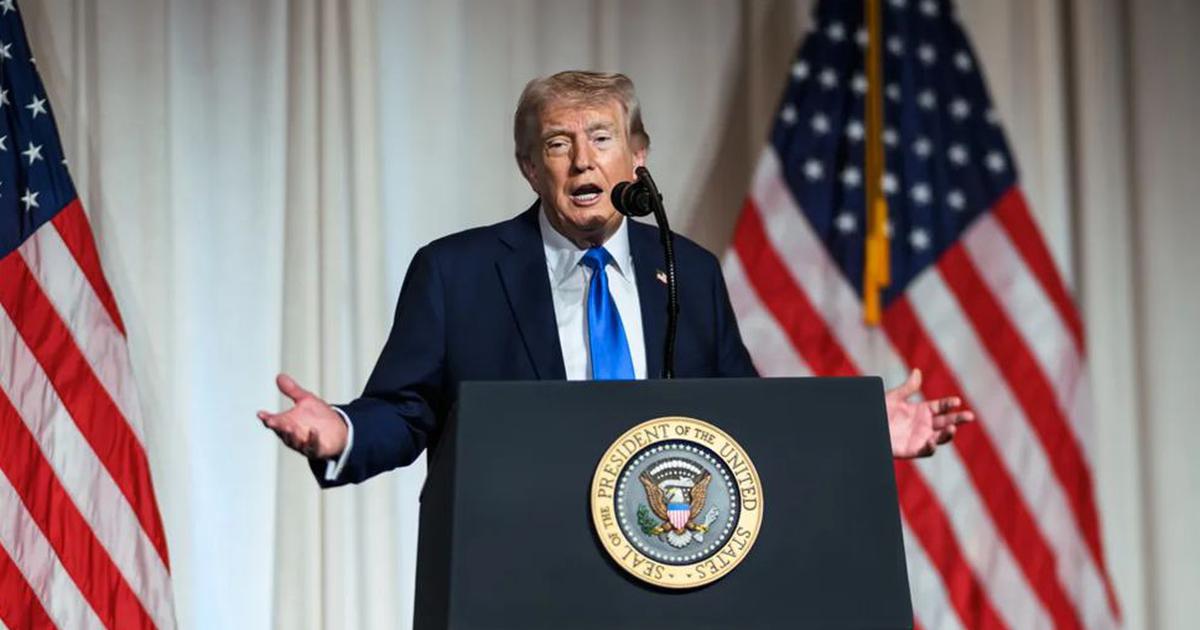
In a significant announcement on Sunday, United States President Donald Trump proclaimed that a peace agreement with Iran has been finalized. This declaration marks a pivotal moment in West Asian geopolitics, with the U.S. aiming to enhance regional stability and economic activity.
Trump revealed plans to initiate a “toll free opening” of the Strait of Hormuz, a critical maritime route for global oil shipments, and signaled the removal of the U.S. naval blockade on Iranian ports. He urged global shipping companies to prepare, stating, “Ships of the world, start your engines. Let the oil flow!” This call to action highlights the anticipated boost in oil exports and economic rejuvenation in the region.
Pakistani Prime Minister Shehbaz Sharif, who is acting as a mediator in the negotiations, confirmed that the agreement is set to be formally signed in Switzerland this coming Friday. The exact provisions of the deal have not been fully disclosed, but Sharif noted that both the U.S. and Iran are committed to an immediate cessation of military operations across various fronts, including in Lebanon. This cessation could pave the way for enhanced dialogue and a more peaceful West Asian landscape.
While Israel, a key player in the region, has remained silent on the developments, Trump expressed optimism on social media about the implications of this peace deal. He stated that the signing would not only allow for the safe passage of oil through the Strait but also facilitate mine removal, which has been a significant concern for shipping safety in the area.
Tehran’s response to the announcement remains pending. However, an Iranian official mentioned to Reuters that the final draft of the memorandum includes discussions on various crucial topics, including the country’s nuclear program. The implications of this deal could significantly alter the dynamics in the Middle East, particularly concerning nuclear negotiations.
This agreement has the potential to reshape alliances and economic relations in a region often marred by conflict and tension. As nations await the formal signing on Friday, the international community is watching closely to see how this deal will influence not just Iran and the U.S., but also neighboring countries and global energy markets.