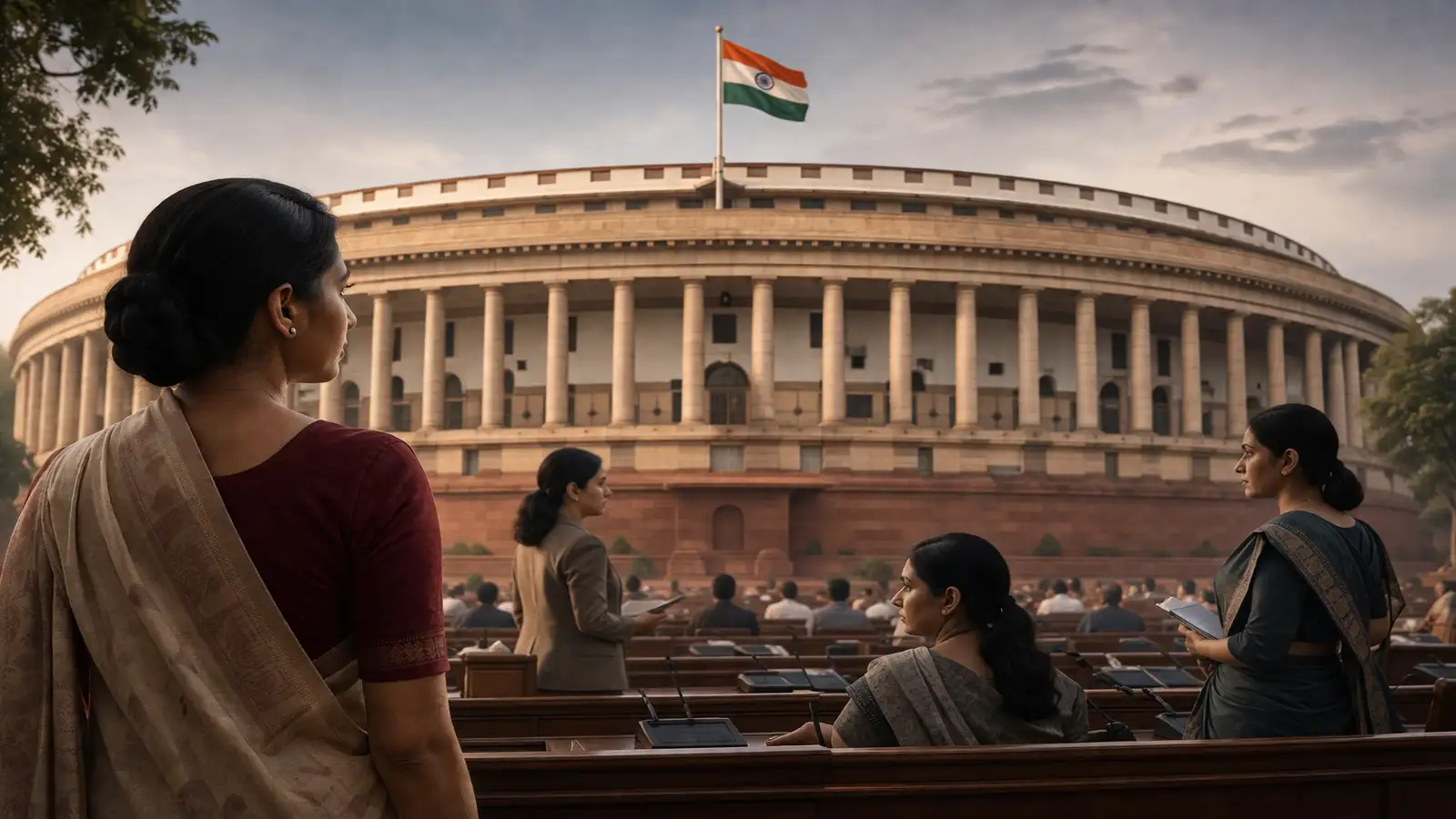
The Women’s Reservation law, officially known as the Nari Shakti Vandan Adhiniyam, represents a major constitutional reform aimed at increasing women’s participation in India’s political system. The legislation provides for 33% reservation for women in the Lok Sabha and State Legislative Assemblies, with the objective of improving gender representation in decision-making bodies.
Although the law was passed in 2023, it has gained renewed attention in 2026 amid discussions around its implementation timeline. Government officials have indicated that the reservation is expected to come into effect after the next delimitation exercise, which is likely to follow the 2026 census. This means the provisions could be implemented by the 2029 general elections.
There have also been discussions in policy circles regarding a possible increase in the number of parliamentary seats to accommodate reservation without affecting existing representation. However, no final decision has been officially confirmed.
Currently, women account for a relatively small share of elected representatives in India, estimated at around 10–15% in Parliament. The proposed reservation aims to address this gap by ensuring greater participation of women in governance.
The legislation has generated debate across political and policy platforms, but it is widely viewed as a significant step toward improving gender balance in Indian politics. Its implementation is expected to have a long-term impact on representation and policy-making processes.